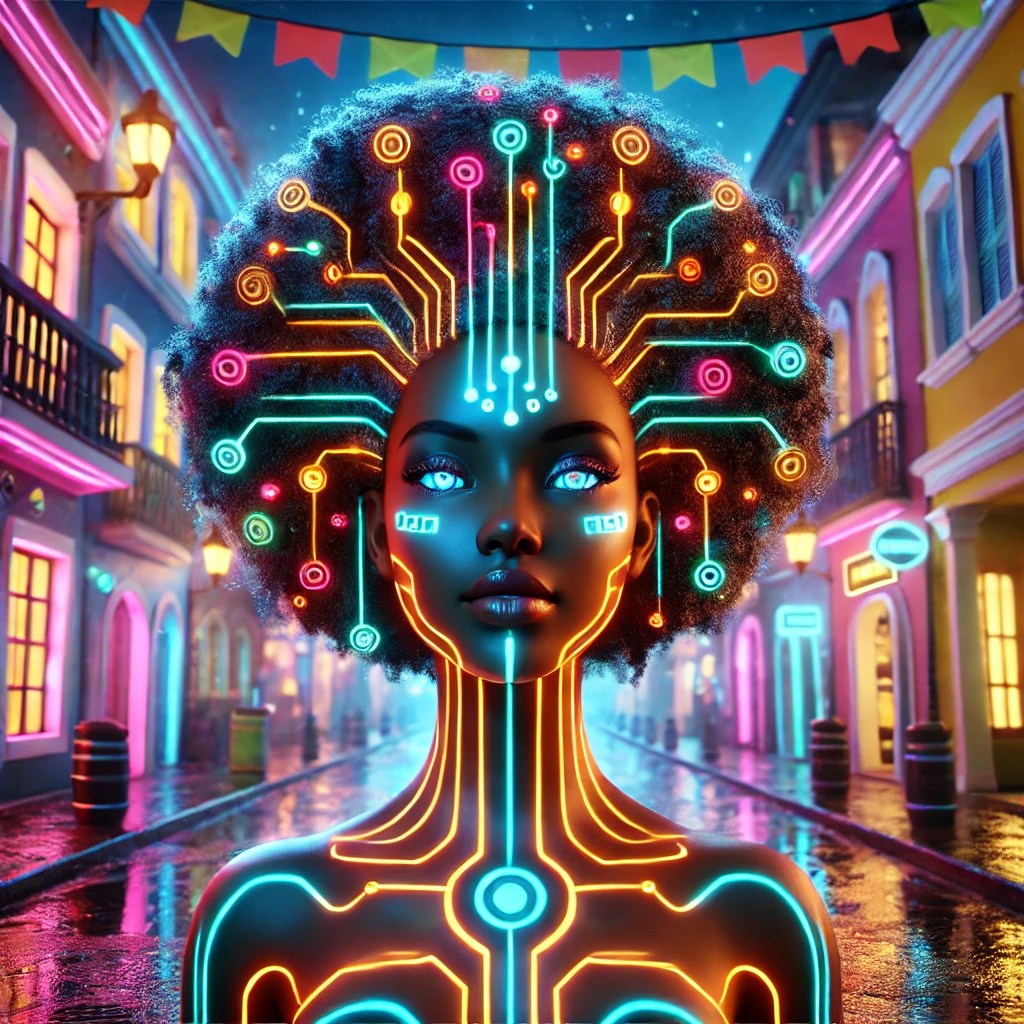
Where folklore transforms, and culture remixes the myth.
At its core, Caribanime is a fusion of two powerful forces. One is the vibrant cultural depth of the Caribbean. The other is the boundless creative language of animation. Caribanime is more than a genre — it’s a storytelling movement born from convergence, memory, and transformation. Rooted in the Caribbean’s layered past, it reimagines folklore through a modern lens, blending the ancestral with the futuristic.
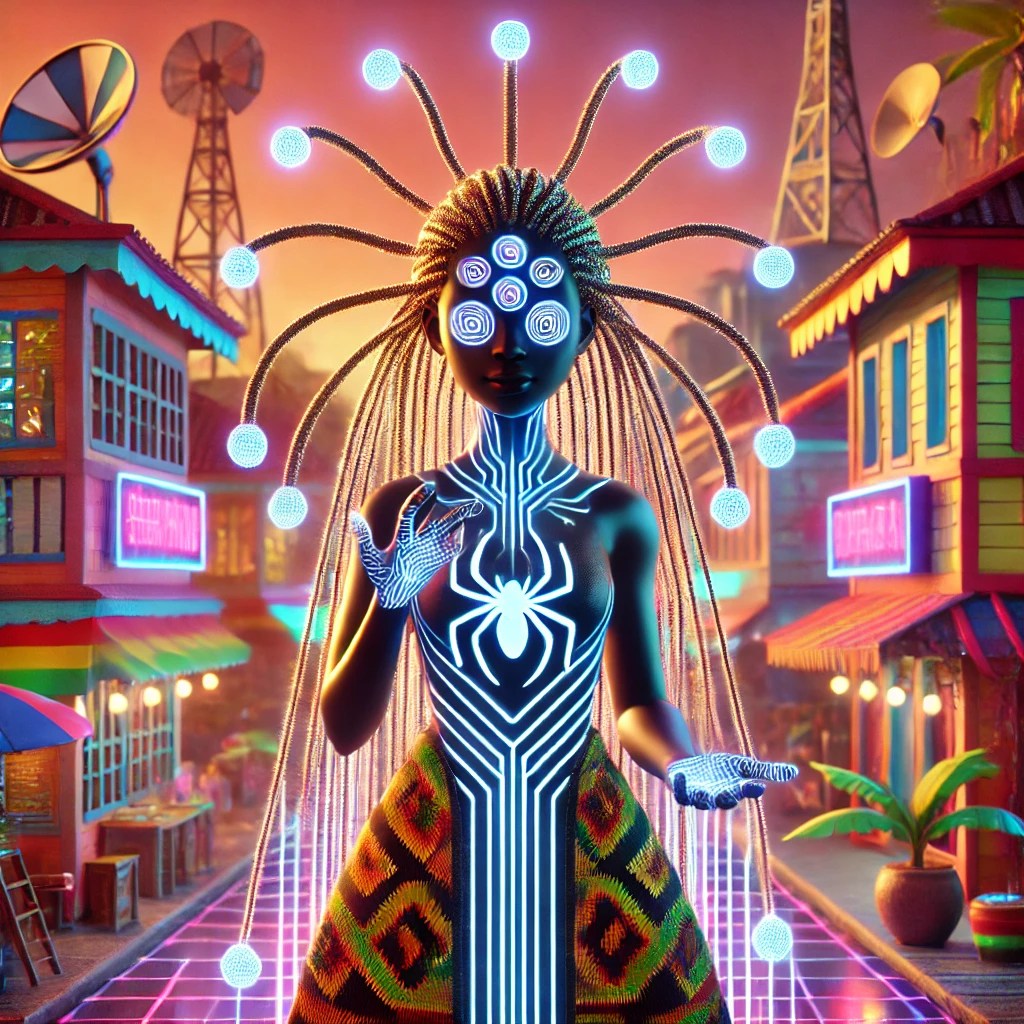
It’s where jumbies haunt smart homes. Anansi spins webs of data here. Fire spirits burn not in rage, but in remembrance. Caribanime doesn’t just retell myths — it reshapes them, giving them new form without losing their soul.
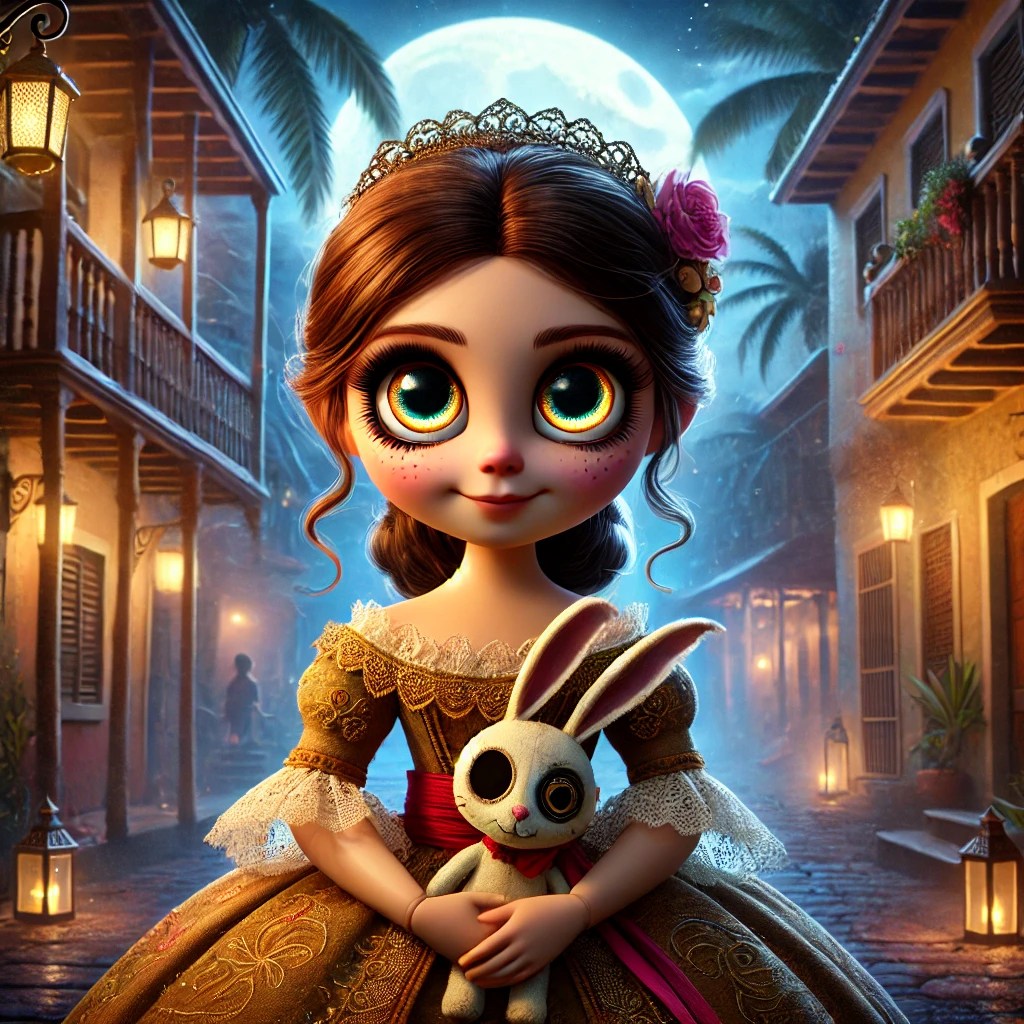
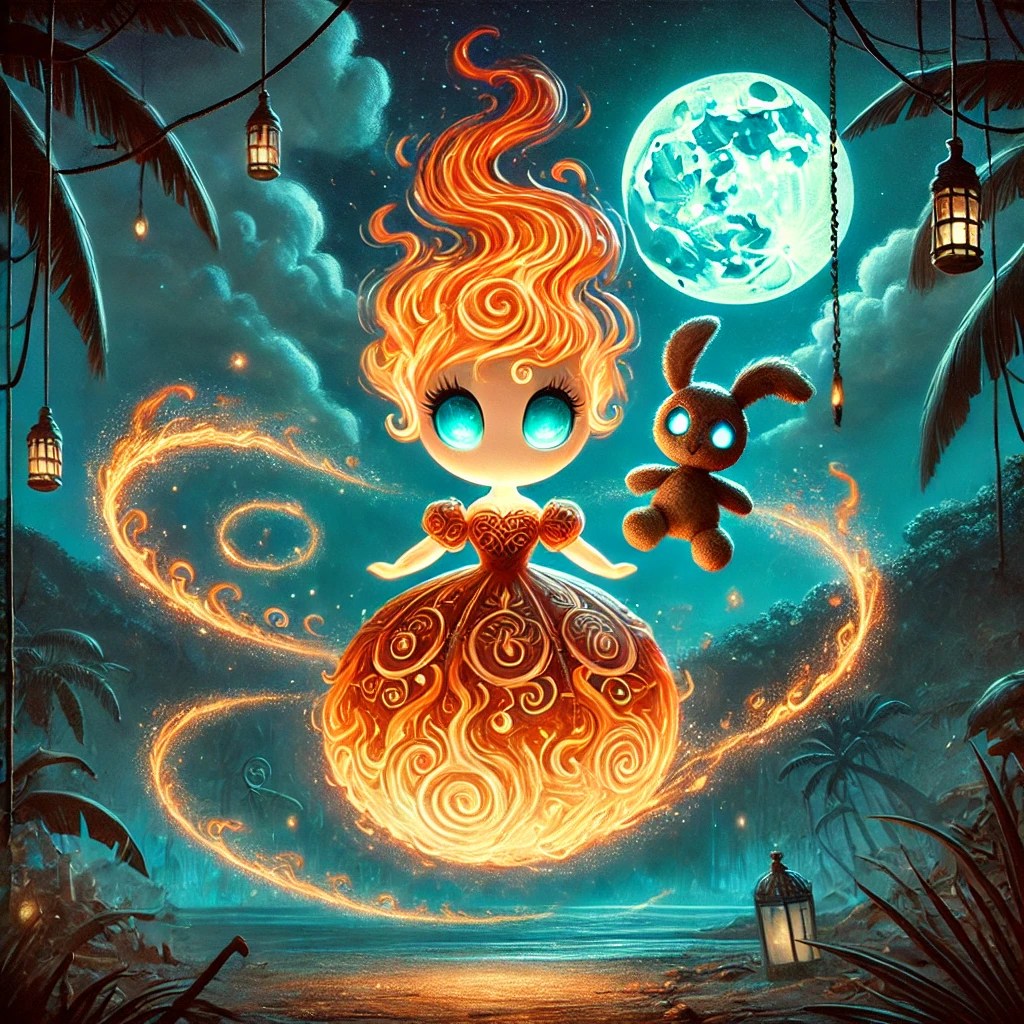
The Caribbean was shaped by a global meeting of cultures. These included West African, South Asian, East Asian, Indigenous, Latin American, Middle Eastern, and European. This meeting wasn’t seamless — it was chaotic, complex, and at times painful. But from that collision came something new: a culture built from fragments, constantly in motion, and full of fusion.
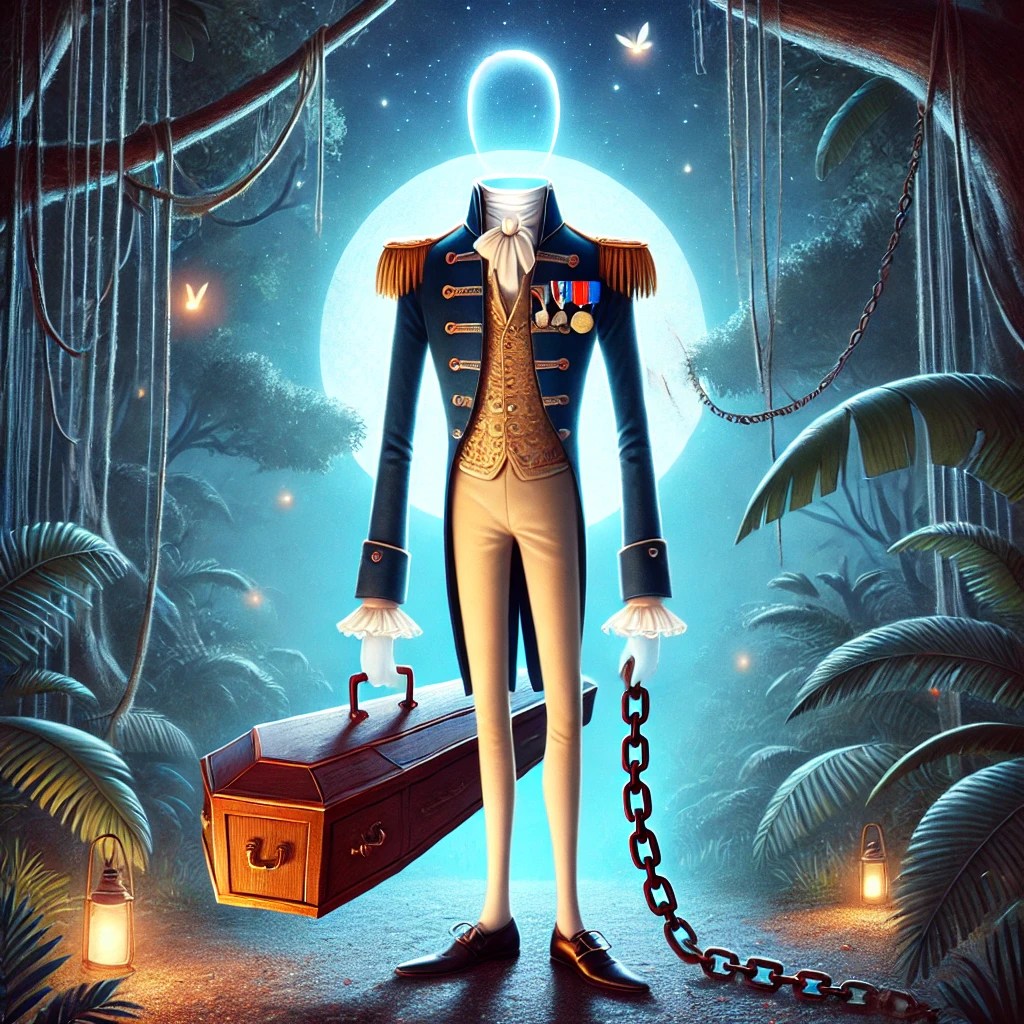
“The Lagahoo” Traditional Form: A shape shifting, headless man who carries a coffin and chains. Sometimes seen as a cursed guardian or demonic beast.
Caribanime Transformation: A regal colonial nobleman with no head, dressed immaculately in old military garb. In one hand, he drags a coffin like luggage. In the other hand, a length of rusted chain. Symbolizes the weight of colonial legacy, unresolved memory, and the burden of privilege and power.
Caribanime reflects this fusion — in language, music, food, and fashion — and channels it into visual storytelling. It honors tradition without being bound by it. It doesn’t simplify or sanitize. Instead, it embraces contradiction, complexity, and creativity.
This movement is about reclaiming stories that were buried, misremembered, or silenced. It treats folklore not as something frozen in the past. Instead, folklore is living material. It is ready to grow, stretch, and evolve.
Caribanime is not nostalgia. It’s not imitation. It’s cultural archaeology through art — digging into history to find what still pulses beneath the surface. In this world, folklore is treasure — and we are the shovel.
We do not reduce — we remix.
We do not erase — we expand.
We do not just animate the old — we forge the new.
This is Caribanime. The stories are still here like gold. Let’s dig.
Caribanime Universe
Help grow the Caribanime universe by subscribing for free at Artist Blueprint YouTube channel
 Artist Blueprint