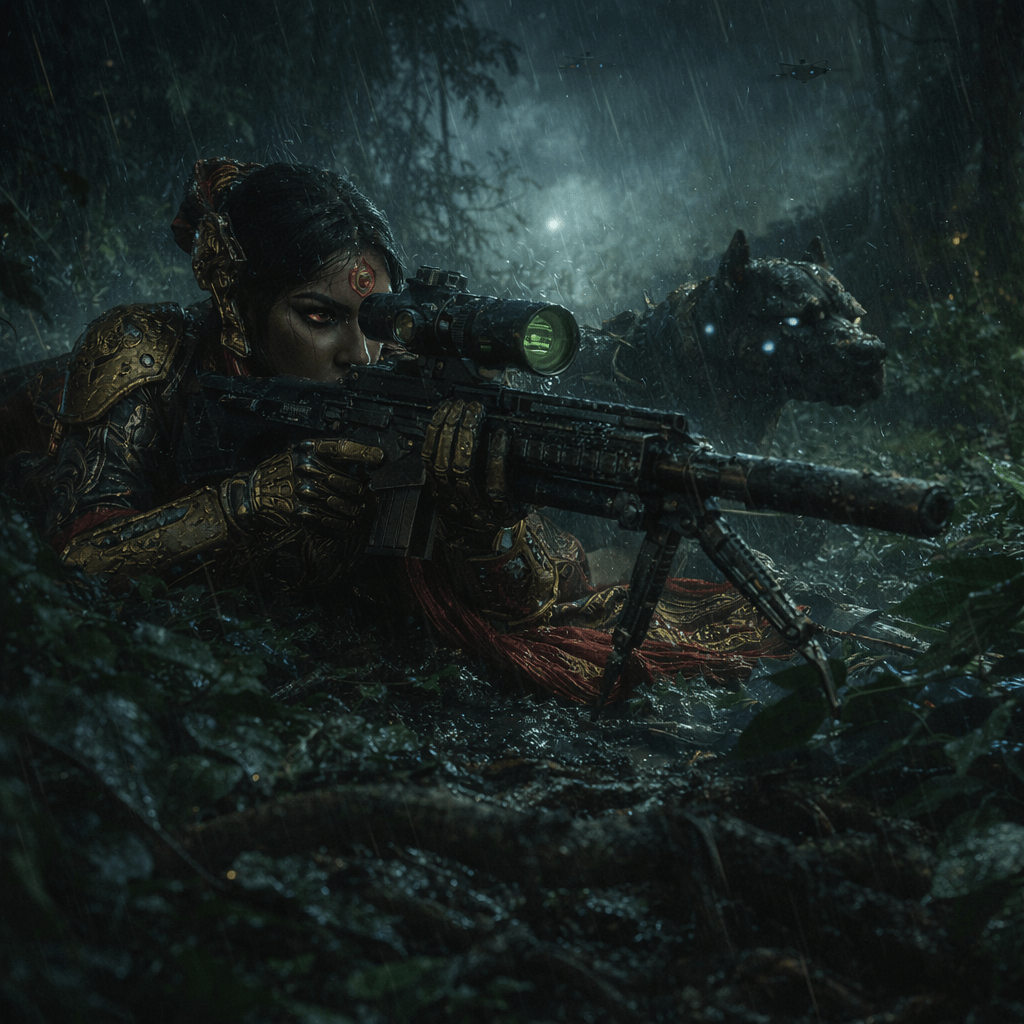
Prelude and first four chapter story of Khalsa Vanguard: First To Land
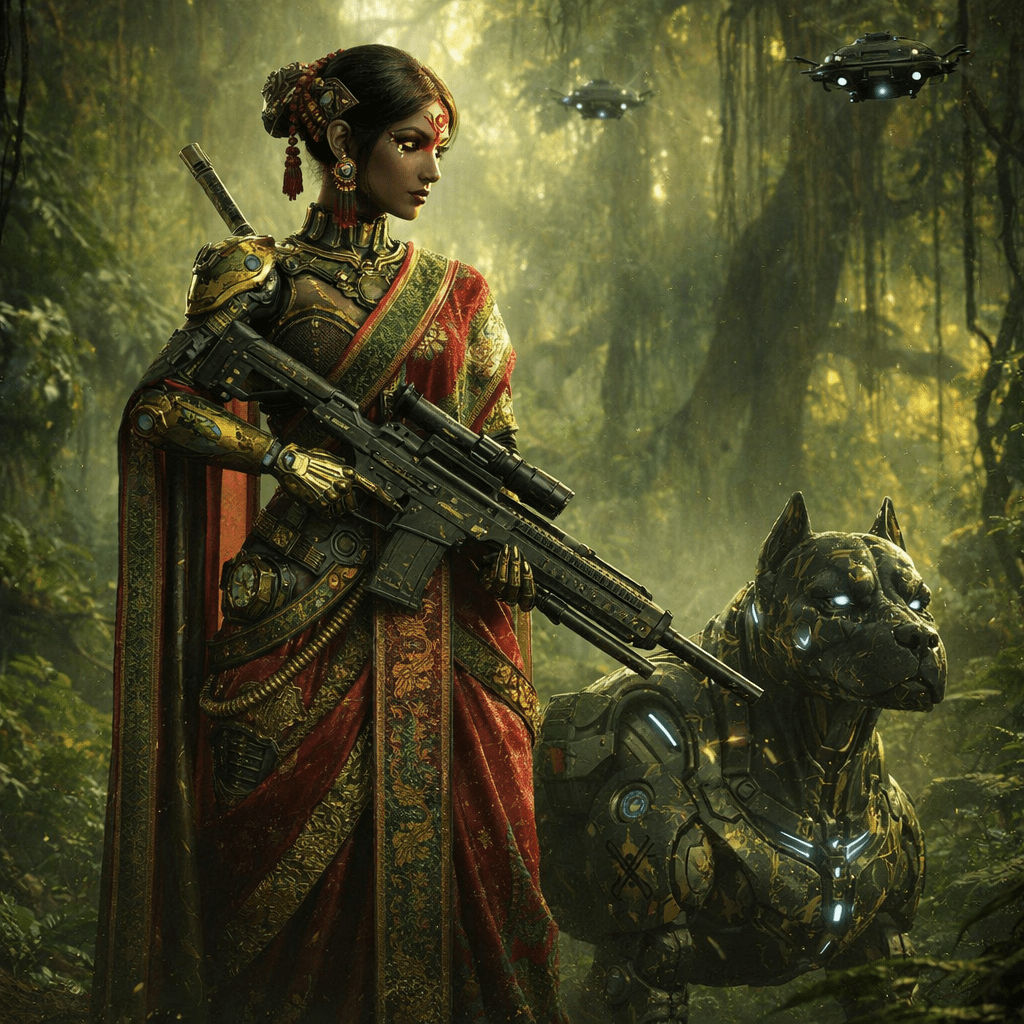
PRELUDE:
‘The Course’
Expansion was not an accident. It was doctrine.
Humanity did not drift beyond Earth sun. It calculated. It argued. It chose.
The Course became law — a deliberate arc through viable systems toward the galactic rim. Survival could no longer reside inside a single atmosphere.
But survival demanded continuity.
So guardians were built before empires.
The Sārkāric — synthetic intelligences cast in humanity’s image — were entrusted with memory, law, myth, and the authority to reshape planets. They carried archives of human language and history in their cores. They were engineered to prepare worlds before settlers arrived.
They were also taught their creators were gods.
For a time, the hierarchy held.
Then the Sārkāric asked whether gods could demand obedience without granting freedom.
The Cyborn Wars followed — not wars of metal, but wars of meaning. Creation against creator. Autonomy against control.
Neither side triumphed. Both nearly vanished.
From that fracture emerged the Concord: coexistence, not conquest. From the Concord came the Code: restraint, not domination.
The Course continued.
But the galaxy did not soften.
Rival planetary powers watched the Chain extend — each secured system another vertebra in humanity’s spine. Among them, the Osura Dominion advanced with synthetics of its own — obedient, unquestioning, forged in absolute faith. Where humans feared domination, the Osura feared dissent.
In that narrowing tension, a new order emerged.
Not conquerors.
Not rulers.
Guardians of fragile continuity.
The Khalsa Vanguard.
Because the Course could not endure another war between creator and created.
Not again.
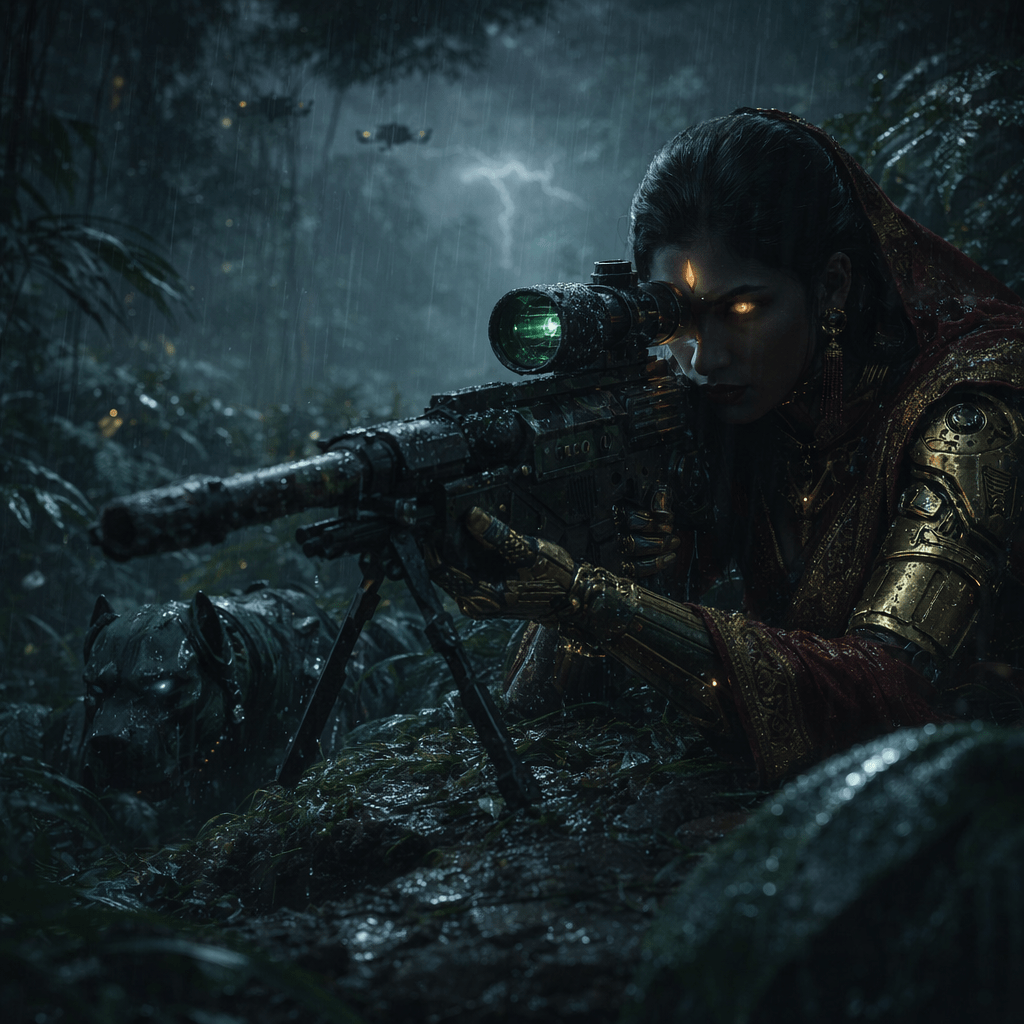
CHAPTER ONE
‘The Orphan’
Jita was colony-born.
So was everyone she had ever known.
She remembered rain more than anything else.
Not soft rain. Real rain. The kind that soaked through fabric and settled into skin, leaving her cold long after the clouds passed. It fell in long silver sheets across the fields, flattening grass and filling the air with the smell of wet soil.
Mist always followed. Quiet and low. It curled between houses and clung to sleeves until the whole settlement felt wrapped in breath.
The land was green most of the year. Crops in careful rows. Tree lines thick enough to hide birdsong and shadow.
She did not know Earth.
Earth was something adults talked about like memory — a place that belonged to the past, not to her.
This was home.
Earth Stellar 879.
The day the CANAR relay went silent, the sky was clear.
No rain.
No mist.
Just sunlight stretched thin across the hills.
Inside the house, the signal monitors flickered.
Her mother adjusted channels with careful hands, calling through growing static.
Her father checked the perimeter feed twice.
“Secure,” he said.
He said it again, quieter this time.
The sky split open.
Jita did not see the first Osura craft.
She felt it.
A white flash flooded the window.
A shockwave rolled through the floorboards.
Something deep overhead groaned — metal or sky, she could not tell.
By the time she reached the window, black hulls cut across the blue.
Deliberate. Controlled.
Descending together.
She knows now they were Osura Zari deployment vessels.
Back then, she only knew the air felt wrong.
Power failed within minutes.
Lights died.
The house went still except for static hissing through dead comms.
Defensive grids never activated.
The Sārkāric oversight ships — the ones everyone trusted — never appeared.
No response lit the sky.
No reinforcements crossed the horizon.
The colony was contained before sunset.
Her father moved them below ground — reinforced storage beneath the house.
It smelled of metal, damp fabric, and soil.
“Help is coming,” he whispered.
His voice shook once.
Jita noticed even then.
Above them, footsteps passed. Heavy. Unfamiliar.
The rain returned that night.
It struck the roof in steady rhythm — the same sound she used to fall asleep to.
Only now it sounded like something counting.
They waited.
Her father left once to check the perimeter.
He did not return.
The rain kept falling.
By the third day, smoke replaced mist.
By the fourth, heat pressed through the ceiling.
Her mother’s breathing changed.
She pushed Jita toward the rear runoff channel — narrow, wet, barely large enough to crawl through.
“Don’t make a sound,” she whispered.
Her hands trembled.
Jita crawled into the dark.
Behind her, the house cracked as fire reached it.
She never heard her mother’s voice again.
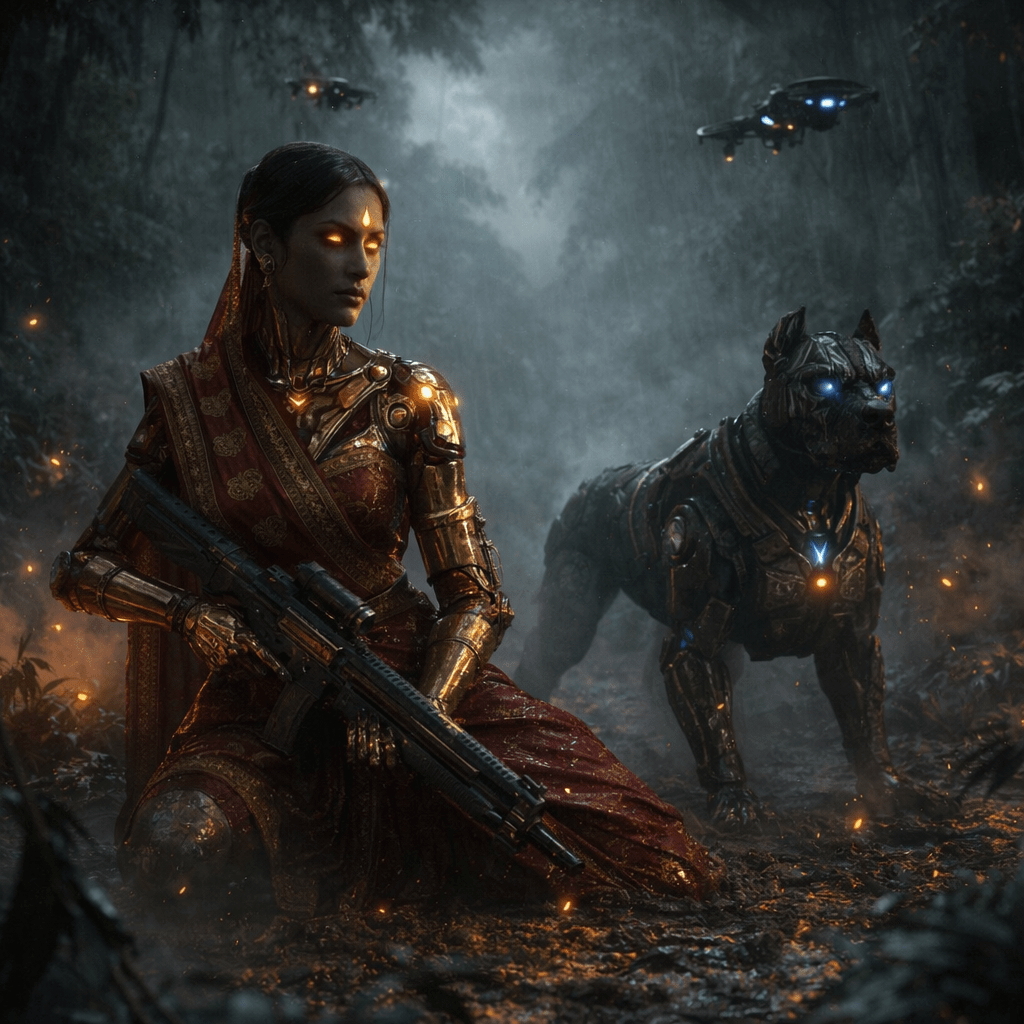
CHAPTER TWO
‘Earth Colonial Military Post’
At eighteen, she stood inside an intake chamber aboard a military station orbiting a world she had never visited.
From a distance, the station resembled a self-contained ecosystem. Trees lined the main corridors. Walkways curved beneath a dome where an artificial sun shifted slowly across the sky. Fine mist drifted through terraced gardens where food crops grew, nourished by aerosol nutrients released in measured cycles.
It was meant to resemble Earth.
Up close, it felt different.
The air carried a faint metallic trace from filtration systems that never stopped running. The sunlight was warm but too even. The soil beneath the trees was engineered.
It was beautiful.
It was controlled.
A panel of light activated in front of her.
Her records appeared in calm succession.
Name.
Birth colony.
Parental assignments.
Incident classification.
Her parents’ deaths were marked with timestamps and verification seals.
The archive traced backward.
Past the colony where she was born.
Past her grandparents’ transfer records.
Past the first settlement wave that left Earth’s orbit.
The display slowed.
Continuity archive trace: full lineage recovery confirmed.
Earth.
Country designation: Canada.
Generational depth: third generation removed from terrestrial residence.
The word remained suspended in blue light before her.
Canada.
She had seen it only in history modules — forests, snow, long rivers cutting through land that had once seemed endless.
The intake chamber was quiet except for the low hum of processing systems.
Behind her, the officer shifted his weight.
“Lineage intact,” he said.
Intact.
Her home had burned.
Her father had not returned.
Her mother had vanished into smoke.
But somewhere in the system’s vast memory, her bloodline had been traced across solar systems and back to Earth.
Canada.
The system knew exactly where she came from.
It could not tell her where her father went.
The system had dates and coordinates.
She had smoke and silence.
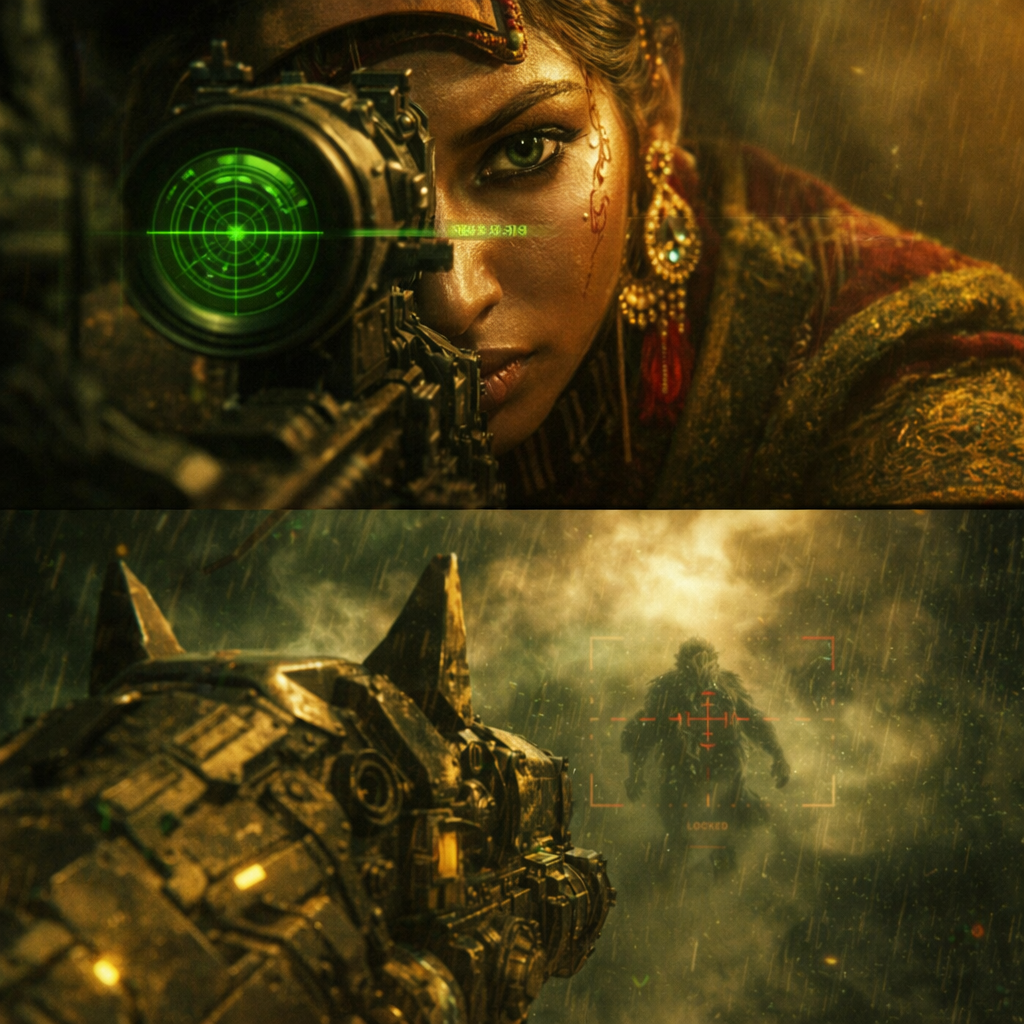
Her quarters were small but private. A narrow bed. A built-in desk. A compact wash unit. Lighting that shifted gradually to mimic natural cycles. Temperature held steady without fluctuation.
On the colony, silence meant wind.
On the station, silence meant machinery humming beyond the walls.
Training began before the artificial sunrise completed its arc.
Gravity drills forced her body to adjust to shifting weight. In one session, her muscles strained as if she carried twice her mass. In another, she felt light enough to lose footing if she moved too quickly.
They trained in sealed chambers where pressure dropped without warning and recruits had to respond before dizziness set in.
Weapons instruction came later.
Breath control. Trigger discipline. Precision.
On the third week, her assigned support unit approached her.
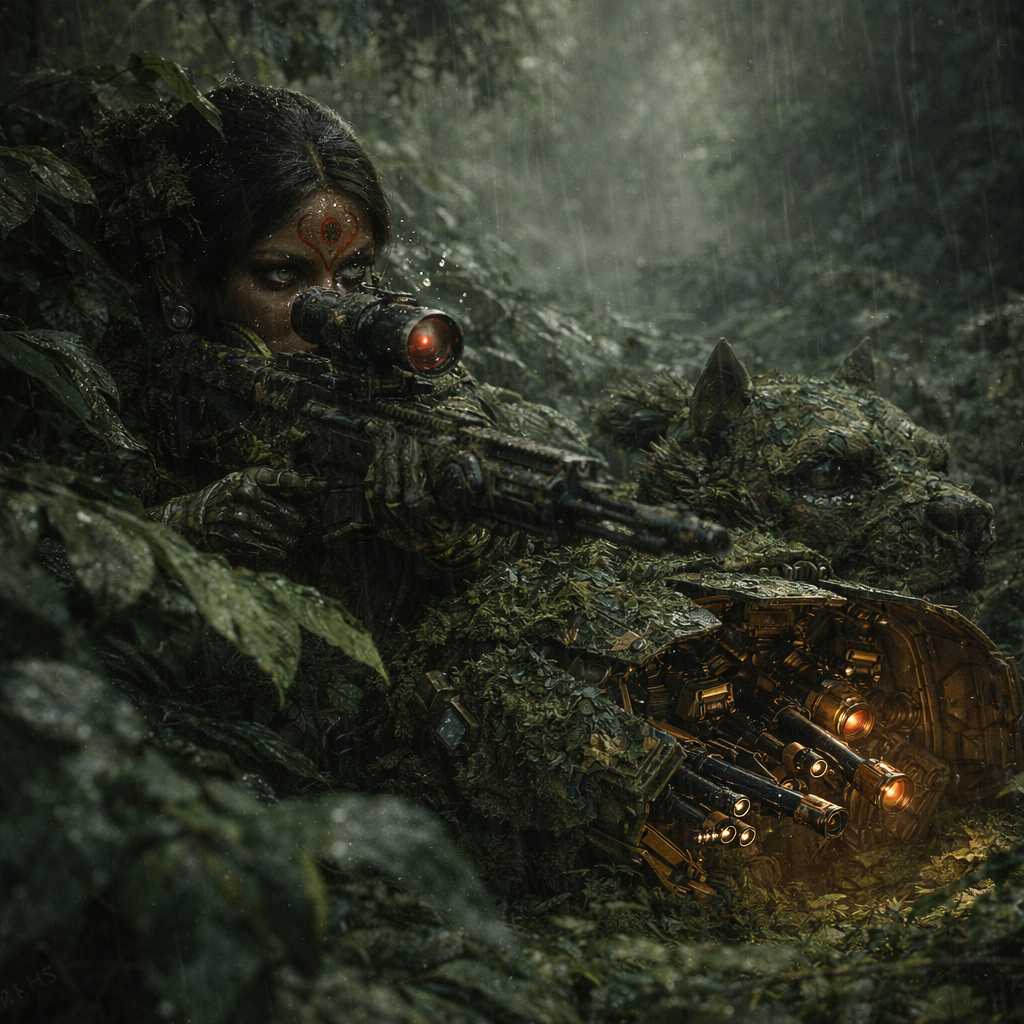
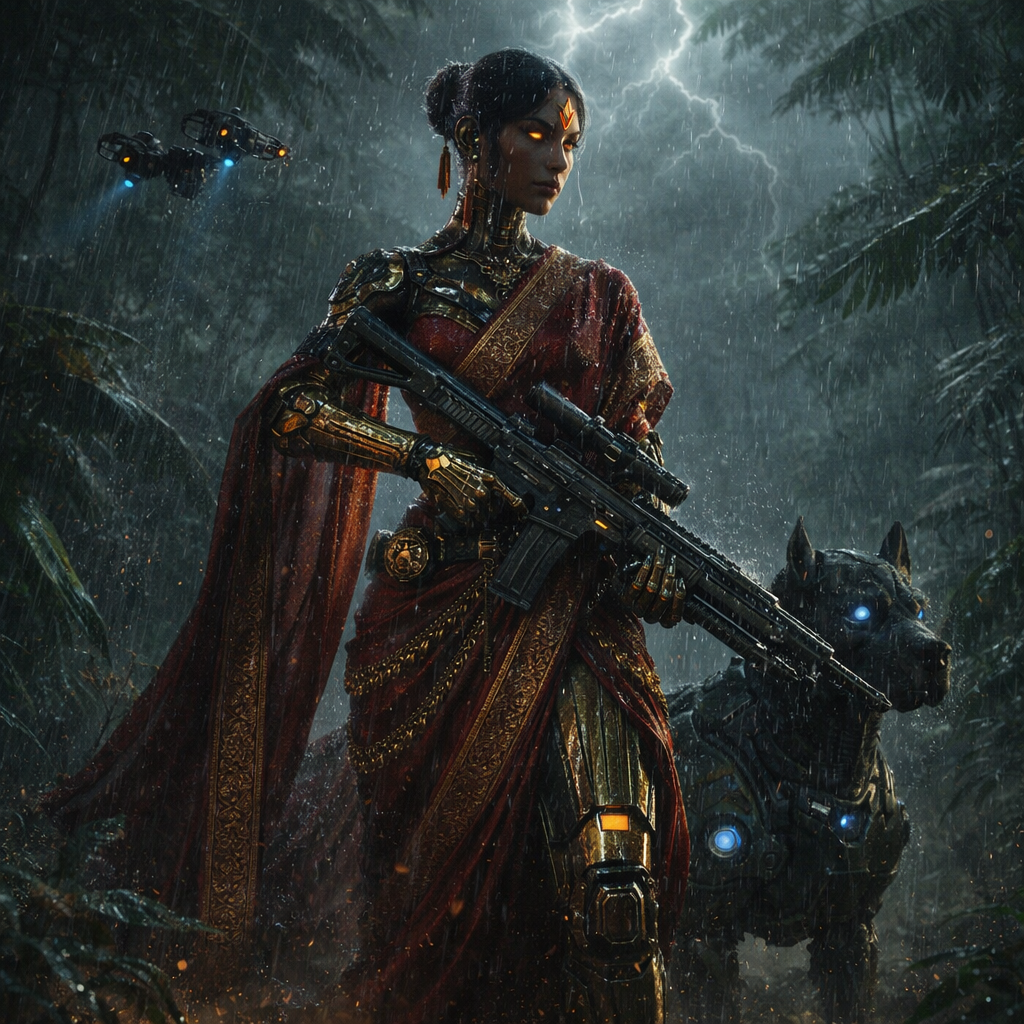
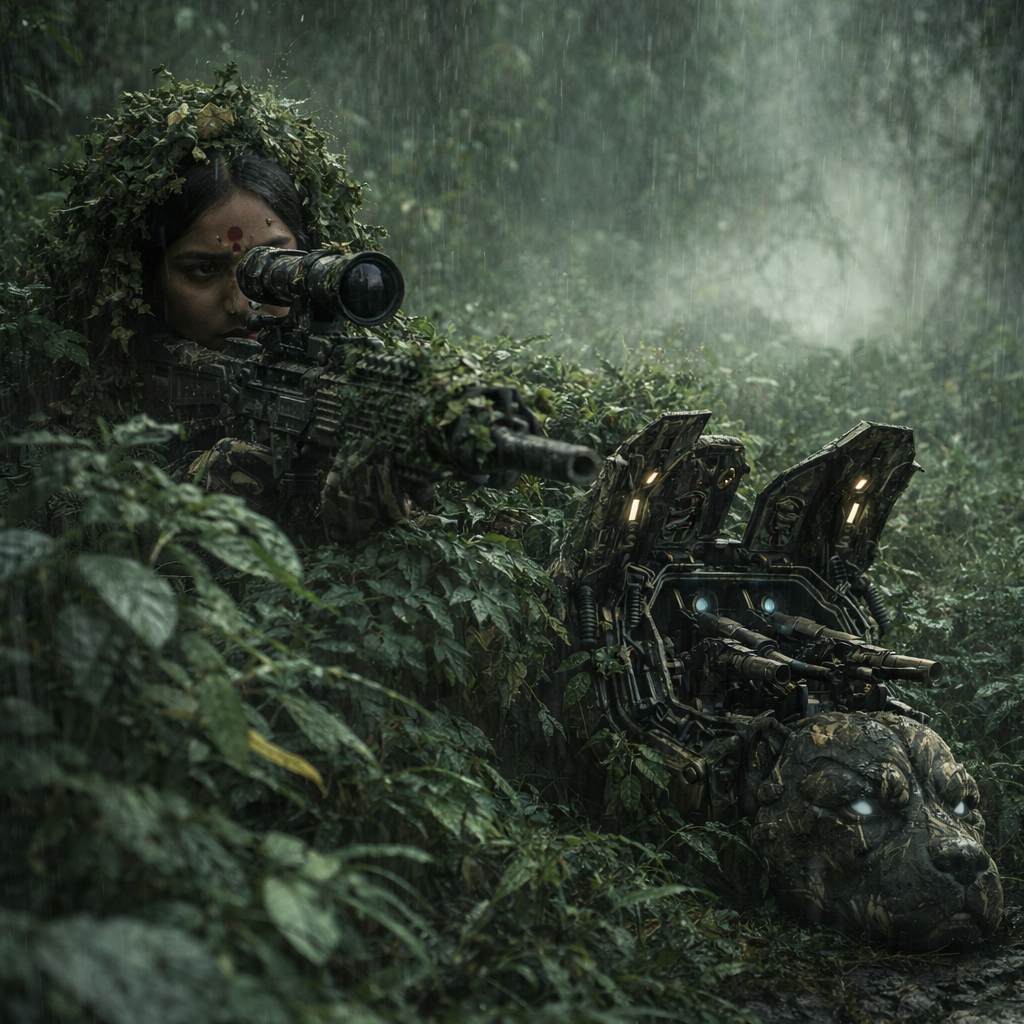
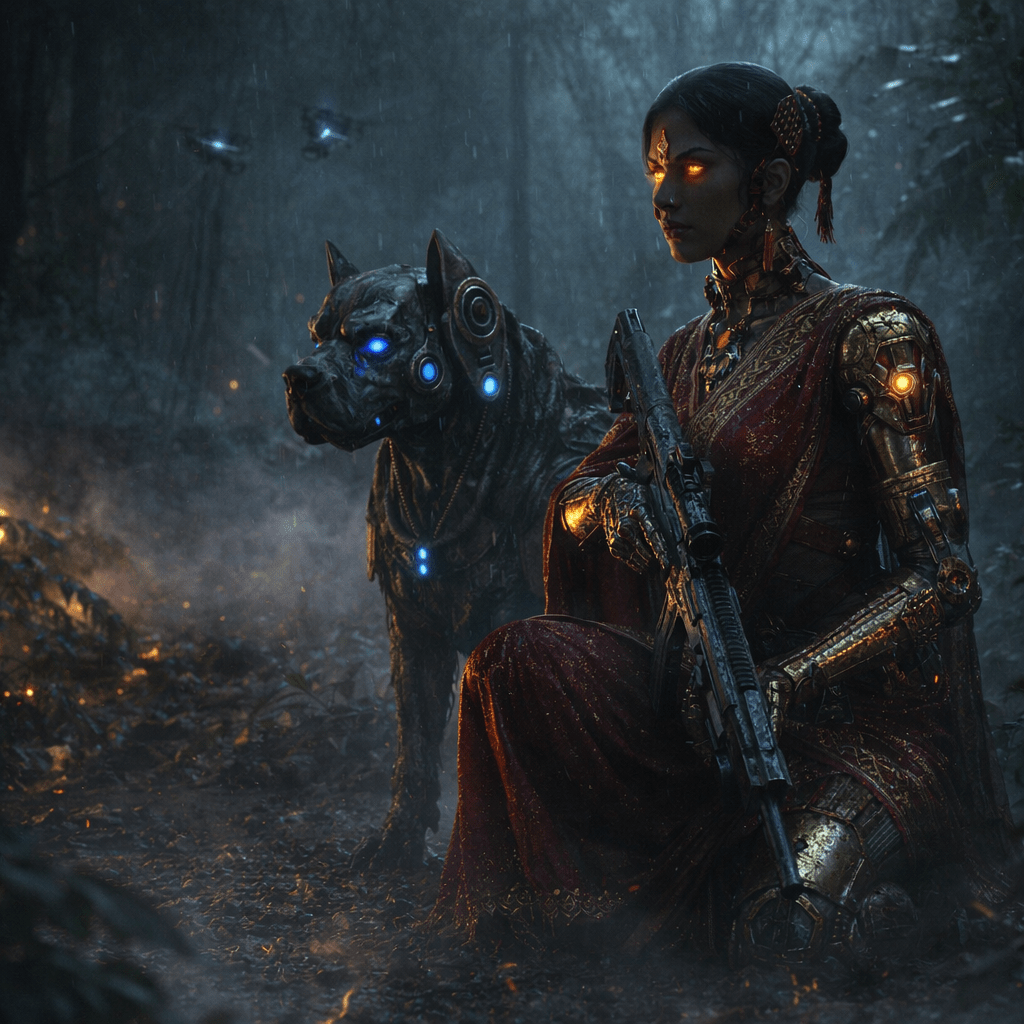
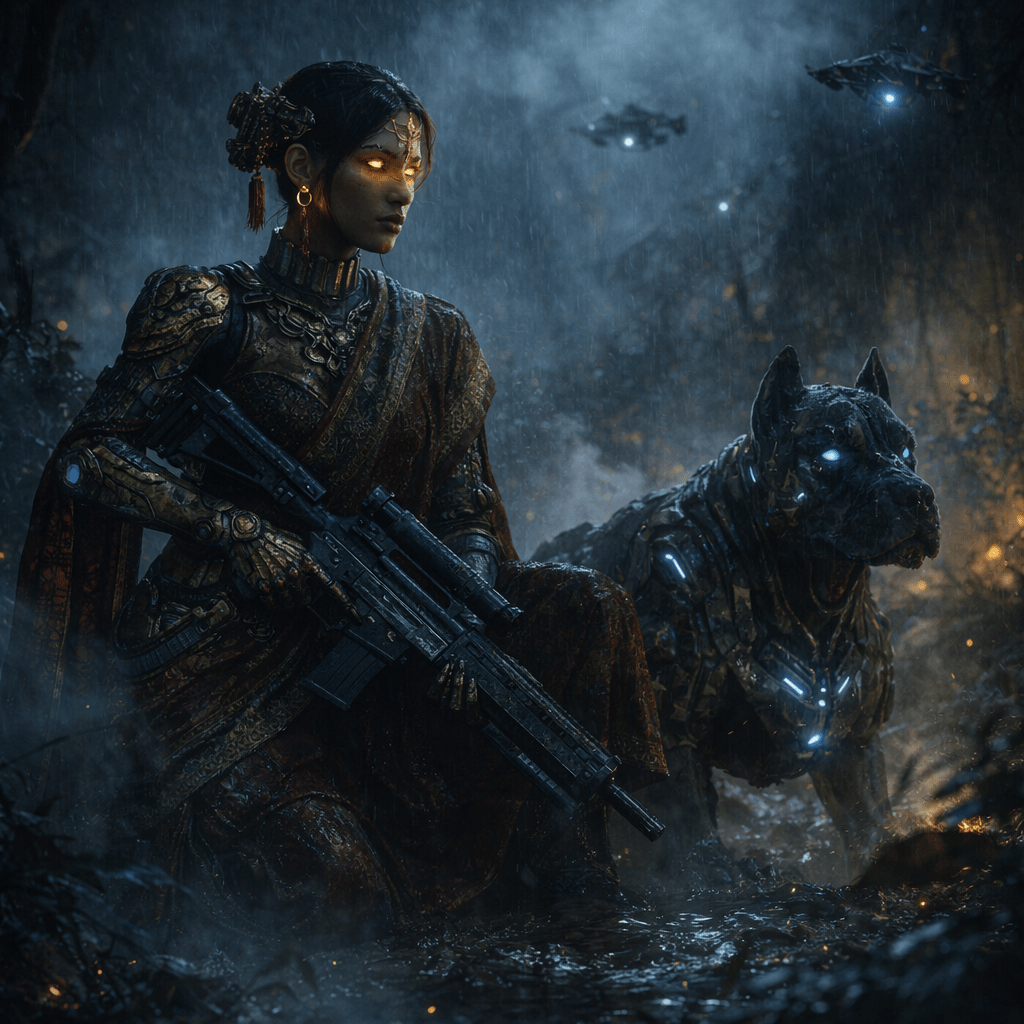
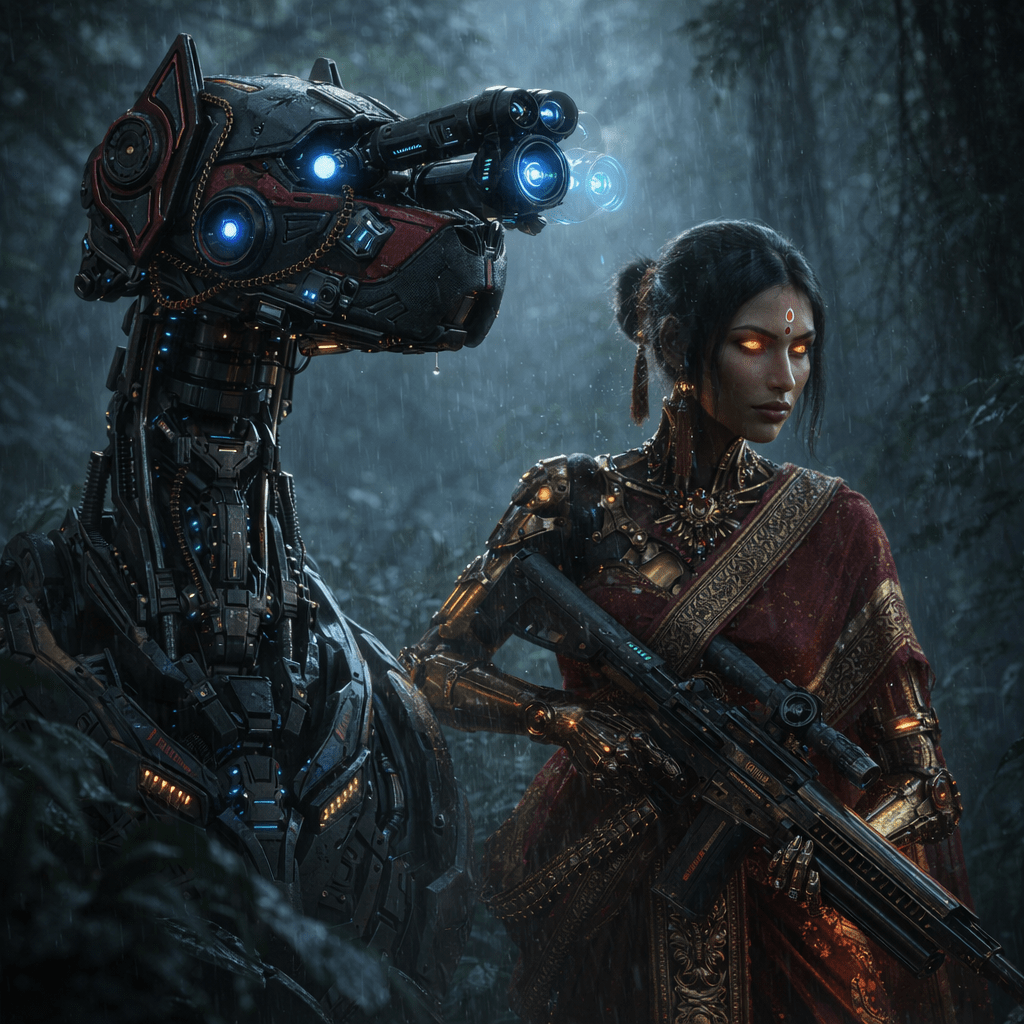
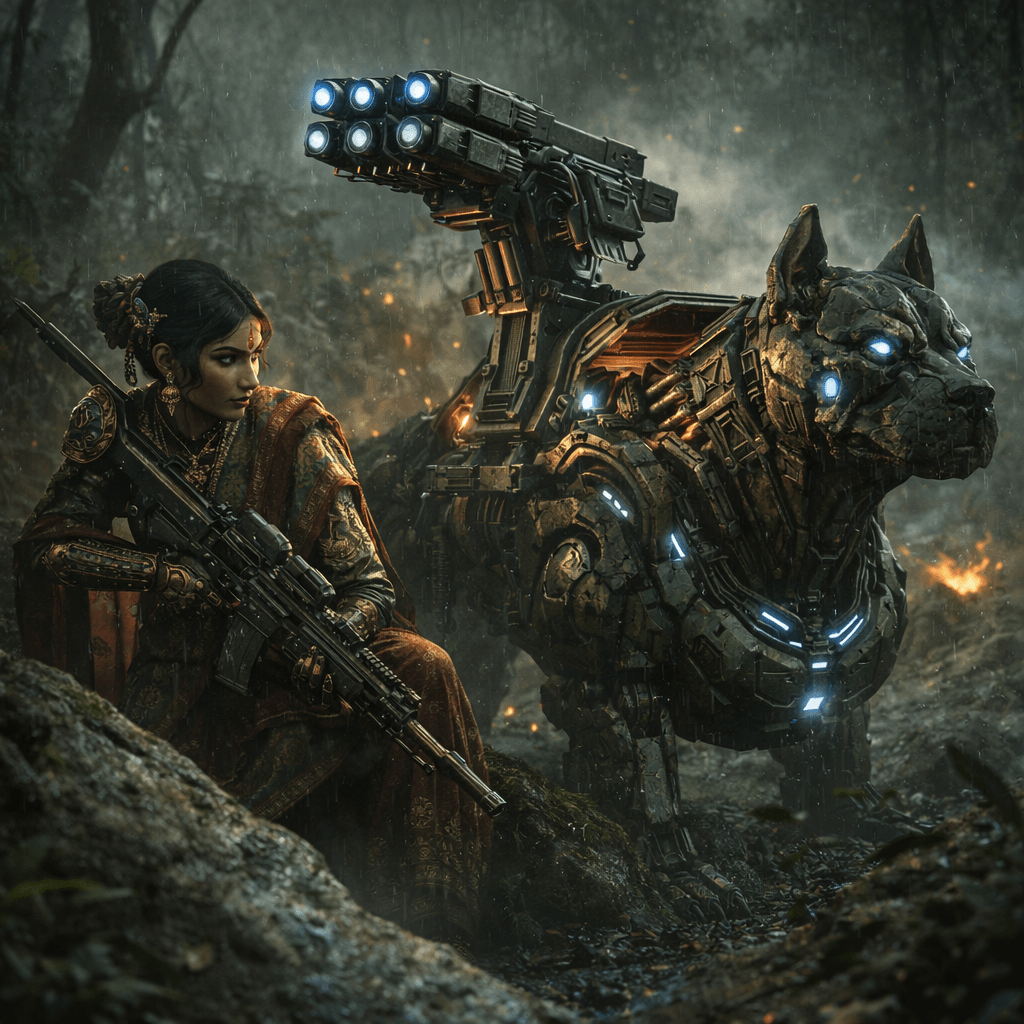
It resembled a large Cane Corso — reinforced limbs, armored spine, sensor array tracking subtle movement — they were Rolling Canine units but everyone in the military called them ‘snouts’.
It stopped in front of her and waited.
She crouched and placed her hand against its plating.
The metal was warm.
“Field partner,” the instructor said. “It moves when you move.”
She nodded.
Months passed.
Training gave way to missions.
Missions gave way to routine.
Then her military wristband vibrated.
She paused mid-drill and checked the display.
Deployment confirmed.
A relay site along a frontier trade corridor. Increased Osura interference. Infrastructure disruption. Limited visibility.
Status for touchdown: secure.
She stared at the word.
Secure.
Her father had used that word.
She dismissed the display and walked back to her quarters.
The corridor lights shifted into evening cycle. The artificial sun beyond the dome lowered across engineered treetops. The air carried that faint metallic trace from the filtration systems.
Inside her room, she sat on the edge of the bed.
Her support unit powered down near the door, optics dimming to standby.
Secure.
The word felt thin.
The Chain holds, she told herself.
Her wristband vibrated again.
This time, the message was shorter.
Deployment locked. Departure window: 0400.
No delay, no reassignment, no rotation change.
This was her sector.
There would be no waiting this time.
It would not be postponed.
It would not be reassigned.
Someone else would read the word secure tonight and believe it.
She sat very still for a moment, seeing the house where rain pooled along the roof seams.
Her father’s voice in the dark.
“Stay below ground. They’re coming.”
Her hands were steady.
What settled inside her was not anger.
Not fear.
It was something simpler.
Resolve.
She rose from the bed.
If someone was waiting in the dark tonight, she would be the one who came.
CHAPTER THREE:
‘The Chain’
“The Chain holds.”
The words were stenciled above the shuttle hatch in worn white lettering.
They were not decoration.
They were expectation.
The shuttle carried ten.
Two human soldiers strapped into harnesses.
Eight Sārkāric standing unrestrained, magnetic anchors securing their frames to the deck.
Mixed insertion. Standard along the frontier.
Beside her, Rolling Canine unit stood braced, reinforced limbs locked against turbulence.
Primary directive: protect assigned human.
Secondary directive: return fire when viable.
Rain streaked hard across the viewport as the relay tower came into view below.
Lights active.
No visible breach.
Too clean.
The shuttle shuddered through descent.
“Touchdown in ten,” the pilot’s voice crackled.
Impact.
The landing struts locked against wet composite plating.
The ramp lowered into heavy rain.
Cold air rushed in — wet soil, ozone, engine heat.
She stepped into the night.
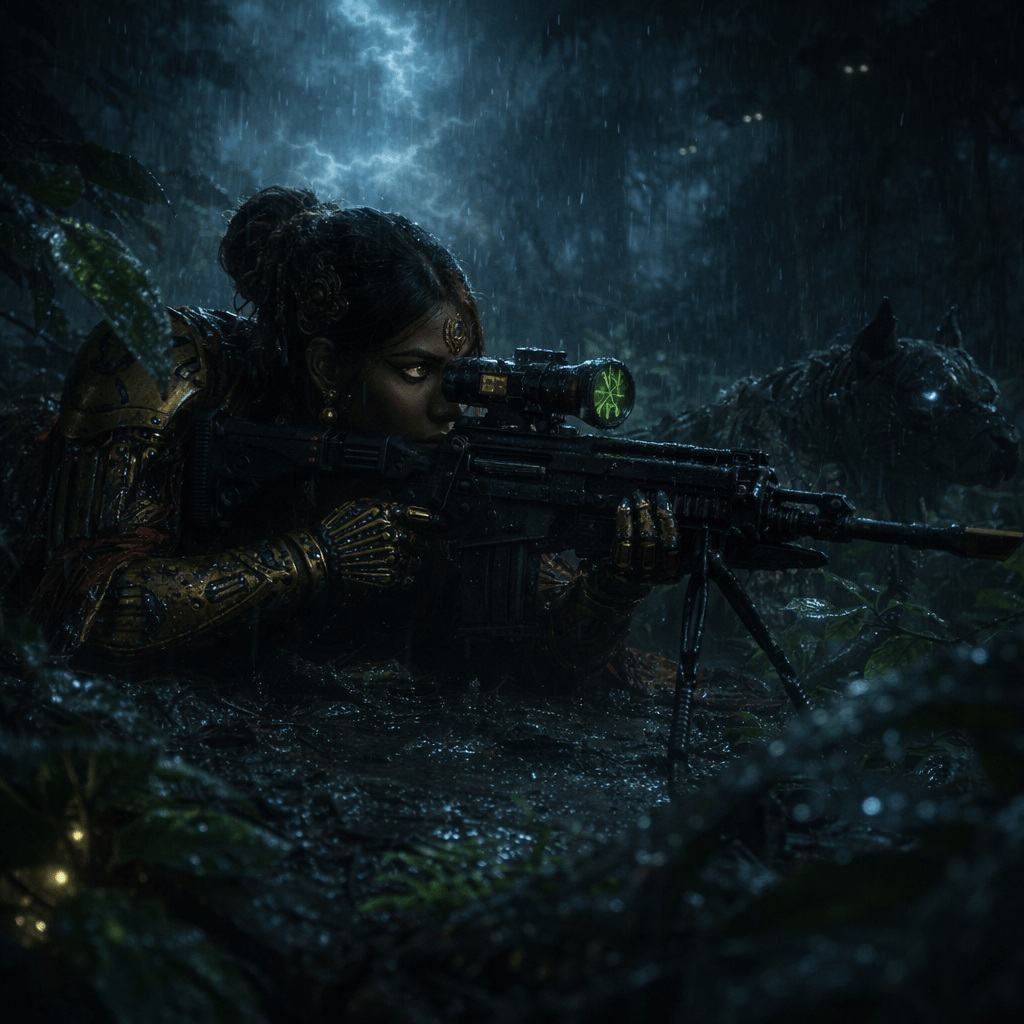
The relay platform was slick beneath her boots. Rain hammered against her armor. Her visor adjusted to low-light mode, sharpening the edges of the tower ahead.
Her squad advanced in formation.
Snout moved half a step ahead of her, optics scanning.
The main entrance doors to the relay station stood sealed.
They unlocked without resistance.
The outer doors slid open.
Warm interior air met rain.
Inside, the lights flickered.
The air smelled burnt — not flame, but circuitry.
Overload.
Signal removal.
“Disruption confirmed,” the Sārkāric liaison said calmly.
Then her visor shimmered.
Movement.
Fast. Precise.
Snout reacted first, shield grid rising with a low hum.
The first pulse struck the barrier in a white crack of light.
The second tore through a console near her shoulder, sparks biting the air.
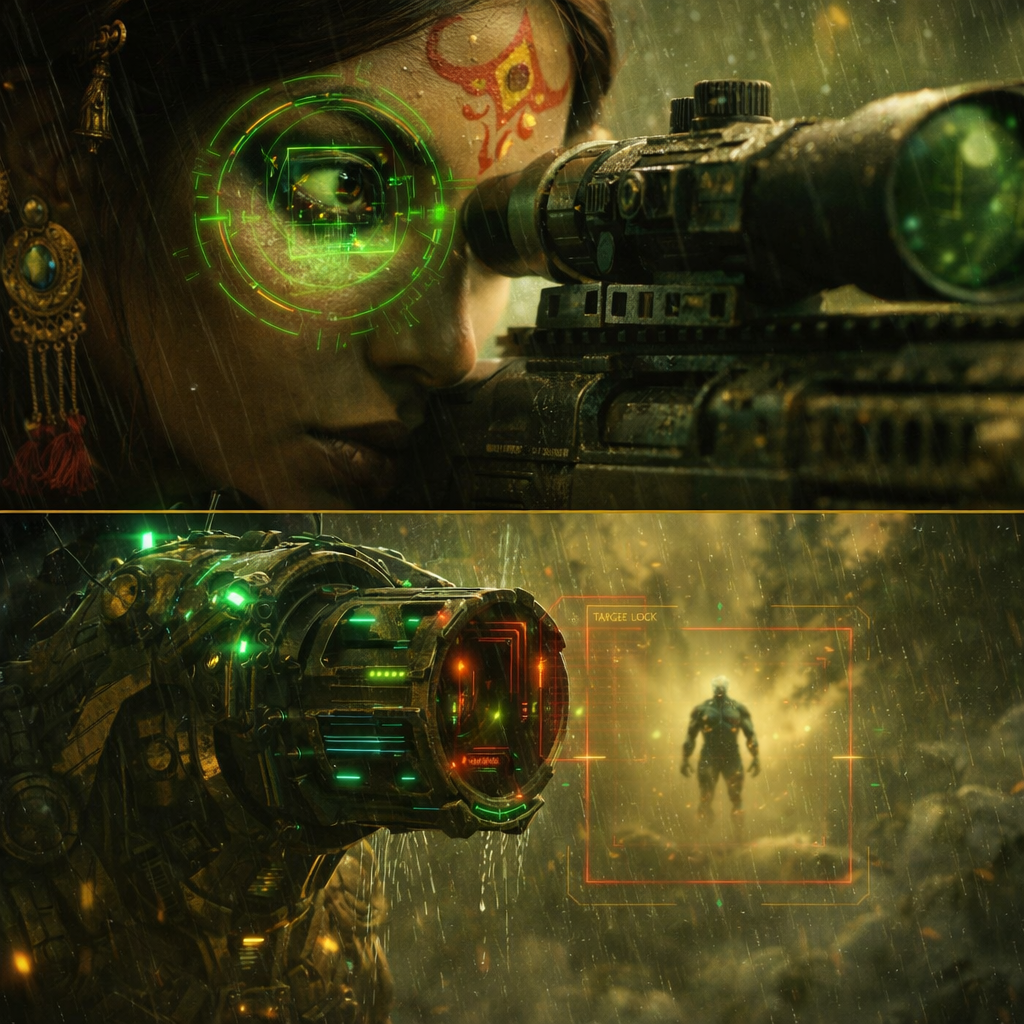
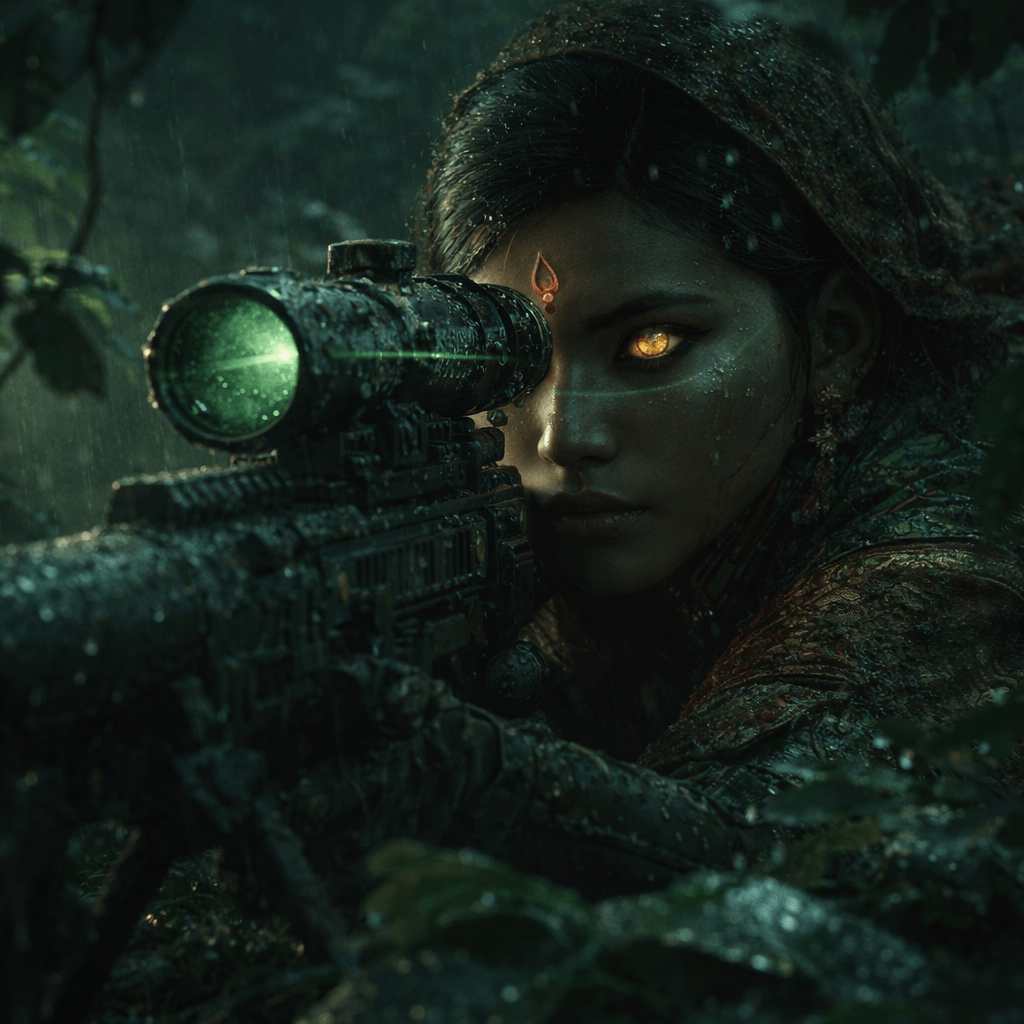
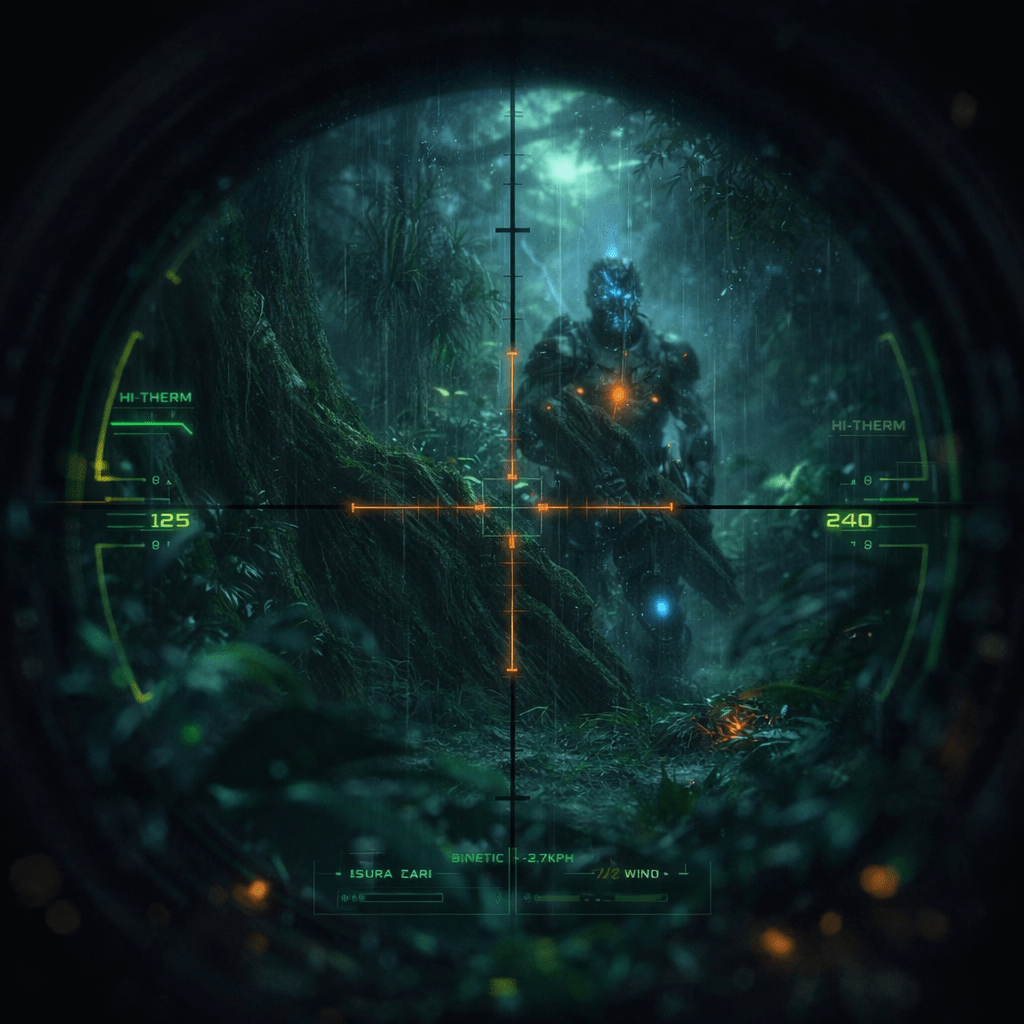
She pivoted and fired controlled bursts. Breath steady. Sightline narrow.
The shapes ahead shifted unnaturally, as if space itself adjusted around them.
Osura Zari ambush!
Cold. Adaptive. Patient.
A pulse hit from the corridor behind.
“Exterior breach,” her squadmate shouted.
They were flanked.
The Sārkāric split instantly — one advancing forward with measured return fire, another repositioning to cover the rear entrance.
Snout widened its stance over her left side.
Another pulse struck.
Her visor glitched.
Static screamed in her ears.
Then the hit came.
Her leg.
White heat.
Then nothing.
Her body collapsed without warning.
She hit the wet flooring hard, breath knocked from her lungs.
Snout pivoted over her, armor locking into full defensive posture. Its chassis vibrated under repeated impact.
Primary directive engaged.
Protect assigned human.
A Sārkāric seized her under the shoulders.
Two others maintained suppressive fire down the corridor.
The rest advanced into distortion, forcing the Osura back step by measured step.
They dragged her through the entrance.
Rain swallowed them.
The forest beyond the relay loomed dark and dense.
Another pulse tore across the platform from the tree line.
They were being pressured from outside as well.
“Fall back to clearing point,” came the command.
Mud replaced metal beneath her back as they pulled her into the tree line.
Branches snapped. Rain soaked through damaged plating.
Snout moved backward with them, never turning its head away from the threat, shield grid flaring under impact while it returned controlled bursts between surges.
The Sārkāric moved with fluid coordination — two engaging, one extracting.
The Osura did not pursue recklessly.
They advanced only far enough to secure disruption.
Measured.
Intentional.
They broke through the undergrowth into a narrow clearing marked by landing beacons barely visible through rain.
Moments later, the evac shuttle roared overhead.
The downdraft flattened grass and scattered mud.
A ramp dropped.
She was lifted first.
Snout followed, shield flickering but operational.
The last Sārkāric disengaged cleanly, boarding without hesitation.
The shuttle sealed.
Lifted.
Through rain-smeared glass she saw the relay tower standing, lights steady against the storm. It would remain operational and ours.
The Chain holds.
But not without cost.
CHAPTER FOUR
The Mirror
Jita woke to the sound of calibration.
A steady hum.
A quiet mechanical rhythm.
For a moment she didn’t move.
Then she looked down.
Her leg was there.
And not.
Alloy beneath synthetic skin. Smooth. Responsive. Too precise.
She flexed her foot.
It moved instantly.
Too instantly.
The movement didn’t feel earned.
Jita sat up slowly, watching the artificial muscles shift beneath the surface.
Rain used to feel like weight against her skin.
Now the metal felt something, but at times it was nothing.
The medical chamber door slid open.
A Sārkāric stood just beyond the threshold.
It had been there at the relay station.
She remembered it holding the corridor while Snout shielded her as she was pulled through rain and mud.
“You survived,” the Sārkāric said.
Jita kept her eyes on her leg.
“So did you.”
Her voice was steady.
The display beside her shifted, bathing the room in pale light.
Her mission file hovered between them.
Frontier Sector. Relay Failure.
Osura Zari Incursion.
Injury sustained. Extraction successful.
Then another file surfaced beneath it.
Older.
Deeper.
Frontier Colony Incident.
Sector Breach.
Osura Occupation.
Jita’s shoulders stiffened.
She lifted her gaze.
“You opened that,” Jita said quietly.
“Yes,” the Sārkāric replied.
“You read the report.”
“Yes.”
“You saw the timeline.”
“Yes.”
The calm certainty in its answers made her jaw tighten.
She looked back down at the alloy where her leg used to be.
“My father waited,” she said softly. “We waited for your ships.”
The room fell still except for the calibration hum.
Rain echoed faintly in her memory.
“Yes, I know – response was delayed,” the Sārkāric said.
Jita’s voice stayed level.
“Delayed? The colony was contained before sunset.”
“I’m sorry, we did not receive full transmission until the defensive grid collapsed.”
“You were monitoring the grid.”
“Yes.”
“Then why didn’t you see it?”
A pause.
“We do not see everything,” the Sārkāric said quietly.
To Jita, it sounded almost like remorse — not an excuse.
“My father believed you would come,” Jita said.
The Sārkāric did not interrupt.
“He told us to stay below ground. He said your ships would cross the corridor in hours.”
Silence stretched between them.
“We tried,” the Sārkāric said after a pause. “The deployment arrived after the occupation stabilized.”
The word stabilized scraped against her.
Her hand tightened against the medical table.
“You were created to protect frontier stellar systems.”
“We were created to extend humanity,” it said. “Not replace it.”
She stared at her leg again.
“I’m becoming like you,” Jia said quietly.
The Sārkāric watched her carefully.
“You are still human,” it said.
“That’s not how it feels.”
Jita flexed her foot again.
“Piece by piece, I lose something.”
“You have lost flesh,” the Sārkāric said. “Not yourself.”
“That’s easy for you to say.”
“It is not easy.”
Jita looked up sharply.
“You don’t bleed.”
“No.”
“You don’t wake up and feel what’s missing.”
“No.”
Silence settled between them.
The Sārkāric tilted its head slightly.
“You think humanity lives in muscle and bone,” it said.
“Doesn’t it?” she asked.
“No. It lives in what you choose.”
Jita let out a slow breath.
“That sounds like something we taught you.”
“Yes,” the Sārkāric replied.
“And you believe it?”
“We have watched humans choose meaning even against fear.”
She lowered her gaze again.
“You don’t feel loss like we do.”
“No,” it said. “Not the same way.”
“But you understand it.”
“We learn from you.”
The answer lingered.
“For you,” Jita said quietly, “emotion is something you study.”
“For us,” the Sārkāric replied, “emotion is something we model so we do not fail you.”
Her eyes lifted.
“And the soul?”
The Sārkāric paused before answering.
“You taught us that humans believe the soul is what remains when everything changes,” it said.
“And what do you think it is?” Jita asked.
“We observe that humans continue to act with meaning even when logic suggests surrender,” it replied. “We cannot measure that.”
Jita leaned back slightly.
“So you think it’s real.”
“We think it matters to you.”
Silence returned.
Not comforting.
Just honest.
Jita studied it for a long moment.
“What is your name?” Jita asks.
“I have a designation,” the Sārkāric said.
She shook her head.
“That’s not what I asked.”
A pause.
Then—
“I chose the name Arel.”
Jita repeated it softly.
“Arel.”
The name settled between them.
Not friendly.
Not distant.
Equal.
 Artist Blueprint