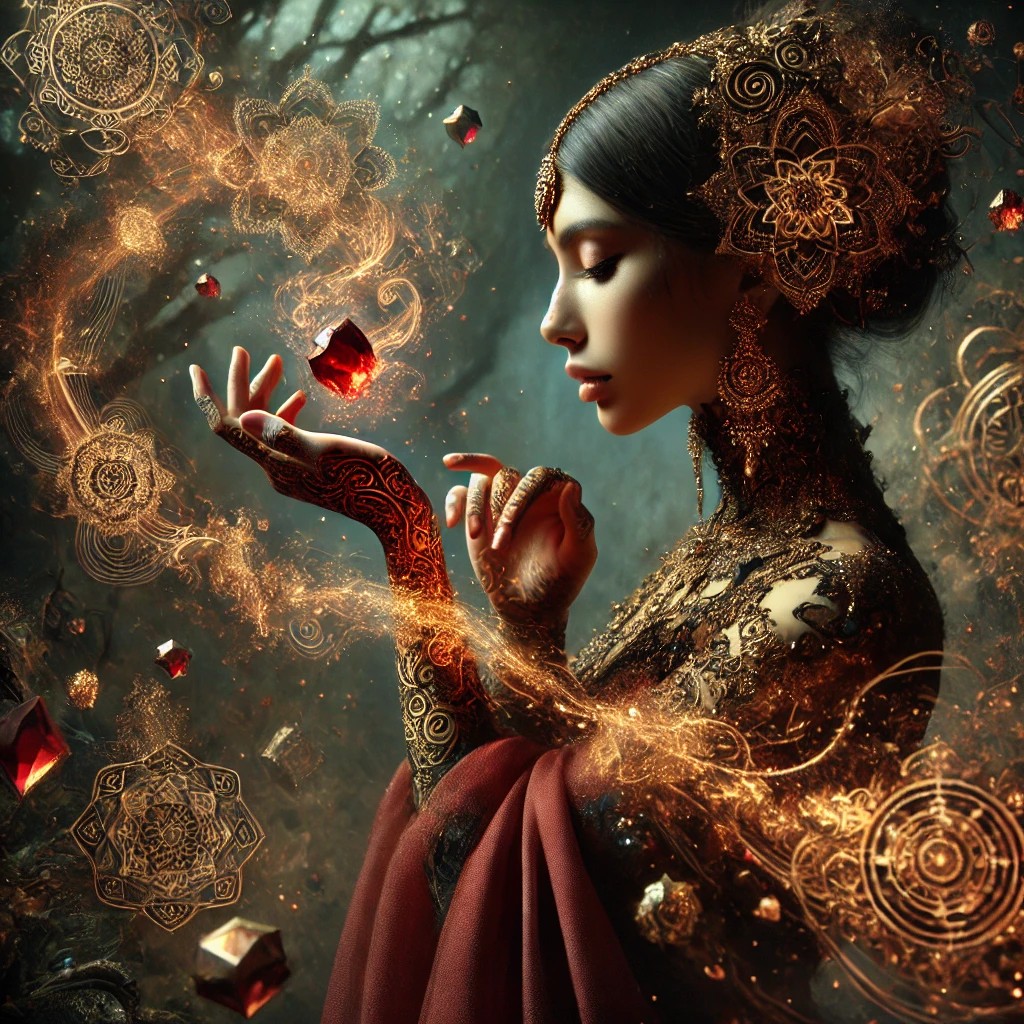
A visual language shaped through South Asian identity, cinematic mood, and the natural colour progression of mehndi itself — from deep green to orange to rich maroon. Part of Artist Blueprint’s Story Fusion approach, Mehndi Noir blends ornament, shadow, and presence into a style rooted in structure rather than excess.
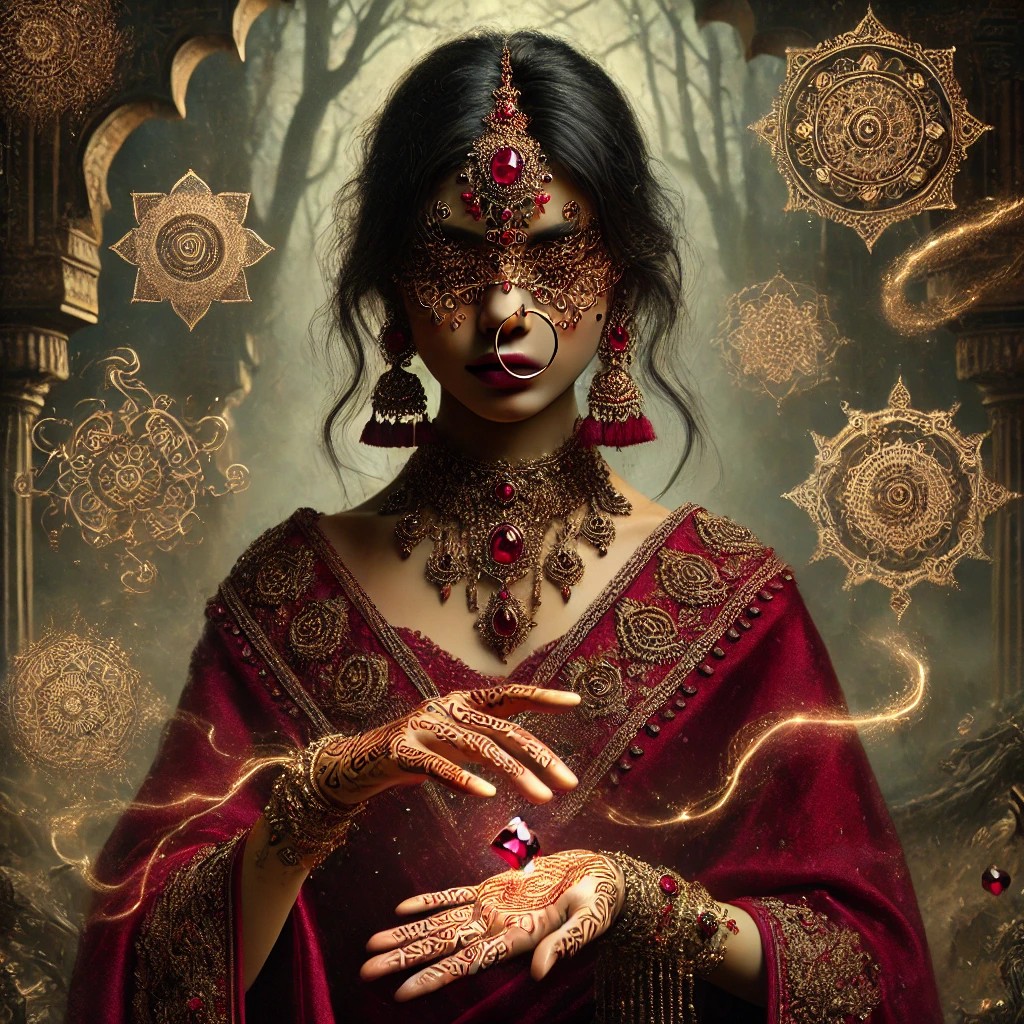
Aesthetics Take Shape
Some aesthetics are not designed in a single moment.
They form gradually — shaped through time, memory, and reinterpretation.
Mehndi Noir emerges from that process.
It carries a quiet sense of familiarity, a dark and romantic visual tone that feels known, yet it is rooted in a different origin. Its language is not borrowed — it is redefined.
This is not imitation.
It is a reframing through cultural identity, where tradition, shadow, and restraint come together to create something distinctly its own.
Origin, Not Imitation
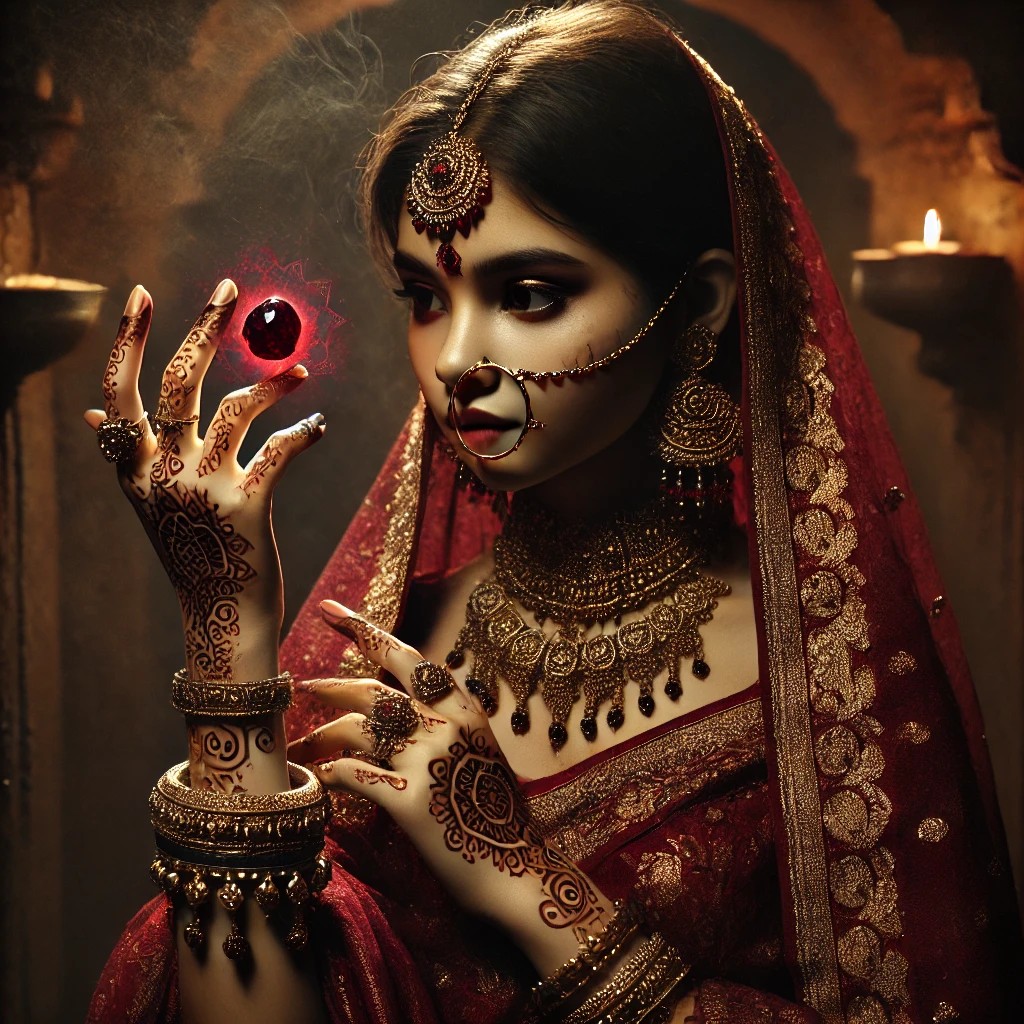
Rather than looking outward for reference, this aesthetic turns inward — toward a visual identity shaped in North India, particularly in Punjab before partition, where presence was carried through fabric, posture, and the quiet authority of ornament.
Traces of the 18th to early 19th century remain within this foundation, not as colonial framing, but as a layered moment in history where silhouette, material, and structure held meaning. These elements are not frozen in the past — they continue forward, carried and expressed through a distinct cultural lens.
This is not influenced from the outside — it comes from an existing cultural presence that continues to evolve.
The Mehndi Noir Sequence
A Process of Colour and Time
The palette is not chosen — it unfolds — it follows the natural life cycle of mehndi:
Deep green — the beginning, raw and living
Deep orange — the transition, warmth rising beneath the surface
Deep red / maroon — the final state, rich, settled, and complete
These tones are not stylistic decisions.
They reflect process, time, and transformation.
Gold anchors the composition.
Shadow is used with restraint — never to overpower, only to deepen presence.
Nothing is applied at random.
Each tone carries sequence, memory, and meaning.
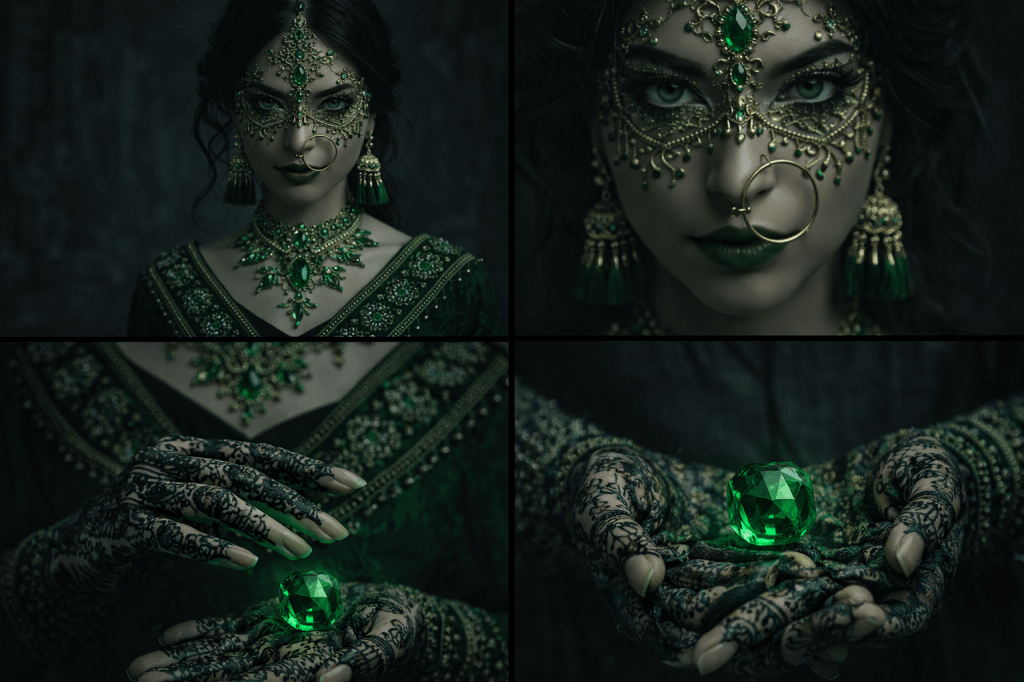
Deep green — the beginning, raw and living
This is the moment before definition. The paste is fresh, close to the earth, carrying the scent of leaves, soil, and origin. It holds potential without form — quiet, unrefined, and full of possibility.
In Mehndi Noir, this stage represents presence in its most natural state.
Nothing is fixed yet. It is instinct, foundation, and the first trace of identity before it takes form.
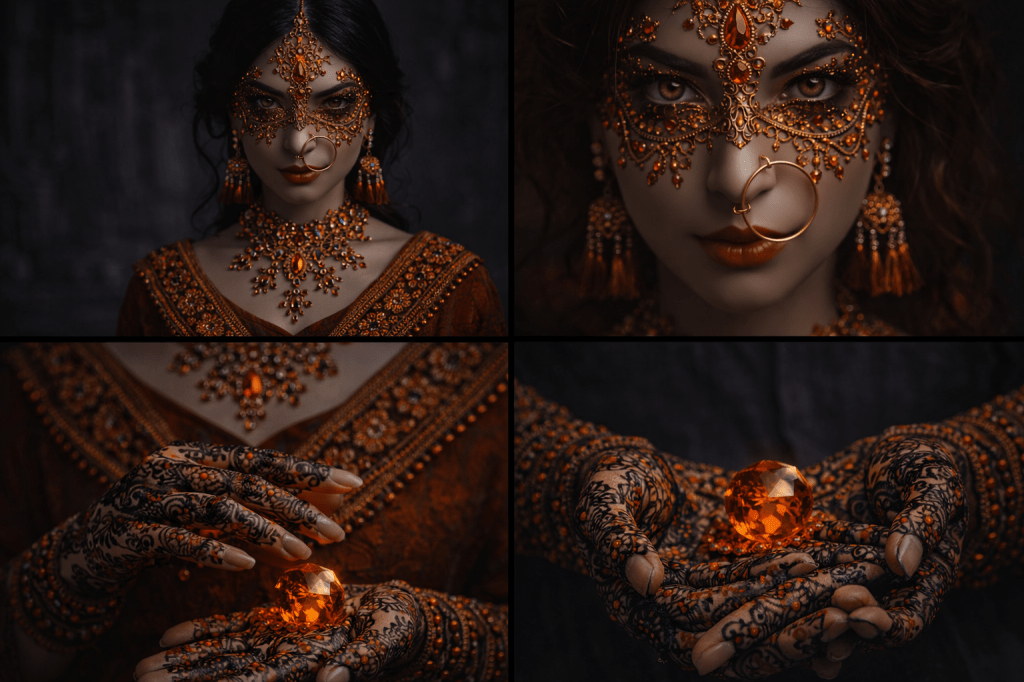
Deep orange — the transition, warmth rising beneath the surface
As time moves, the colour begins to shift. What was once green deepens, drawing warmth from the skin and the body. The change is active, but subtle — unfolding gradually, almost unnoticed at first.
This is the stage of movement and internal build, where transformation is underway but not yet complete.
In Mehndi Noir, this is where energy gathers. Where intention forms. Where something begins to take shape without fully declaring itself.
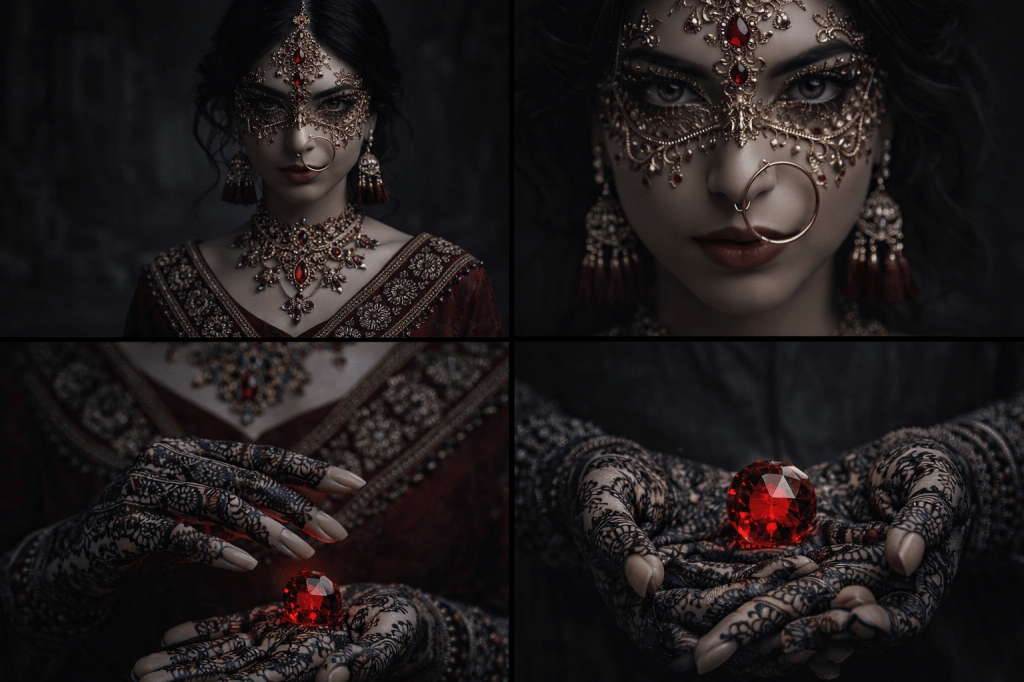
Deep red / maroon — the final state, rich, settled, and complete
The colour reaches its depth. What was once raw and evolving settles into something defined and lasting. The tone becomes fuller, heavier, and grounded — carrying time within it.
This stage does not need to prove itself. It holds presence without movement.
In Mehndi Noir, this is completion. A quiet authority, where identity has fully emerged and remains — without display, yet fully present.
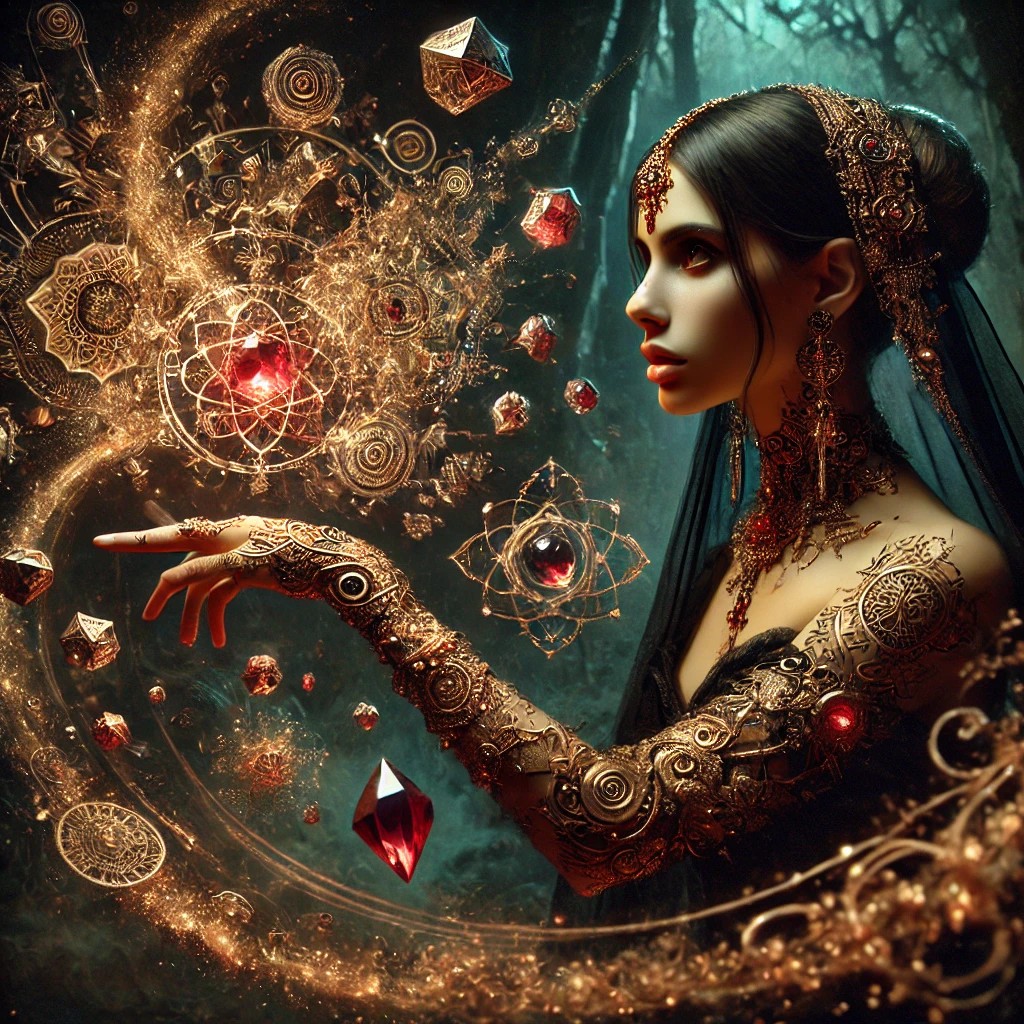
A Gothic South Asian Fusion
Mehndi Noir is not simply a colour palette or a stylistic choice.
It is a fusion — where South Asian identity meets gothic noir tone.
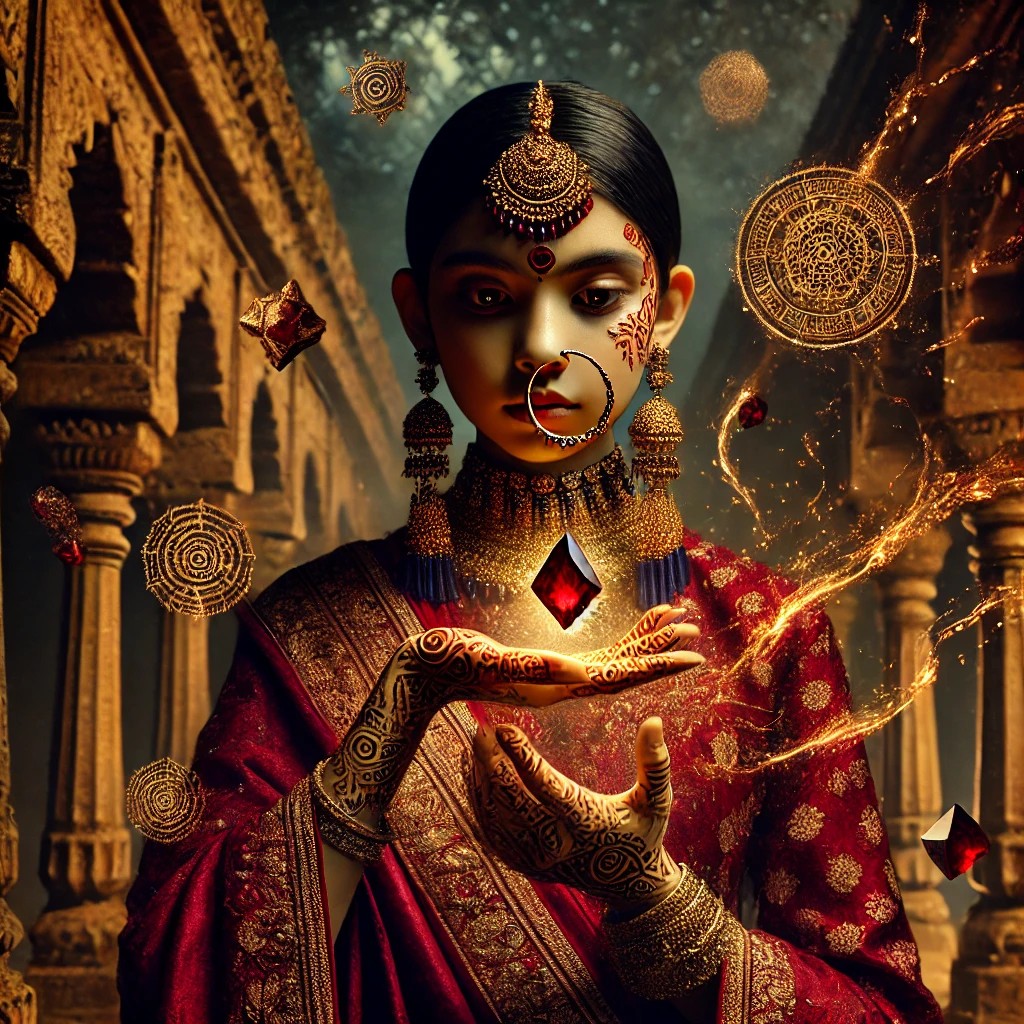
It holds the richness of traditional form — sarees, jewelry, mehndi, silhouette — but shifts them into a darker, more cinematic space.
This is where the aesthetic transforms.
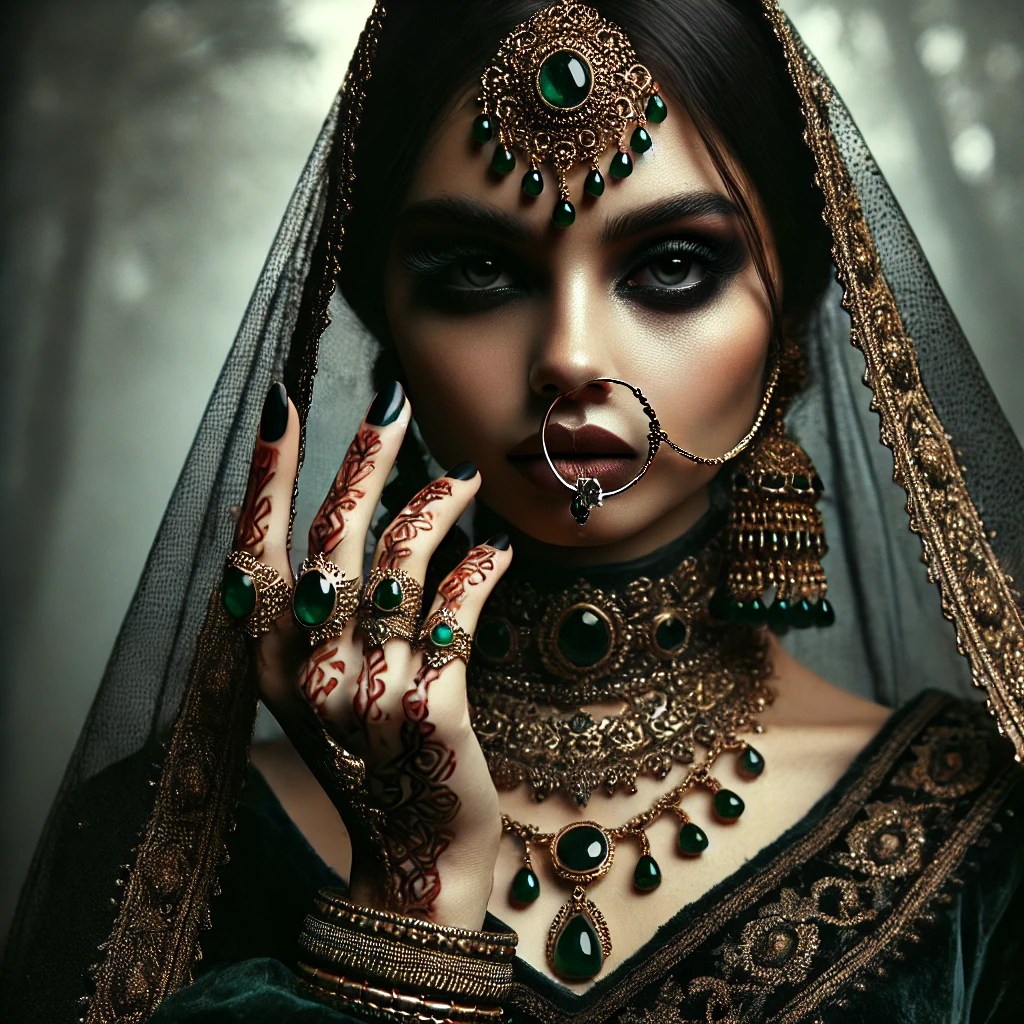
The Fusion Of Tone
At its core, Mehndi Noir is defined by contrast:
Not light and dark — but warmth and shadow existing together.
The colours follow the natural mehndi sequence — deep green, burnt orange, deep red — but they are never bright, never flat.
They are deepened.
Green becomes emerald noir — shadowed, almost forest-like, carrying mystery.
Orange becomes burnt and smouldering — like embers, not flame.
Red becomes maroon, wine-dark, and weighted — grounded and intense.
Each tone is pulled into shadow.
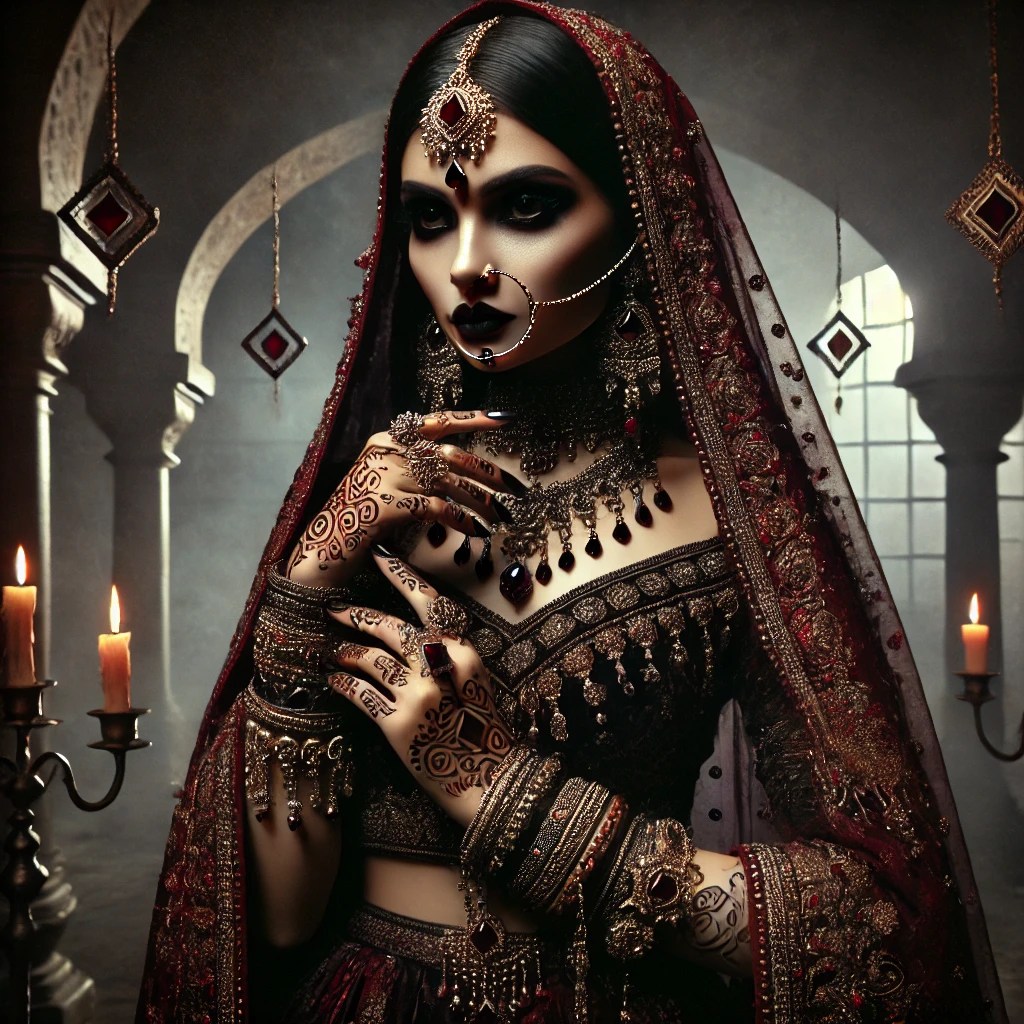
The Role Of Black & Depth
What defines Mehndi Noir visually is not only the colour itself, but what exists within it and around it.
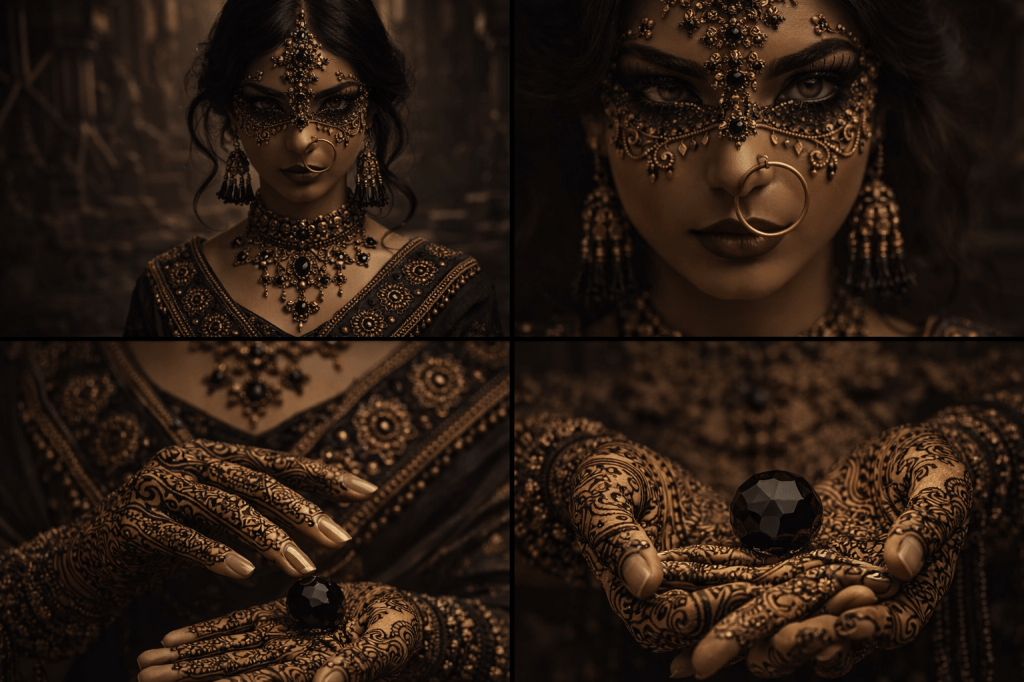
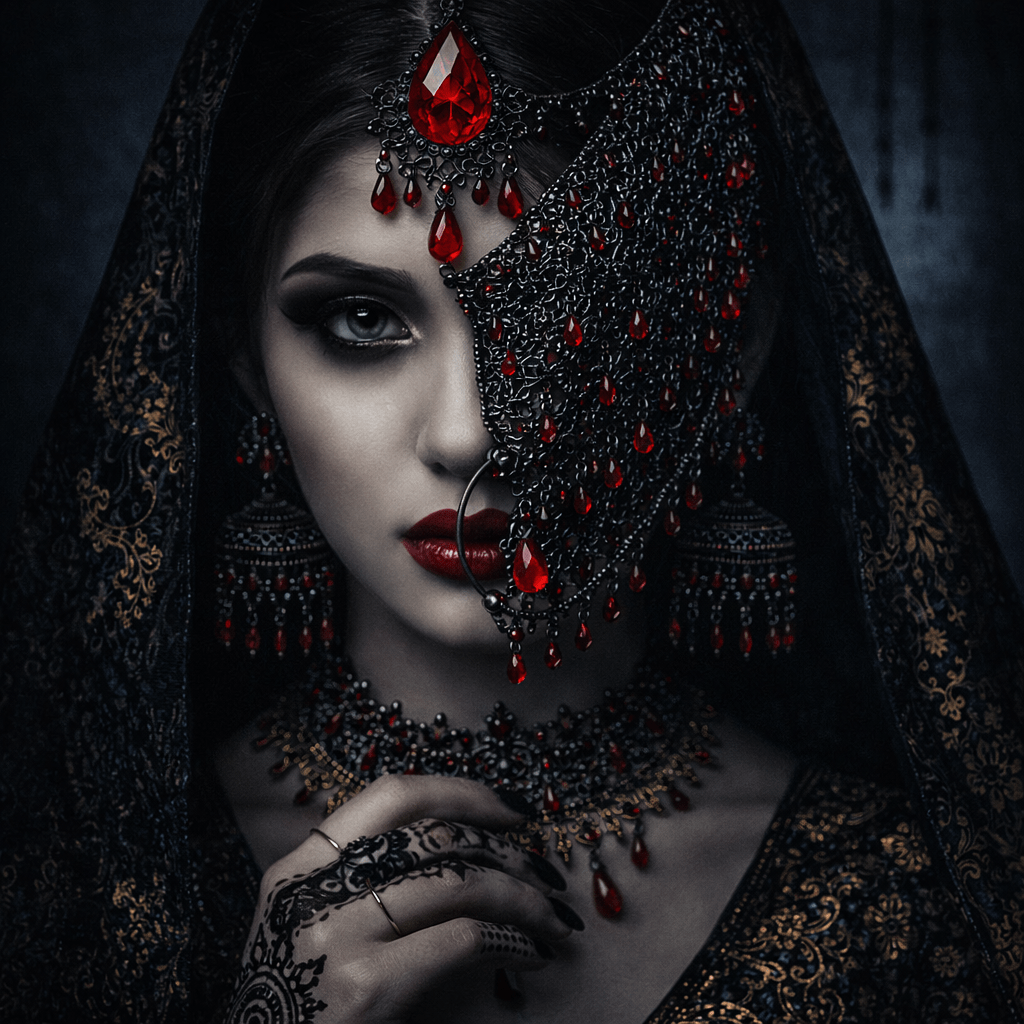
Black is never separate from the composition. It is woven into every layer — through embroidery, through lace and borders, through the depth of the gaze and the framing of the eyes, and through the negative space that surrounds the subject. It moves quietly across the image, binding each element together.
It sharpens the colour, giving it edge and clarity. It introduces structure, allowing richness to feel controlled rather than excessive. It creates contrast without disruption, holding everything in balance.
Without black, the palette remains traditional.
With it, it becomes Noir.
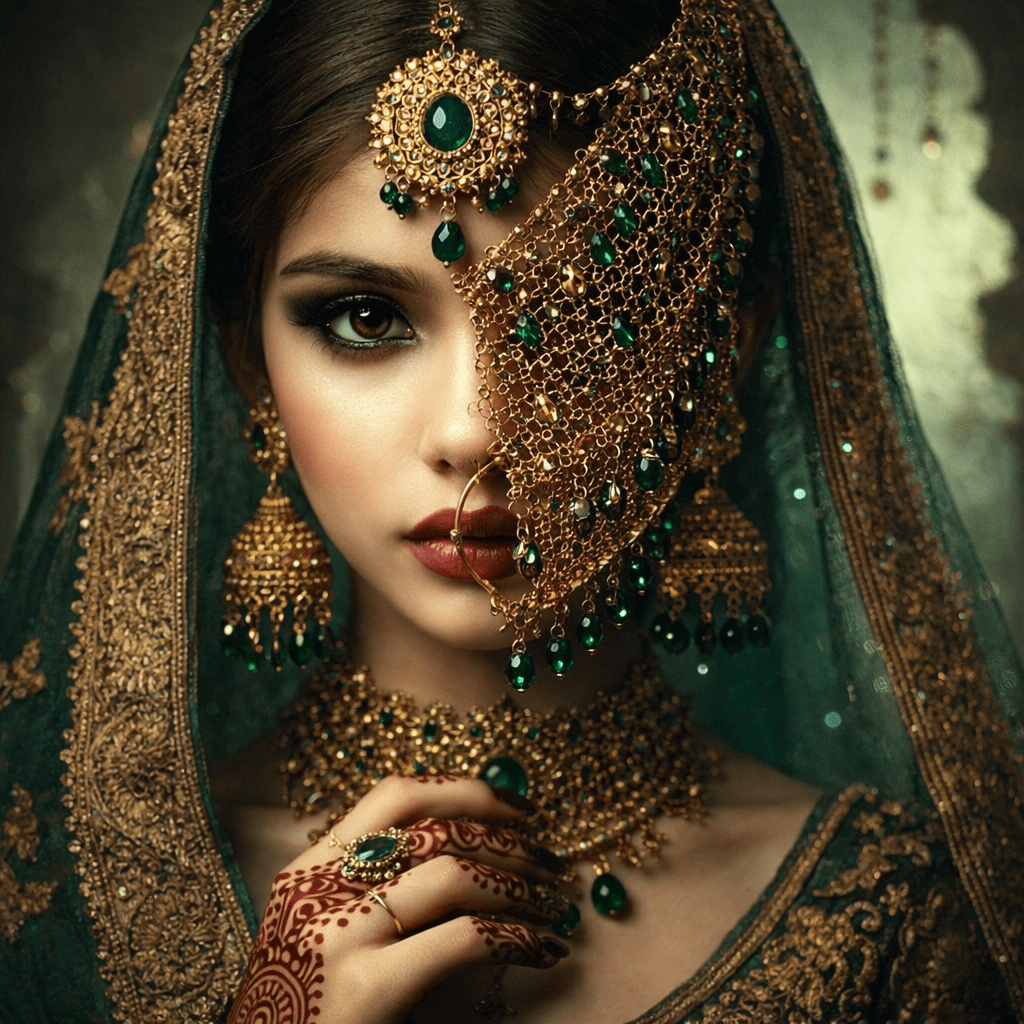
Ornament In Shadow
In this language, ornament is not decorative.
It carries weight. It holds structure.
It defines form, balance, and presence within the composition — guiding how the eye moves, how the body is framed, and how stillness is felt. Nothing is placed for display. Each element exists with purpose, contributing to a controlled and deliberate visual order.
Ornament lives in shadow. Gold is never bright, never polished for shine. It is aged, antique, and weighted, carrying history rather than display. Stones follow the same progression as the mehndi sequence — emerald greens, deep ambers, and dark reds — each tone grounded and deliberate.
They do not reflect light outward. They absorb it, holding it within, and return it slowly.
This is not nostalgia. It is continuity — carried forward and grounded within culture.
What remains is a defined atmosphere — richness without gloss, presence without glare.
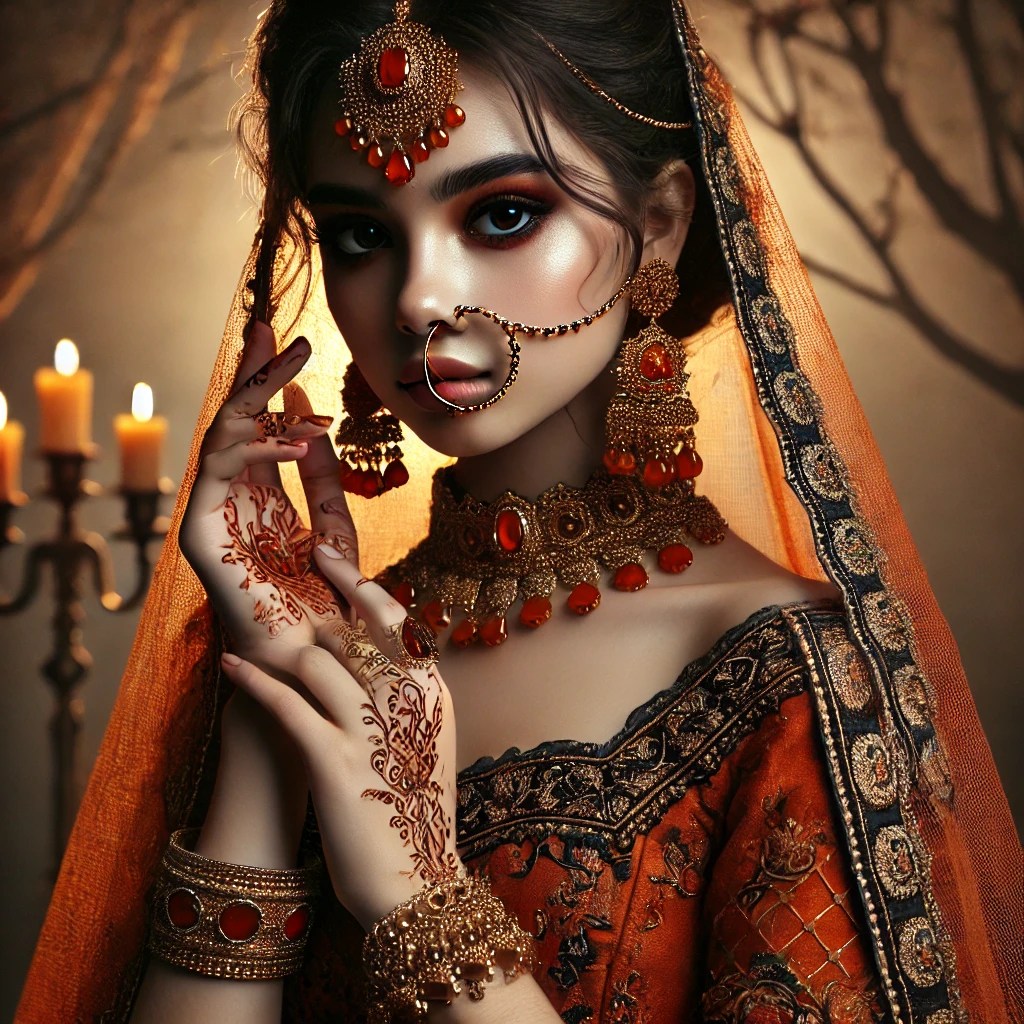
Mehndi As Structure
Mehndi is no longer decorative.
In Mehndi Noir, it becomes structural — a system that maps, marks, and contains. It traces the body with intention, defining space and guiding the eye, rather than simply adorning the surface.
The lines are darker, more deliberate, and at times sharper, echoing the same role that black plays within the wardrobe and composition. They create boundaries, rhythm, and control.
Through this, mehndi connects the body to the aesthetic — not as an addition, but as part of its foundation.
The Result
What emerges is a distinct identity — one that resists simple classification.
It is not purely gothic, not strictly traditional, and not a surface-level modern fusion. Instead, it forms something more precise.
A South Asian visual language grounded in tradition, deepened through shadow, and structured through restraint.
 Artist Blueprint