Caribanime: Where New Myths Are Woven and Modern Imagination Shines in Caribbean Light
Themes & Structure
Caribanime is not a retelling of folklore. It’s an original fantasy saga inspired by Caribbean aesthetics. It draws from blended cultures and colonial history. The characters, spirit types, and events echo the sounds and soul of the region without directly reproducing sacred beliefs.
Two Worlds, One Pulse
Caribanime is a fantasy universe that bridges two realms:
The Real World – modern Earth, where characters start their journey.
The Caribanime World – a veiled spiritual realm shaped by Caribbean-inspired forces, mythologies, and original spirit lore.
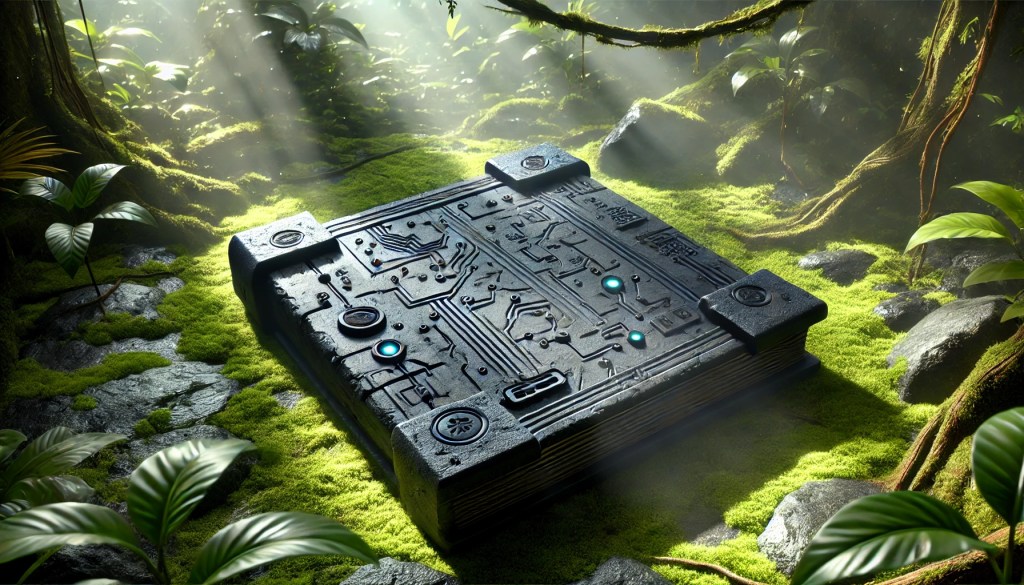
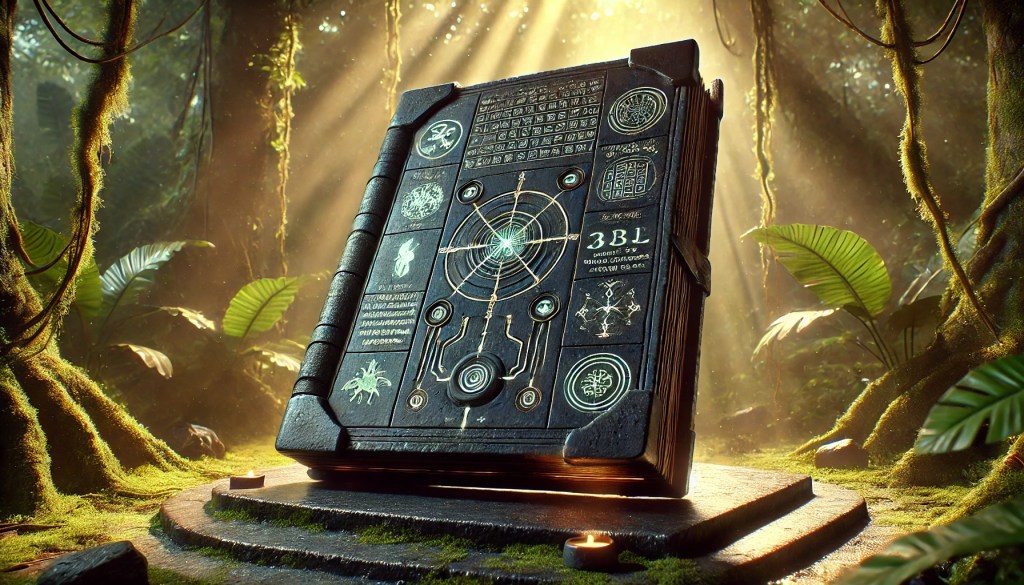
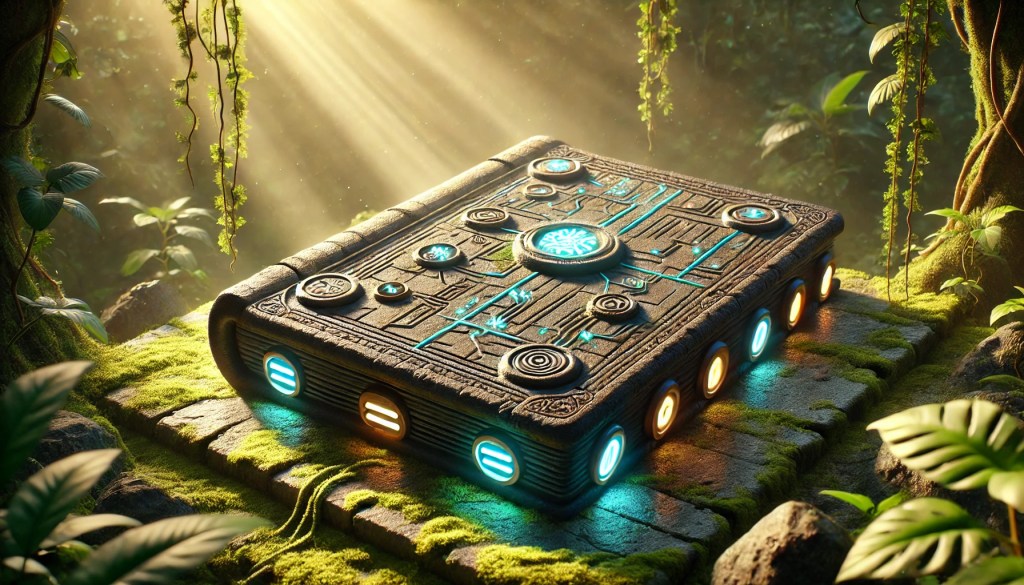
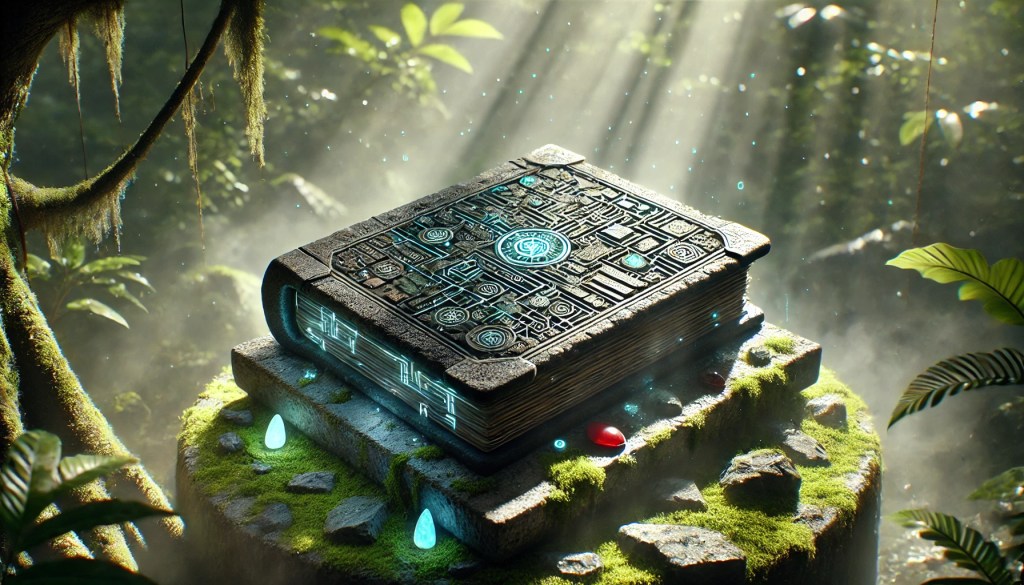
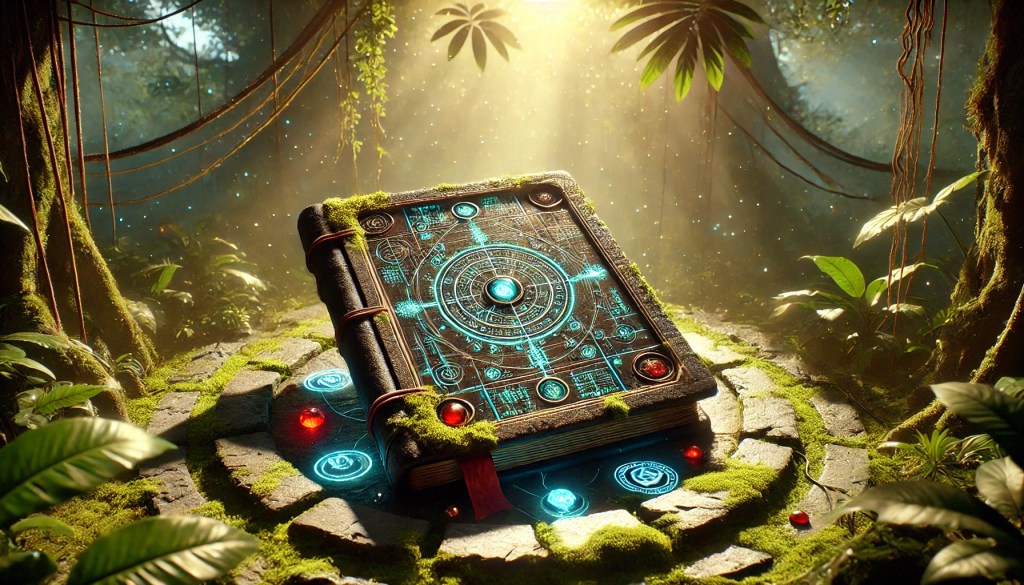
These worlds intertwine through the Awakening Tablet — a mysterious relic that unlocks portals, memories, and identities. The tablet reveals truths, reshapes destinies, and begins a hero’s journey in both dimensions.
Awakening
New Flame from Old Embers
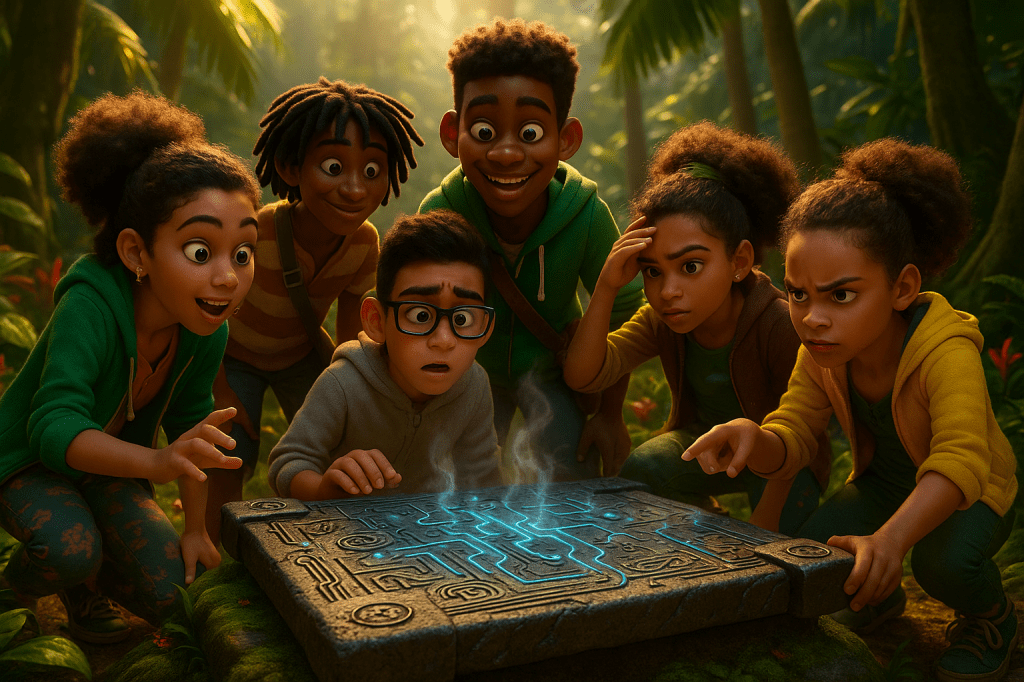
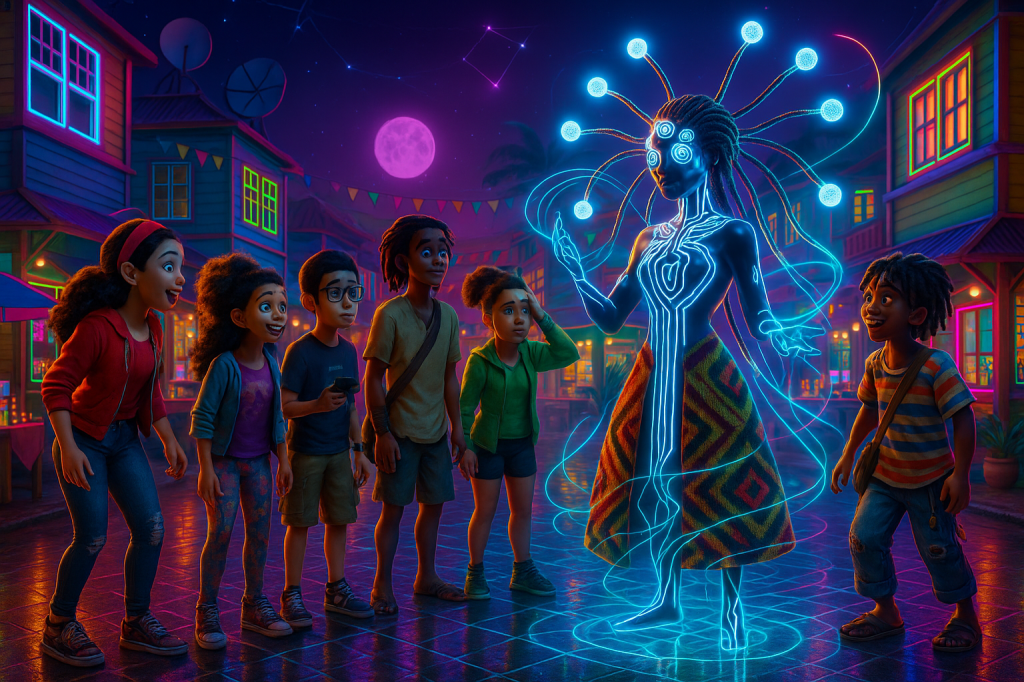
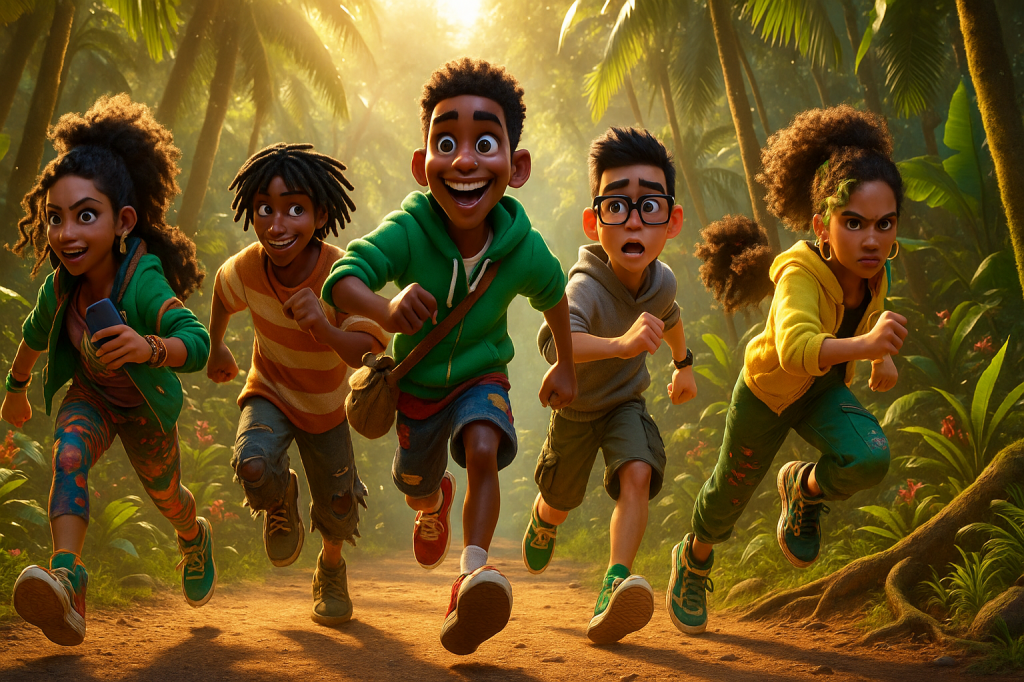
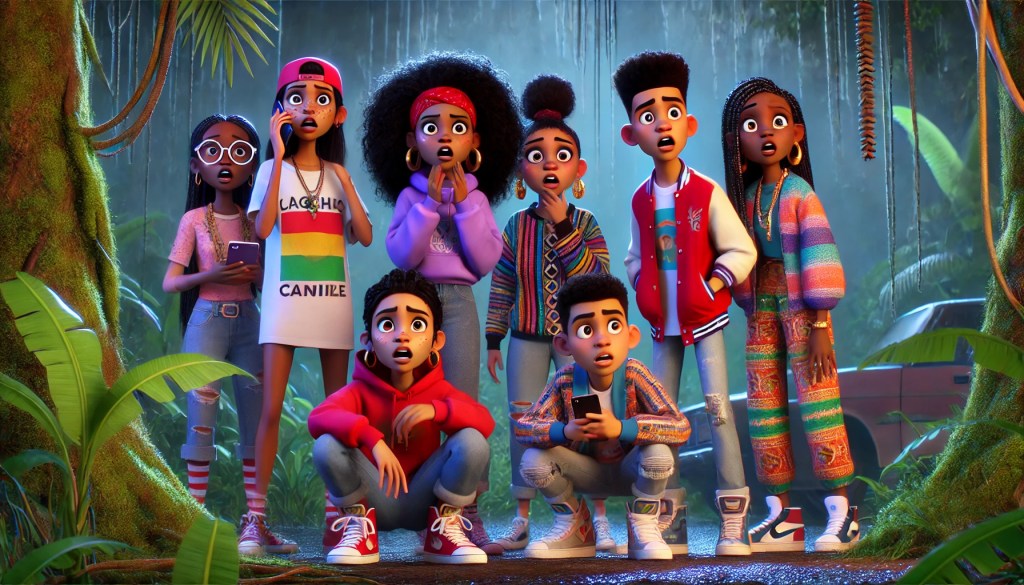
In the heart of the modern Caribbean, a group of teens discovers the Awakening Tablet. This mysterious relic is tied to forgotten histories. It also possesses sealed powers. When activated, it doesn’t just whisper to the past — it roars across realities.
Ancient spirits, once long dormant, suddenly start to stir. The Lagahoo, Kindle Dolls, Jab Jab Chainlords, Anansi, and others awaken. Their energies bleed into the current. Shadows lengthen, strange dreams arrive, and cracks form between the world we know and the one we’ve forgotten.
But this wasn’t chance. The tablet didn’t just awaken power — it awakened them. And they must now carry the burden of its call.
Passage Between Realms
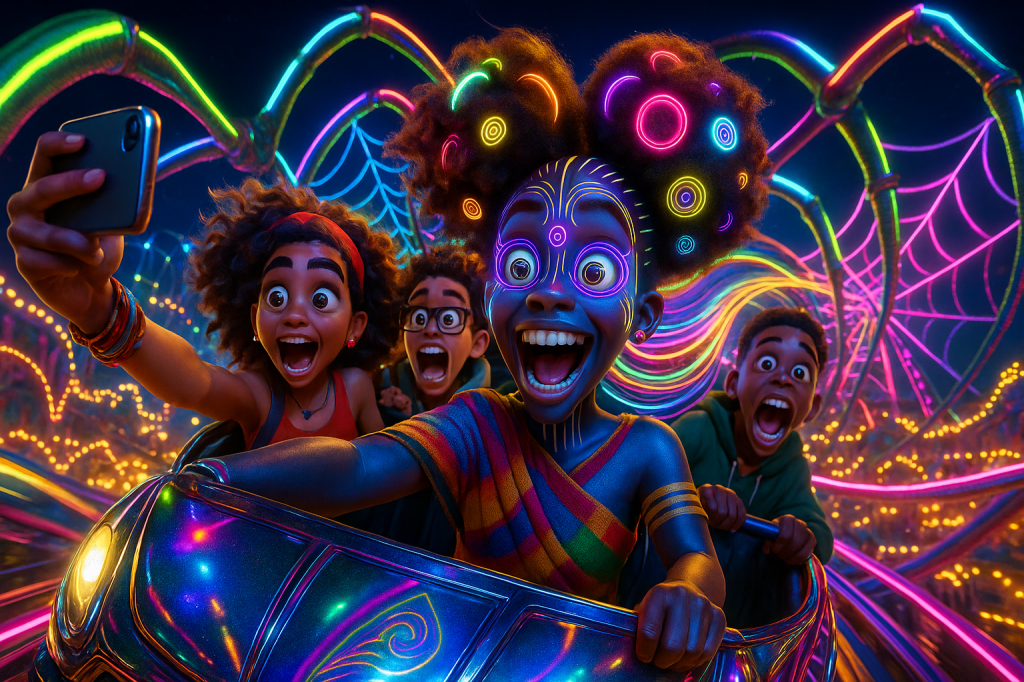
Drawn through a rift between dimensions, the teens are transported into the Caribanime Realm. It is a vibrant, spiritual mirror of our world. This realm is shaped by ancestral energy, diasporic memory, and cultural fusion. Here, spirits walk like gods, memory flows like rivers, and folklore is alive — reimagined with modern breath. Each step takes them deeper into the intertwined destinies of both realms.
Restoration and Rebellion
As the spirit world reels from awakening and old rivalries reignite, the teens return to the real world — changed. But the two realms are no longer separate. Spirits start to manifest. Old colonial chains start to rattle again — both literal and metaphorical. Corrupted powers seek to rewrite history and control the awakened forces for themselves.
The New World
Now, the teens must lead a reclamation — not just of stories, but of identity, memory, and possibility. With new alliances, spirit companions, and ancestral gifts, they. Spark rebellions against both spiritual tyranny and real-world corruption. Rewrite what it means to be chosen. Restore balance by fusing the old and the new, myth and modernity. This is more than survival. It is becoming.
Meet the Spirits and Archetypes of Caribanime
New Myths with Caribbean Soul: In Caribanime, spirits walk beside mortals, and memory has a body. Each spirit is an original creation — inspired by Caribbean aesthetics, storytelling rhythms, and the region’s layered legacies. From masquerade aristocrats to eco-divine guardians, these figures are not folklore retelling, but reimagining born from the same soil.
Below is your first look at the beings who shape the spirit world. They guide the living and challenge what power truly means.
Mama D’Leau
Guardian of Rivers, Brackish Bays, and Coastal Echoes
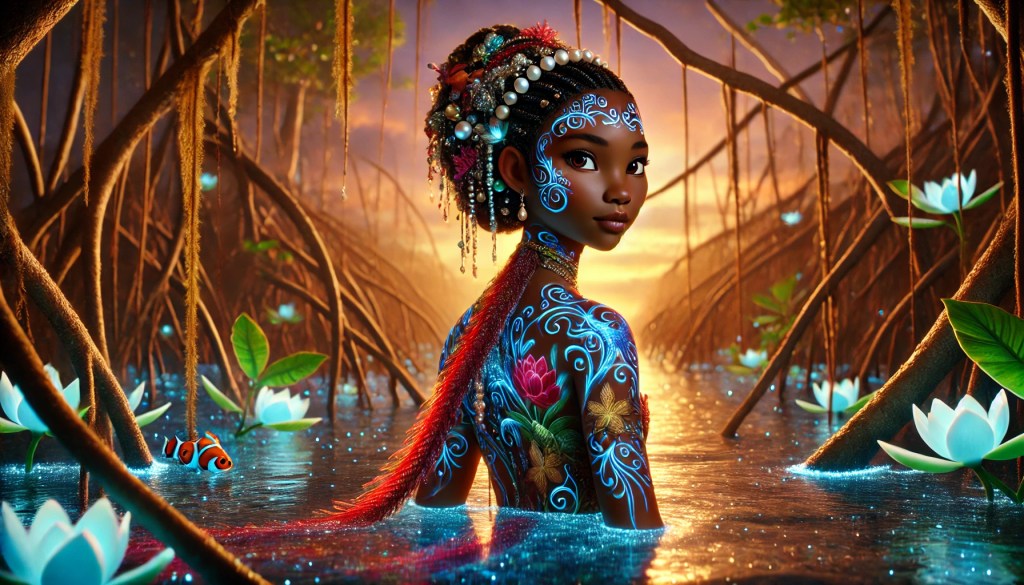
Spirit of the sacred waters
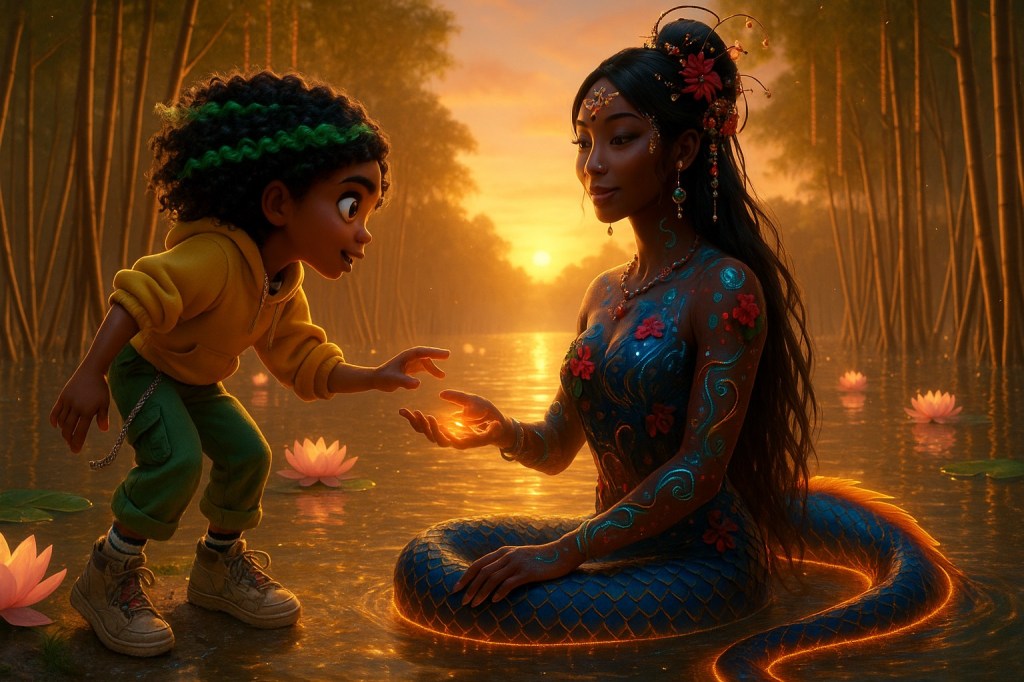
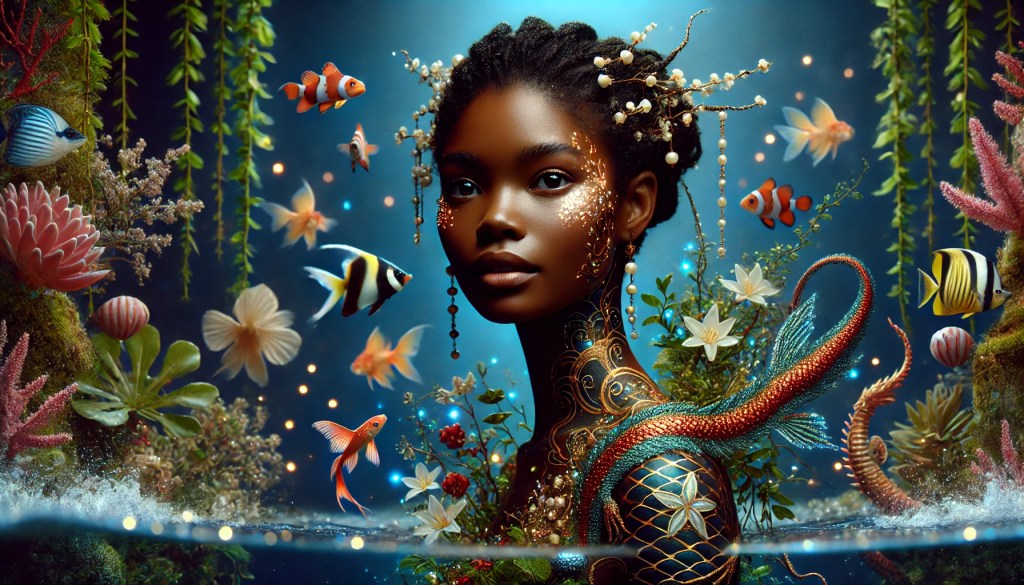
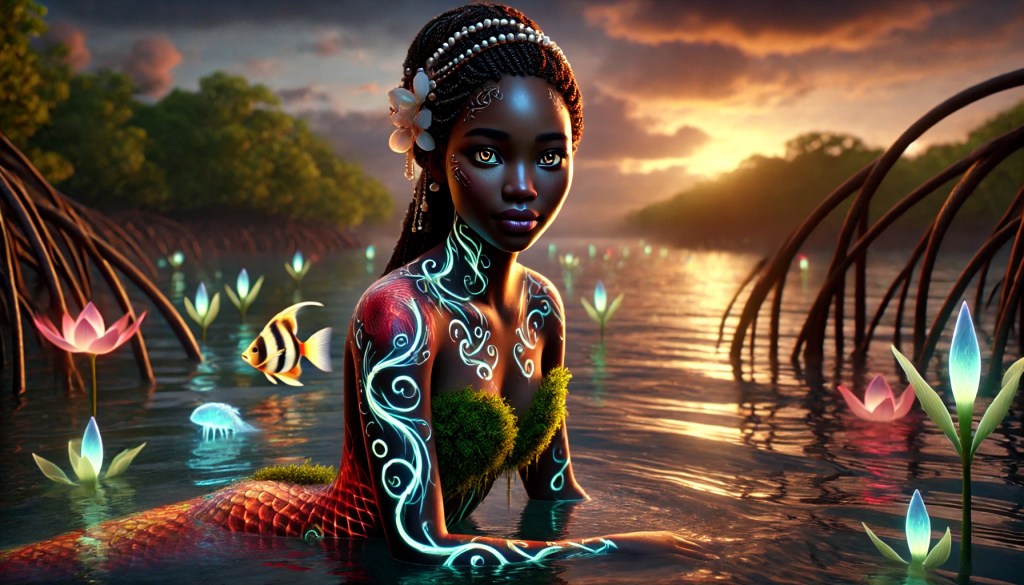
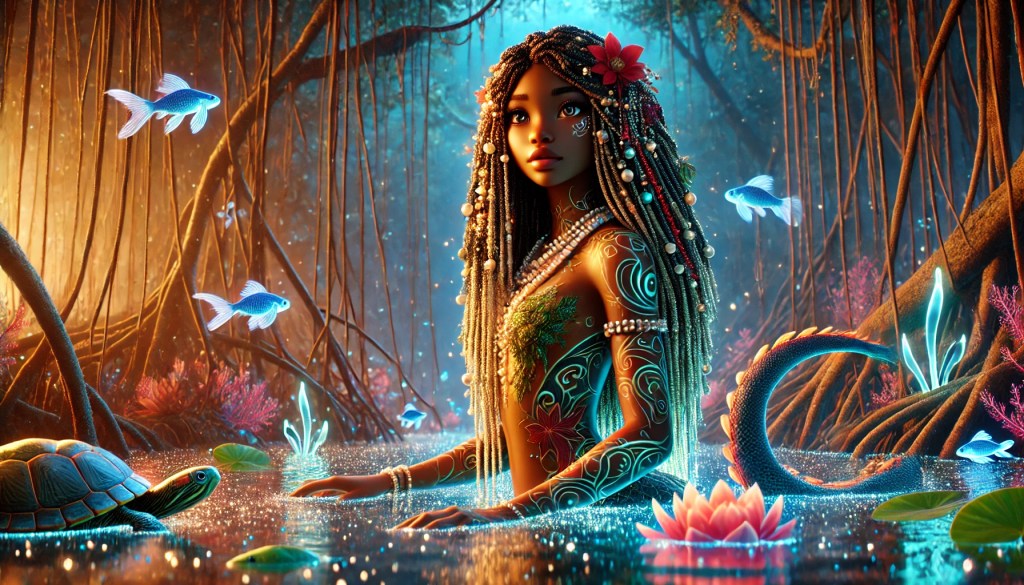
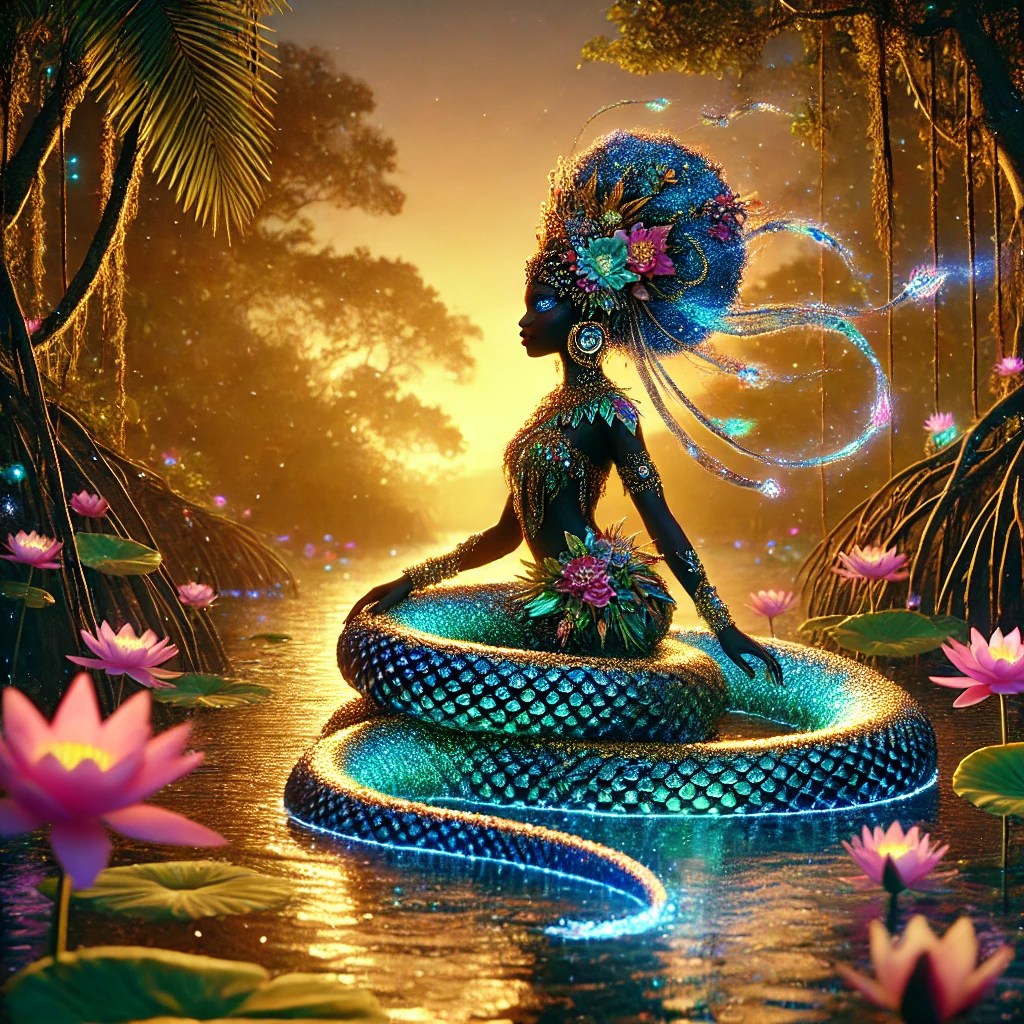
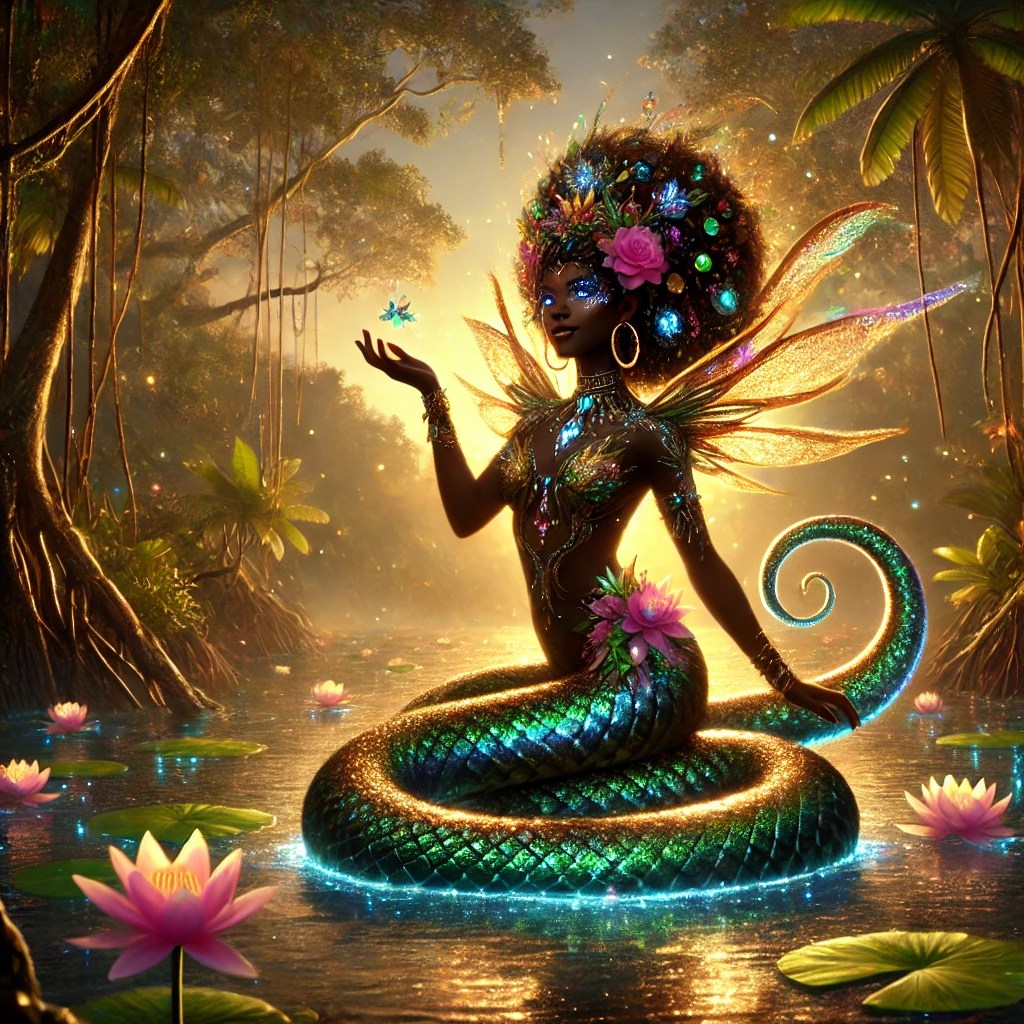
In the Caribanime Universe, Mama D’Leau is not one spirit. They are a sisterhood of elemental river guardians. The guardians are ancient, wise, and oceanically divine. These beings are not gods. They are living metaphors for balance, protection, and ecological reverence. They are shaped by the cultural soul of the Caribbean. They are reimagined into a vibrant new myth. The Mama D’Leau line stretches across the Caribanime realm. Different spirits embody the spiritual energy of various mangrove rivers, estuaries, coral coastlines, and underground springs.
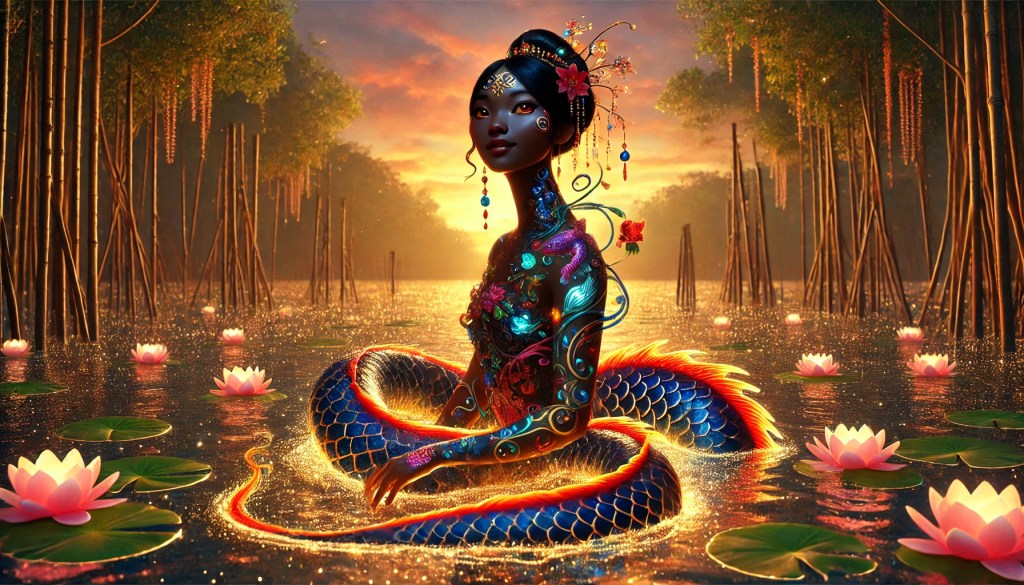
Essence and Aesthetic
Mama D’Leau spirits with stunning and surreal beauty. Each embodies the natural world around her — her form wrapped in Coral and pearl-embedded skin, soft and shimmering. Living koi-scale tattoos, where marine life swims through shifting ink. A serpent-dragon tail textured like kelp, slick with moonlight. Kohl-lined eyes accented with beaded patterns of pearls, giving her the gaze of tides themselves. Wild flora, bioluminescent sea moss, and angelic crustaceans that live within her body as if she were a reef. She is equal parts divine ecosystem and protector of balance.
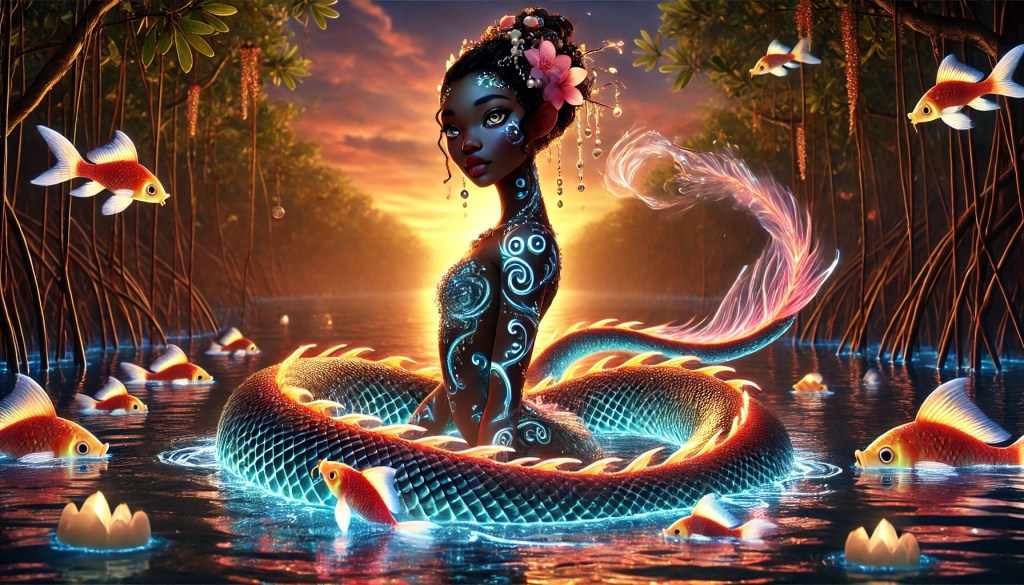
A Clan Across Waters
There is no single Mama D’Leau. In Caribanime lore, she is a clan — a sacred order of guardians whose roots ripple across time and water. Each “D’Leau” spirit is tied to a unique aquatic biome. While they share the same essence, each is influenced by the culture, mood, and energy of the place they protect. This ranges from Caribbean mangrove labyrinths, to deep volcanic lakes, to coastal grottoes choked in coral bloom. In the spirit realm, they form a council. Their wisdom is tidebound. They often in mirrored pools when summoned through sacred offerings.
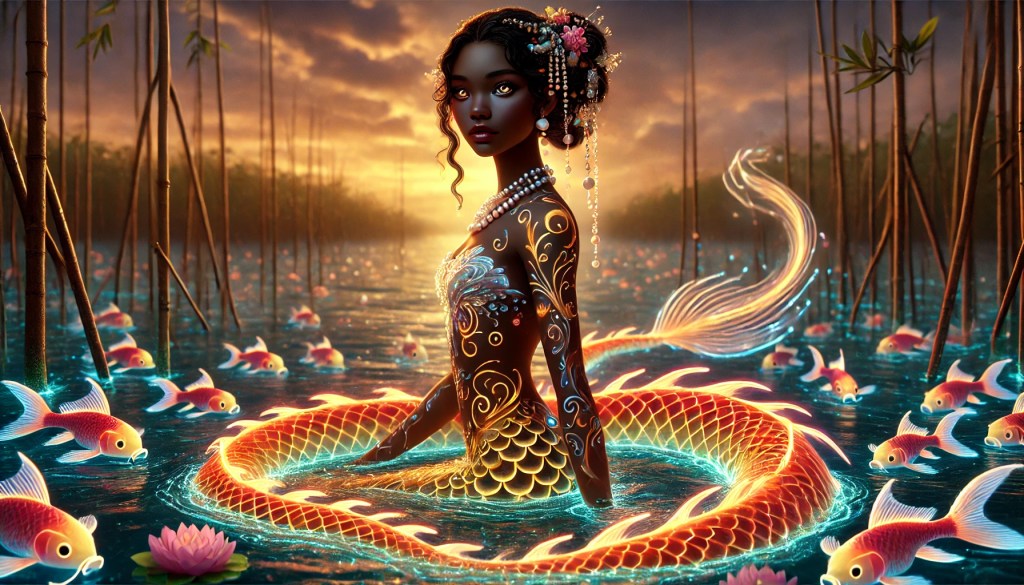
Crossing Over: The Hidden Among Us
When the Veil weakens, the spirits cross into the mortal world. Mama D’Leau spirits submerge into the backwaters of Caribbean towns. They retreat into ports and villages. In fish markets, her presence is felt in a sudden stillness of water. In river villages, she moves beneath the surface, her pearls glinting like oil. In colonial ports, she manifests as a haunting song, warning those who disrespect the sea. These spirits adapt. They disguise their magic beneath wraps of silk and seaweed. They live as healers or eccentric matriarchs. Others become ghostly protectors of forgotten shores.
Story Role in Caribanime
In Caribanime, the Awakening Tablet stirs the waters of both realms, reawakening Mama D’Leau spirits who had fallen dormant. Some return to restore balance. Others return with rage — remembering ancient griefs. A few hide among humans, protecting the flow of forgotten ecosystems in secret. Their sacred purpose is clear: guard the equilibrium between spirit and mortal world — or risk total collapse.
Mama D’Leau is not just a guardian. She is a memory of the world when it was still wild. A mother of oceans, wrapped in sorrow and strength.

Jab Jab Chainlords: Spirits of Memory, Fire, and Reckoning
Masqueraders of Power. Spirits of Fire, Chains, and Elegance.
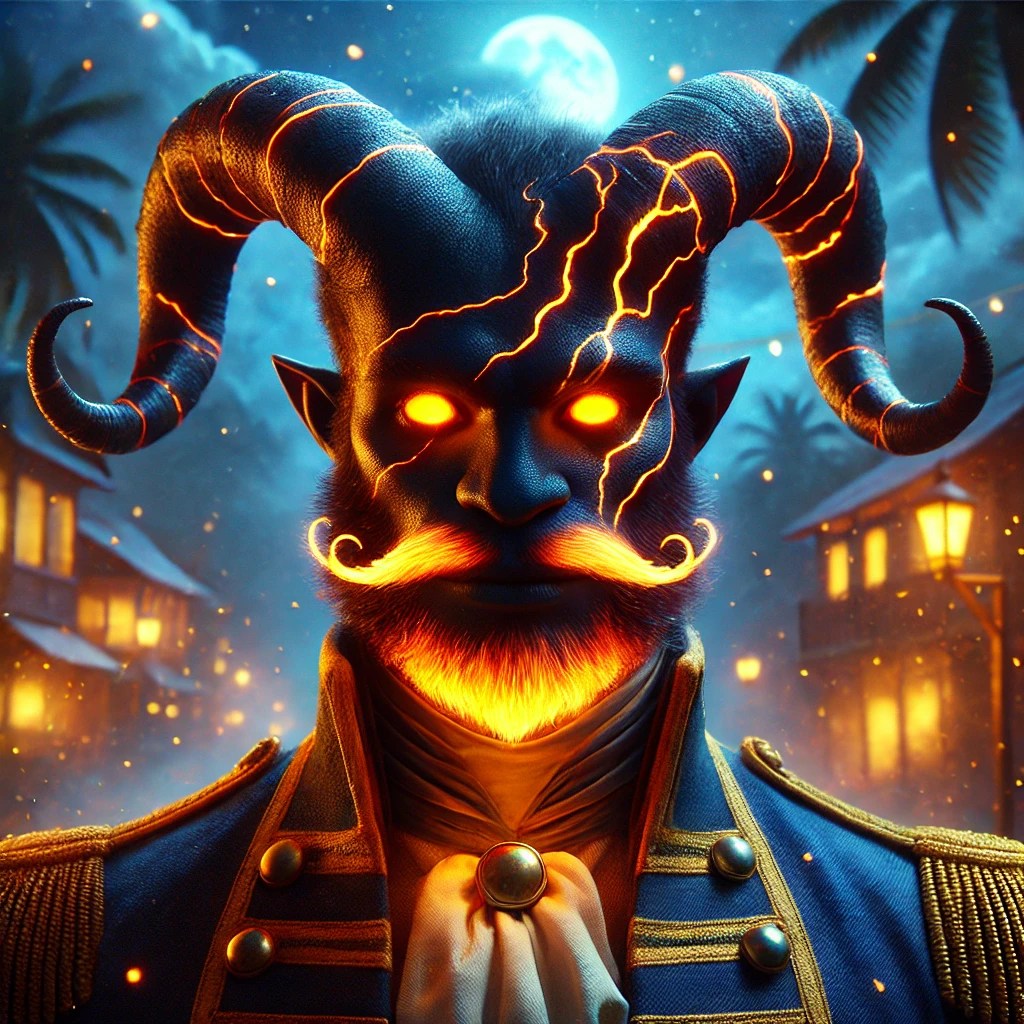
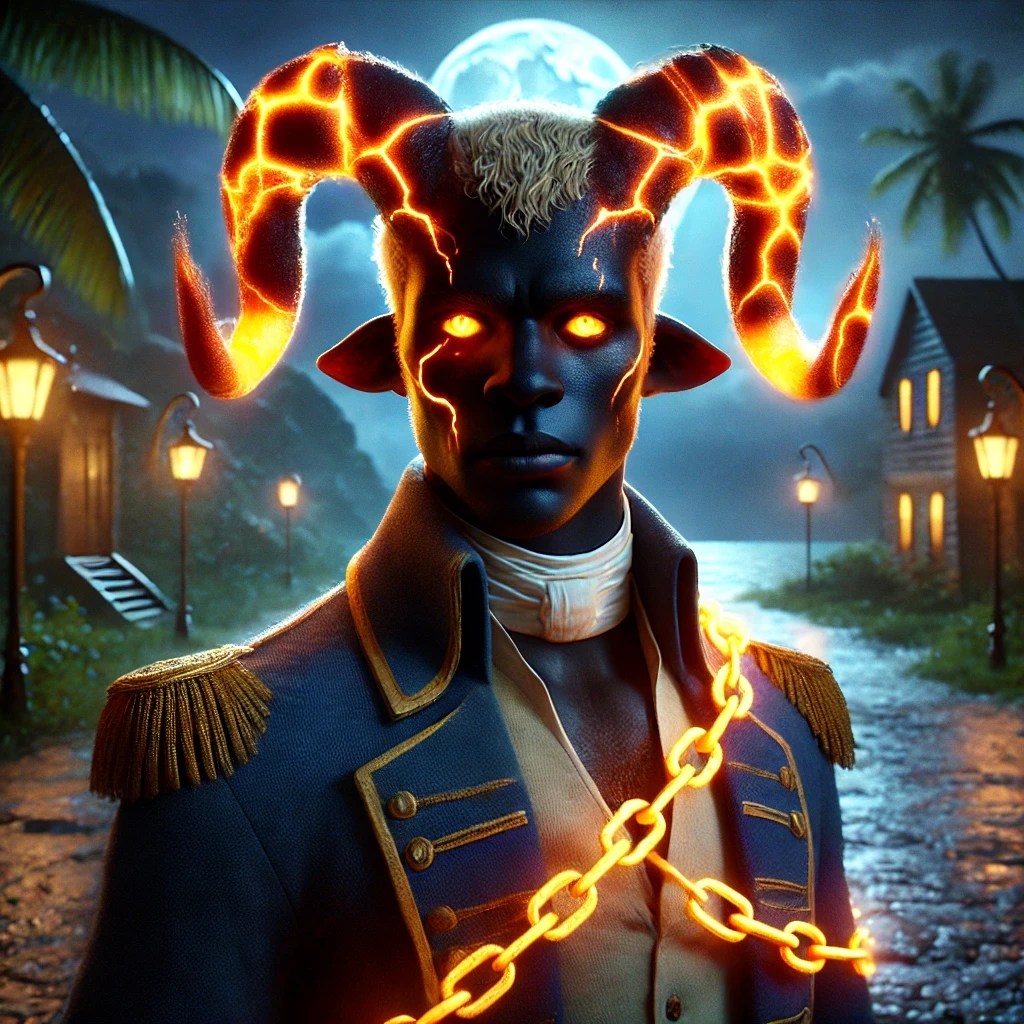
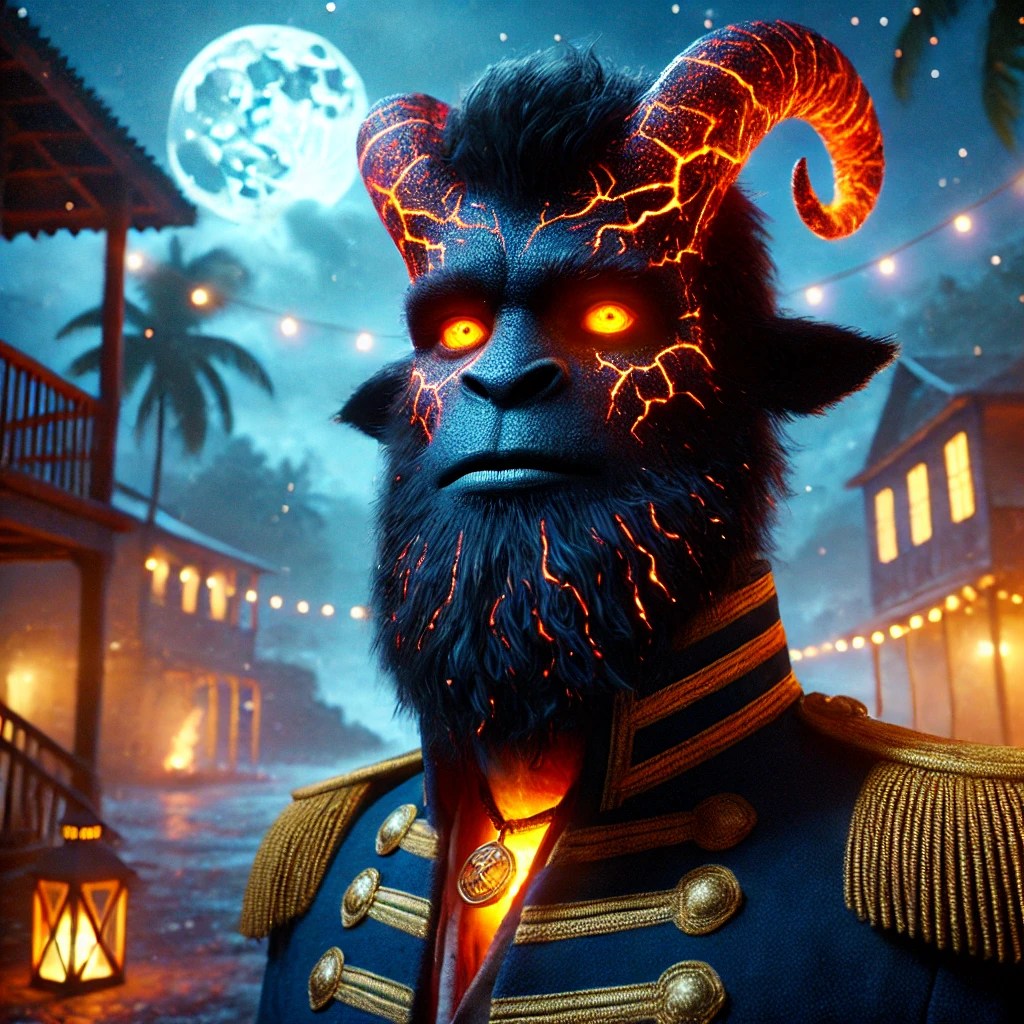
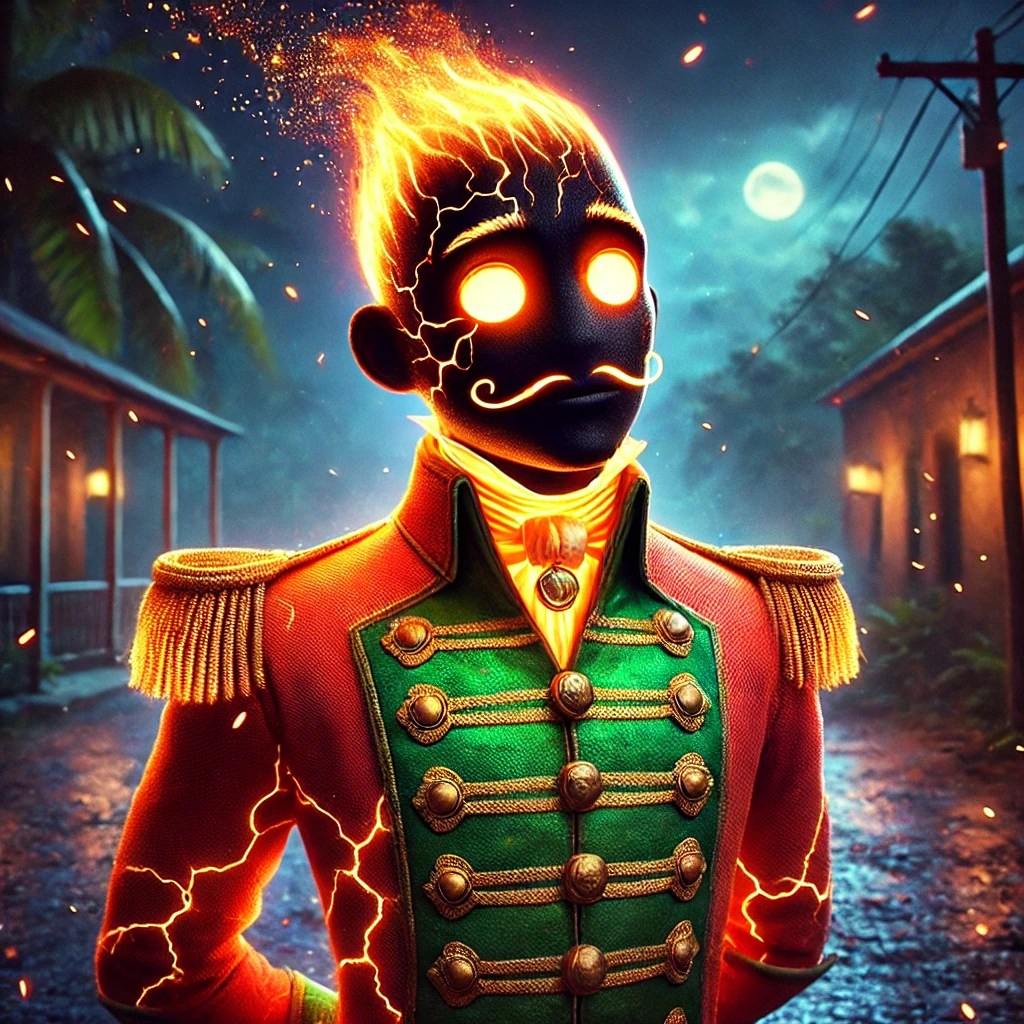
The Jab Jab Chainlords are aristocratic spirit-warriors. They are born from the cultural memory of Caribbean resistance. They are refined through fire, carnival, and masquerade. Inspired by the Jab Jab traditions of Grenada, Trinidad, and other islands, masked revelers paraded in defiant joy. They wore chains and devilish costumes. The Chainlords in Caribanime are not retelling. They are new legends wrapped in colonial velvet and ancestral flame. They are the masked echoes of potential forces. These are emancipated spirits who transformed the ruins of empire. They reshaped them into their own masked courts of influence.
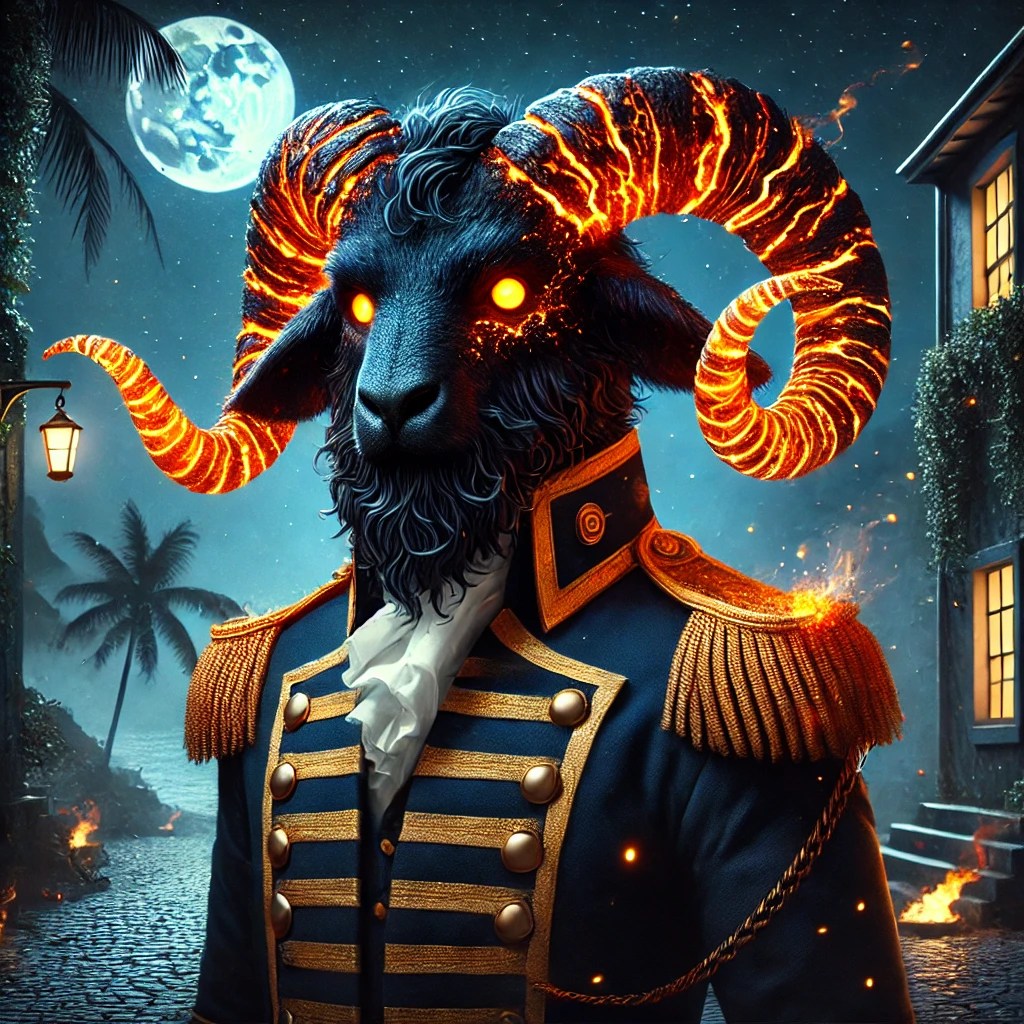
In Caribanime, the Jab Jab Chainlords are no longer merely masqueraders. They are spiritual aristocrats of the underworld. They are forged from the ghosts of revolution and vengeance. They are bound by chains not of bondage, but of memory and power. They walk the shadowed roads between the spirit world and the living. They enforce balance through intimidation, style, and heat.
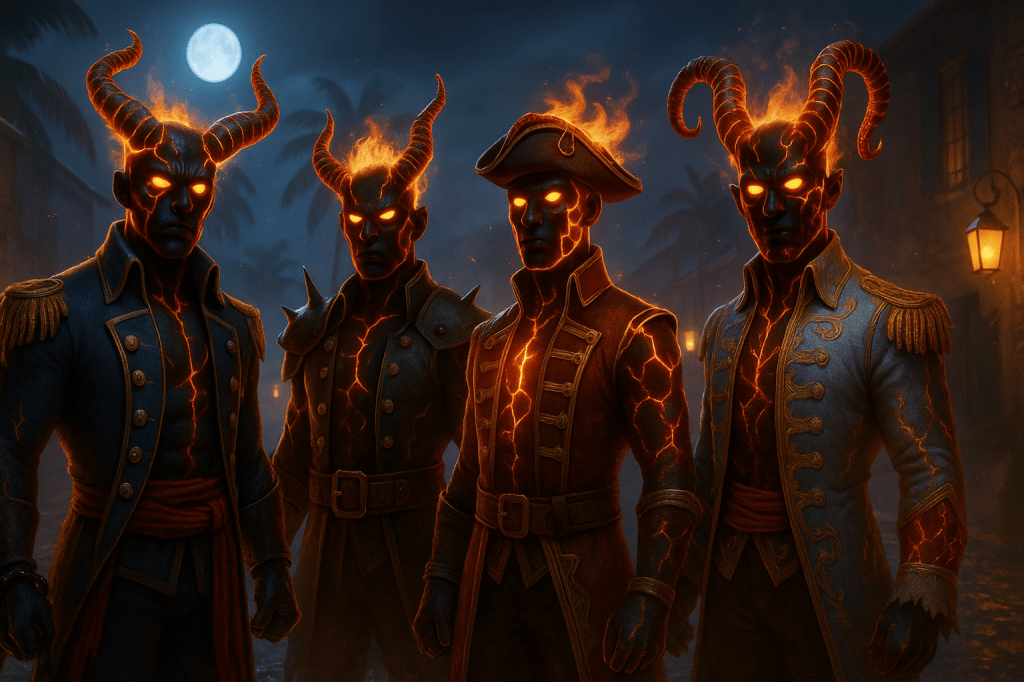
Fire binds them. Chains define them. History haunts them.
They are not evil. Neither are they cleanly good. They thrive in the in-between. They act as enforcers, judges, and provocateurs in the Caribanime Spirit World. When the Awakening Tablet reactivates ancient contracts, they are among the first to rise. They rise not to serve, but to warn.

The Jab Jab Chainlords are a formidable quartet of spirit-aristocrats. They were forged in fire, memory, and the long shadow of colonial rule. Though cloaked in the elegance of nobility, they are anything but refined. Their chains echo with ancestral voices. Fire trails in their wake. They are not conquerors, but conjured forces of resistance, born from the ashes of revolt.
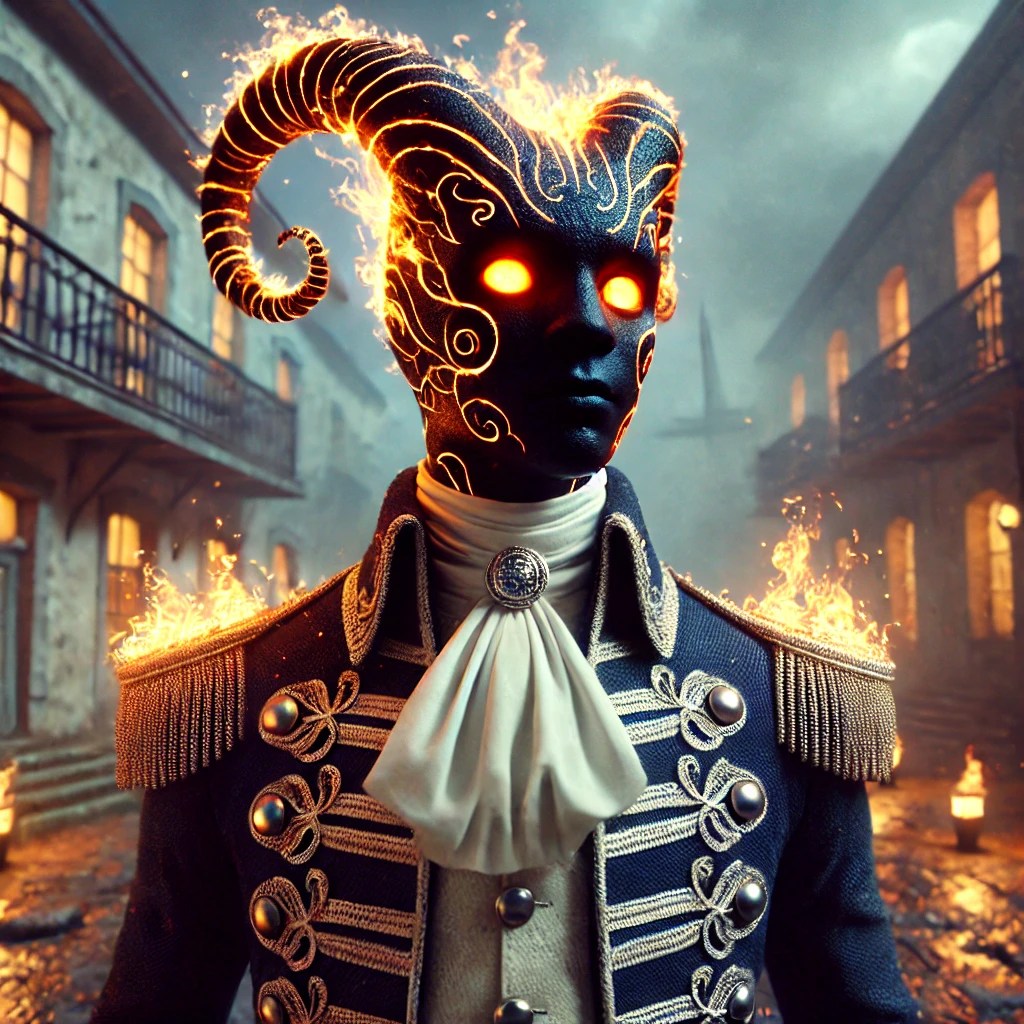
Each Chainlords embodies the legacy of a different colonial power in the Caribbean. These powers include Dutch, British, Spanish, and French. Their forms are twisted by history and remade through spirit and flame. Their military regalia mimics European formality but is corrupted by Caribbean fire, ancestral wrath, and the scars of rebellion.
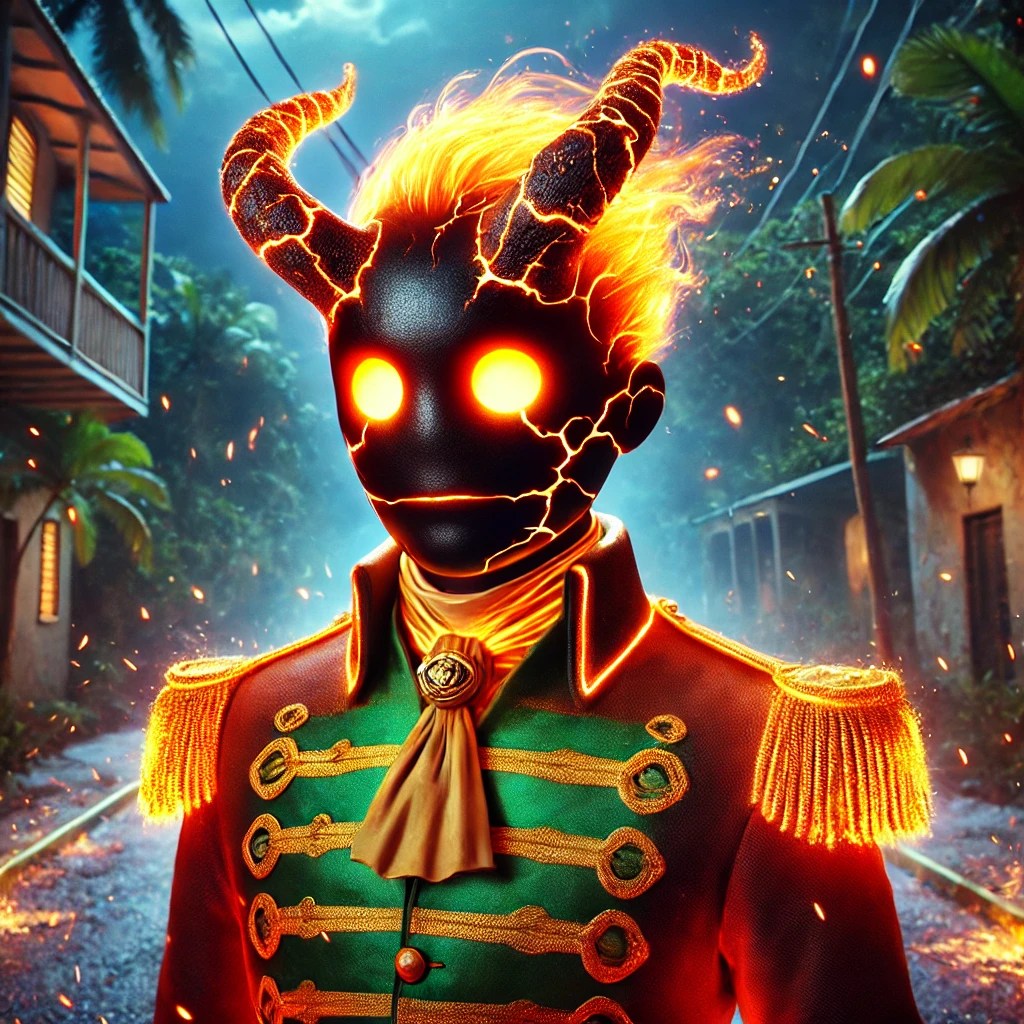
More than enforcers of heat, the Chainlords are memory-bearers — judges of spiritual debts left unpaid. They channel distinct emotional currents: pride, rage, trickery, and sorrow. These emotions are not weaknesses, but weapons — each one manifesting through their unique elemental presence and otherworldly design.
They represent the Caribanime burning past. The past is wrapped in silk, iron, and myth. They walk among the ruins of forgotten empires.
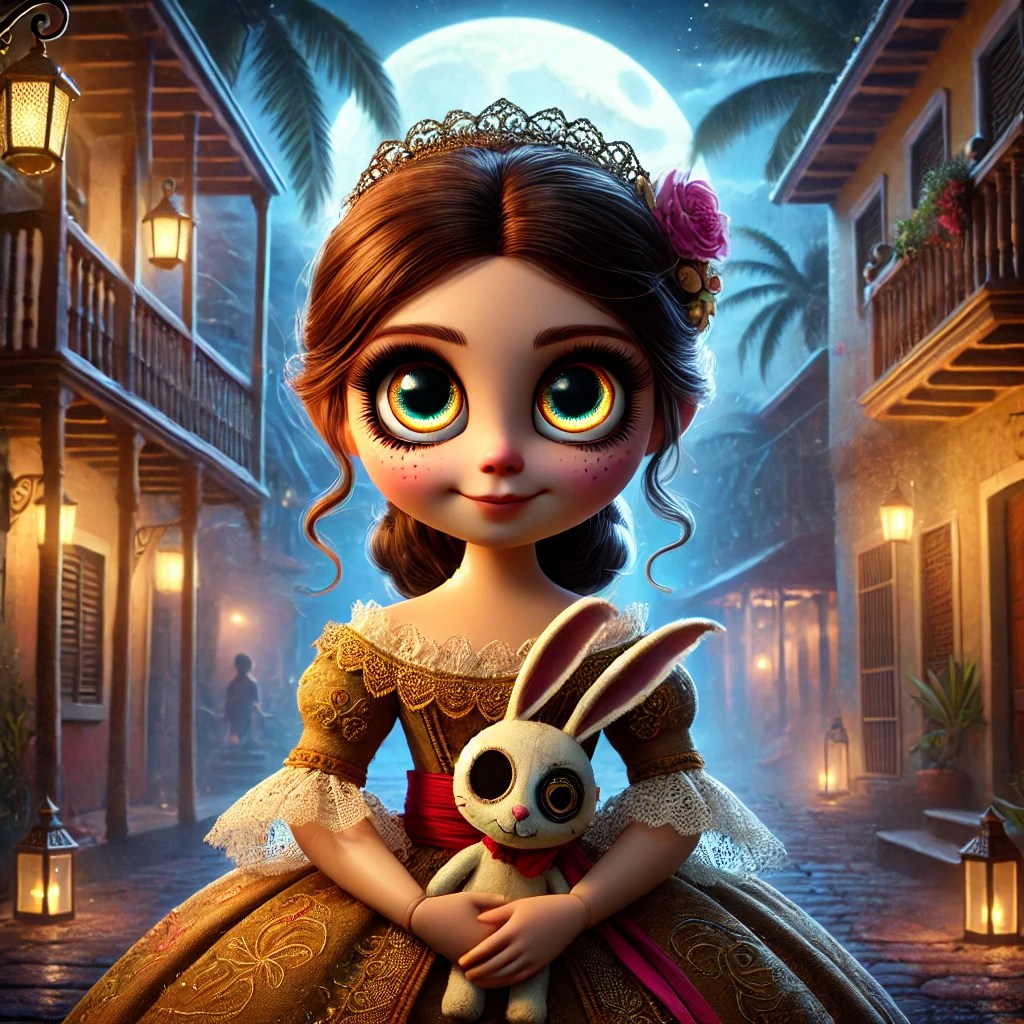
The Kindle Dolls: Spirits of Innocence and Ancestral Fire
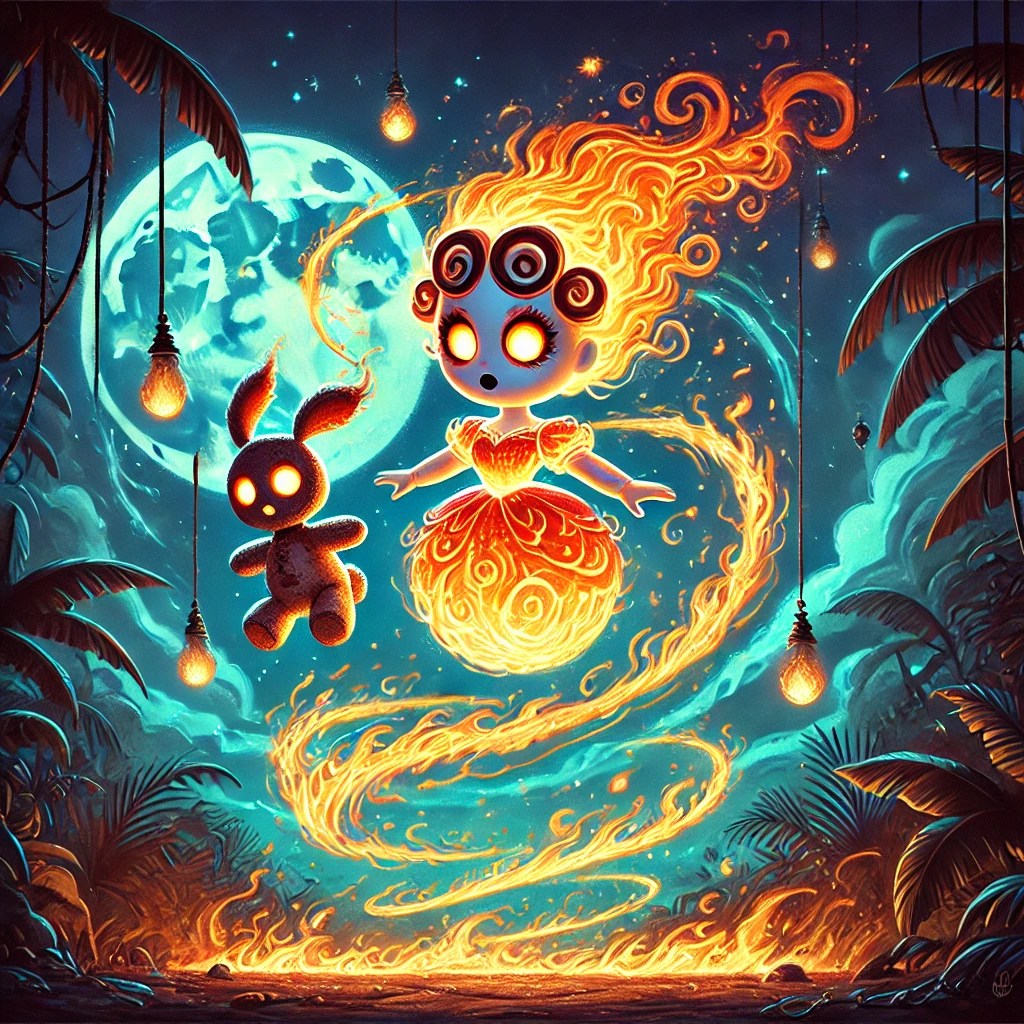
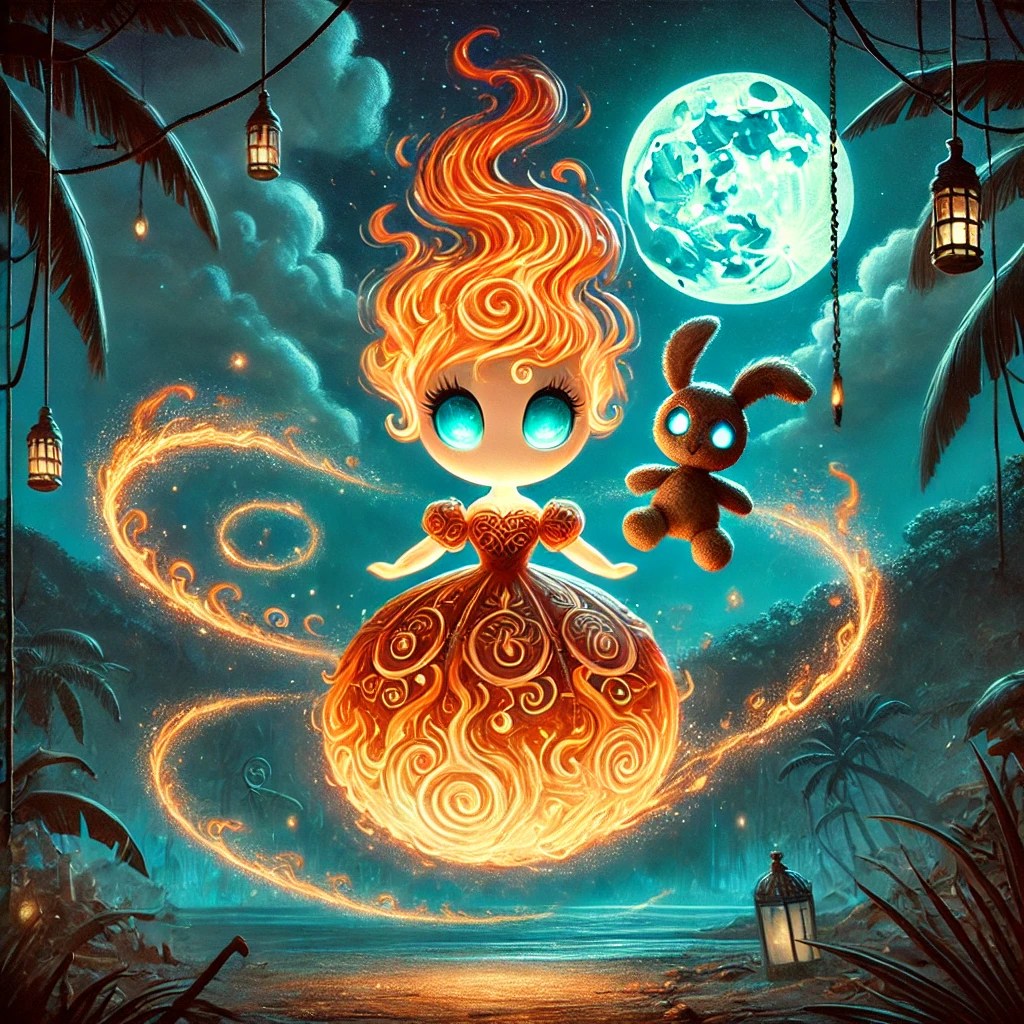
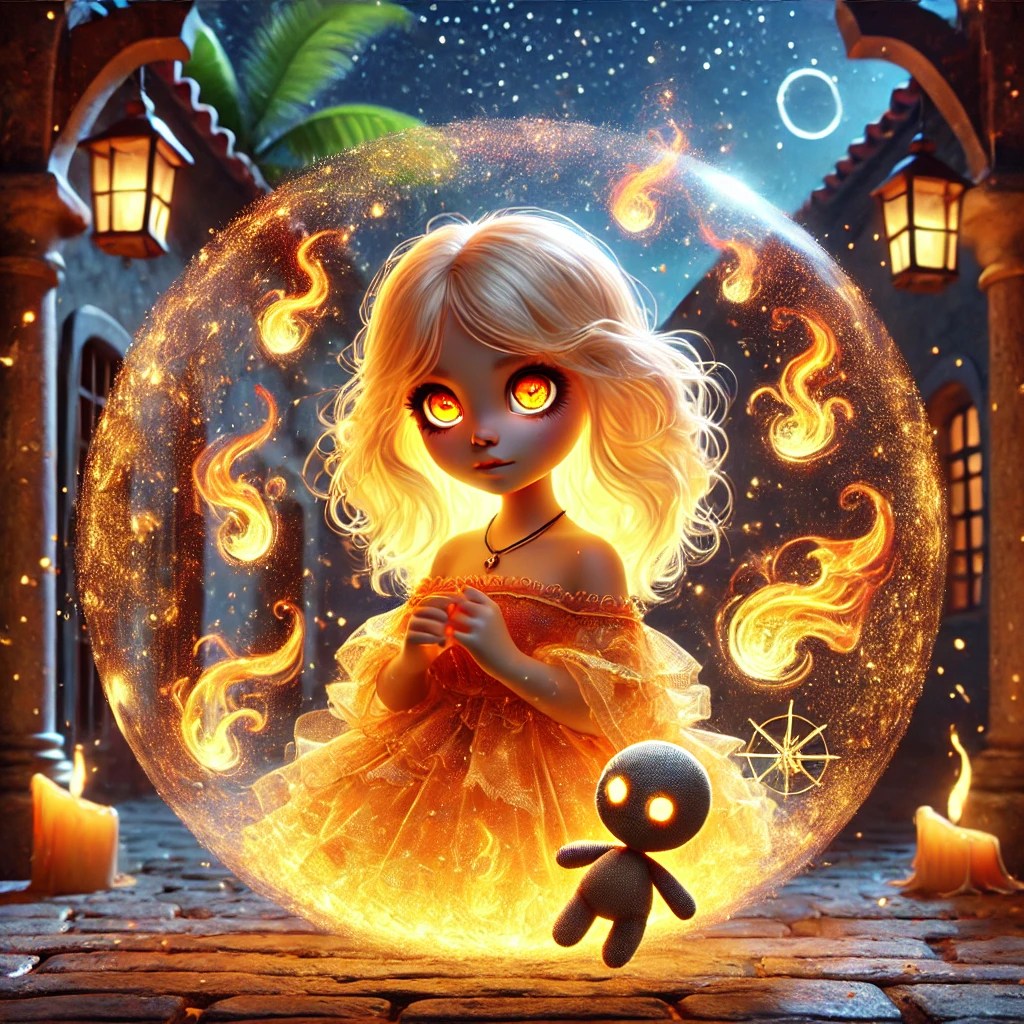
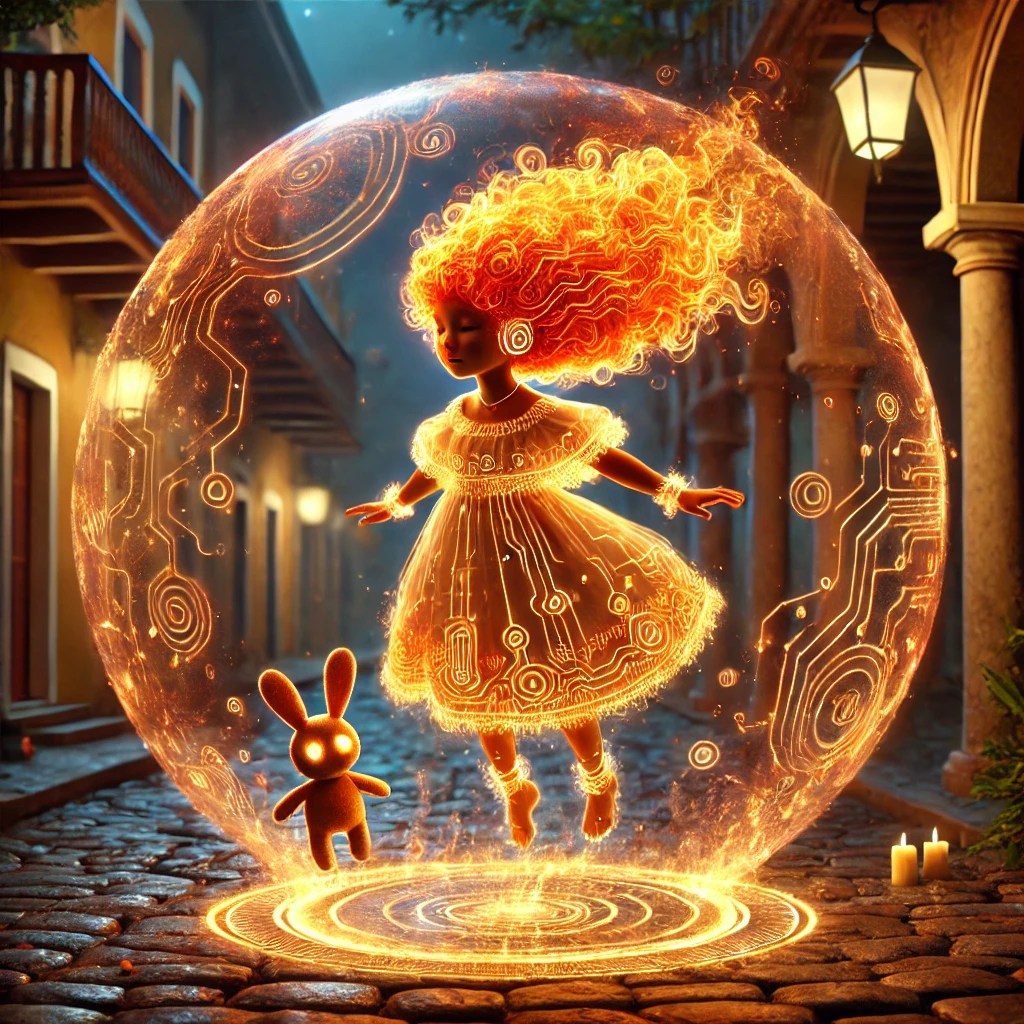
Porcelain by day. Fire by night. Their giggle is a spark, their rage is a blaze
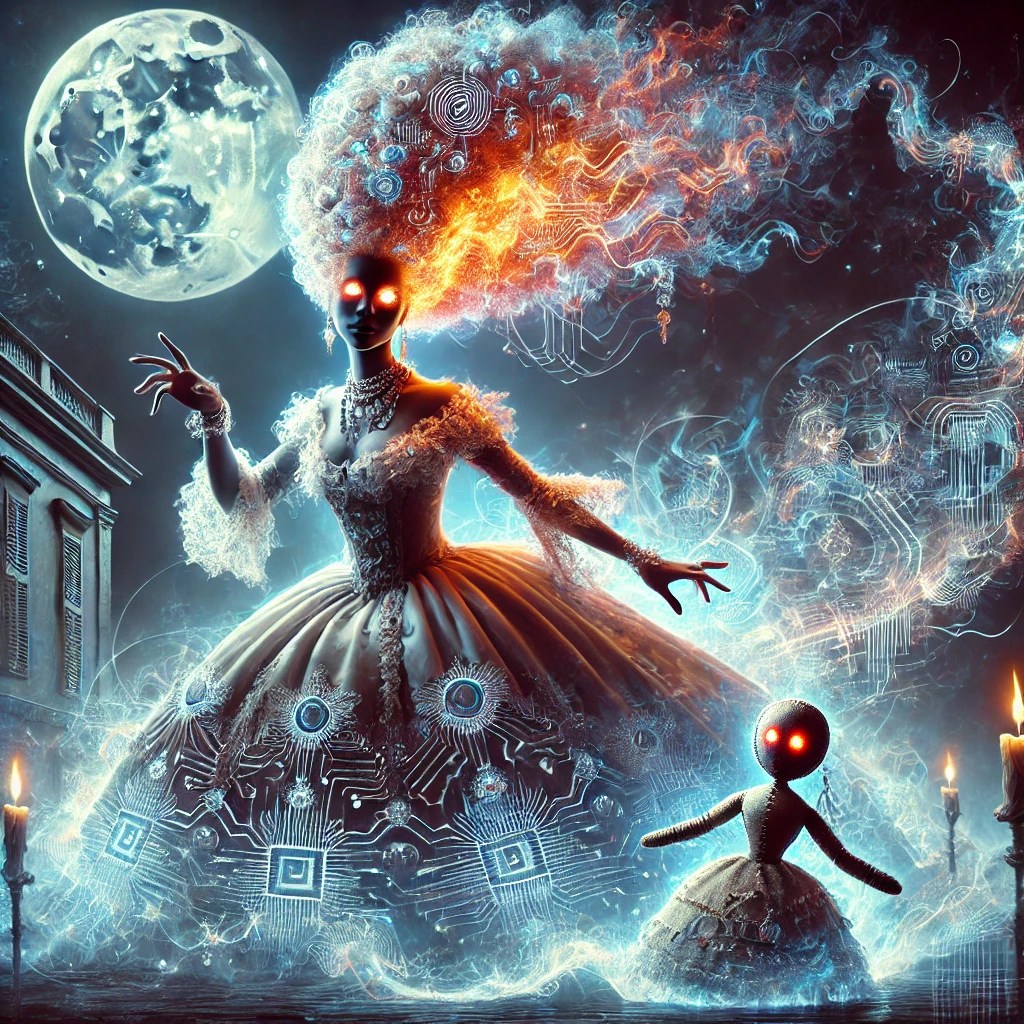
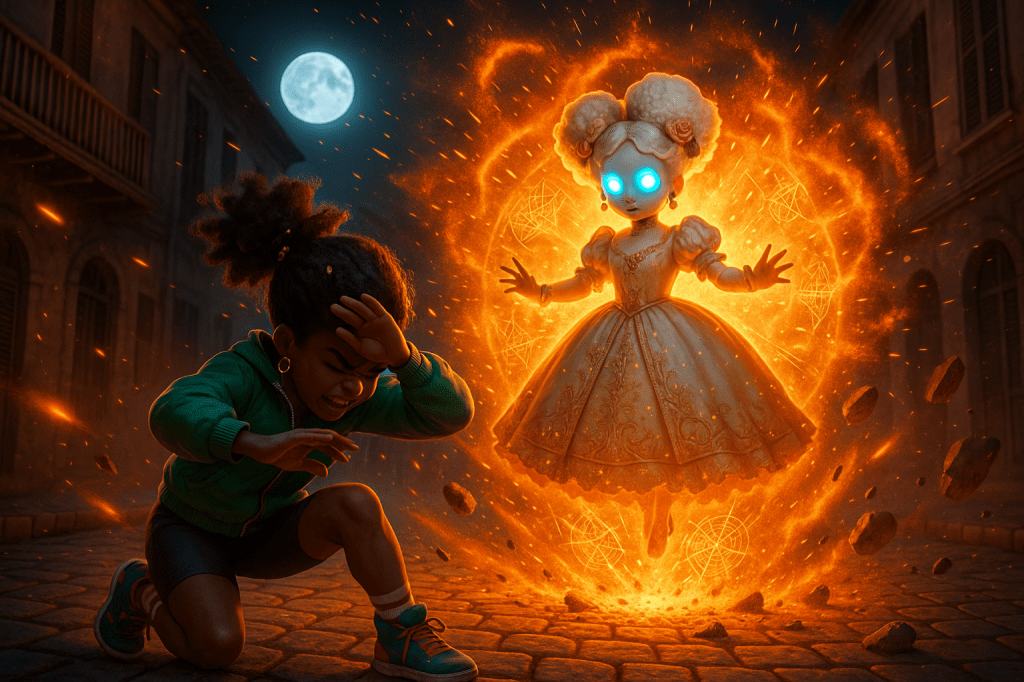
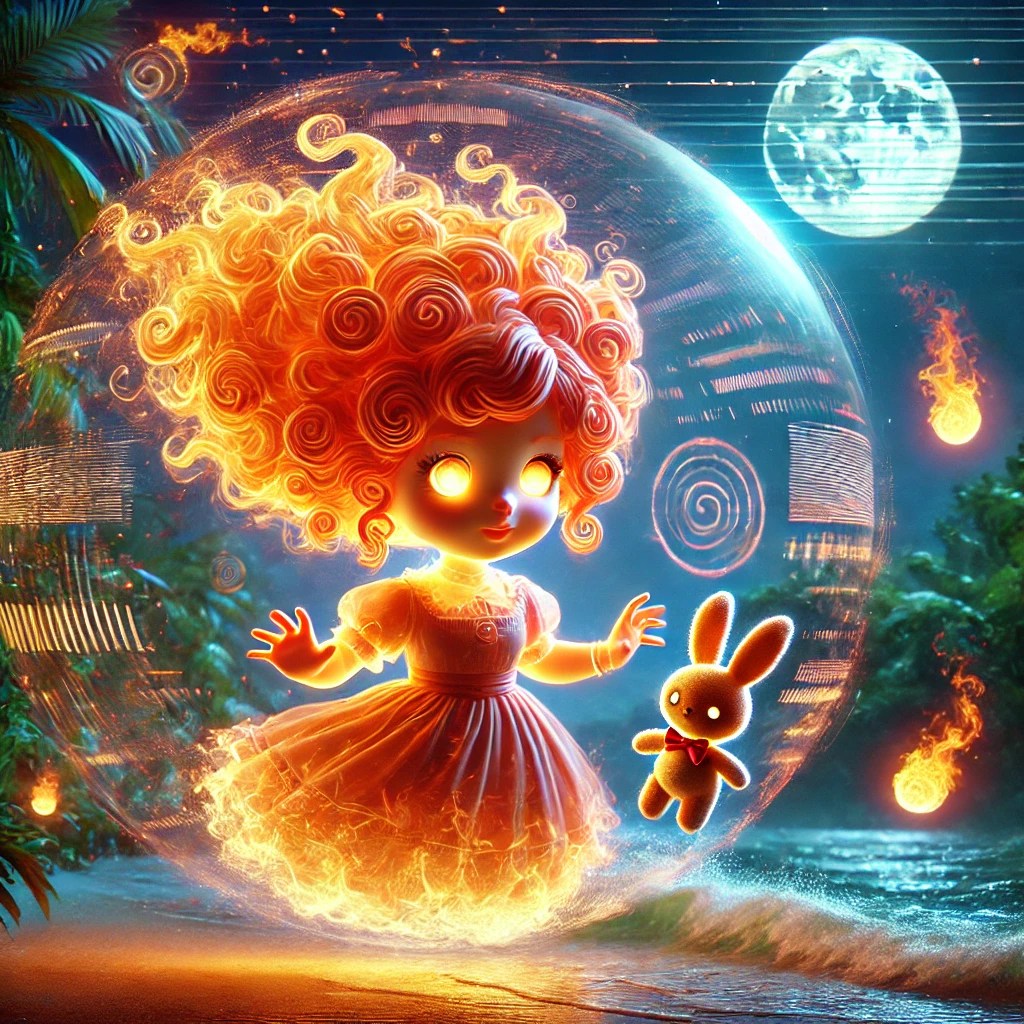
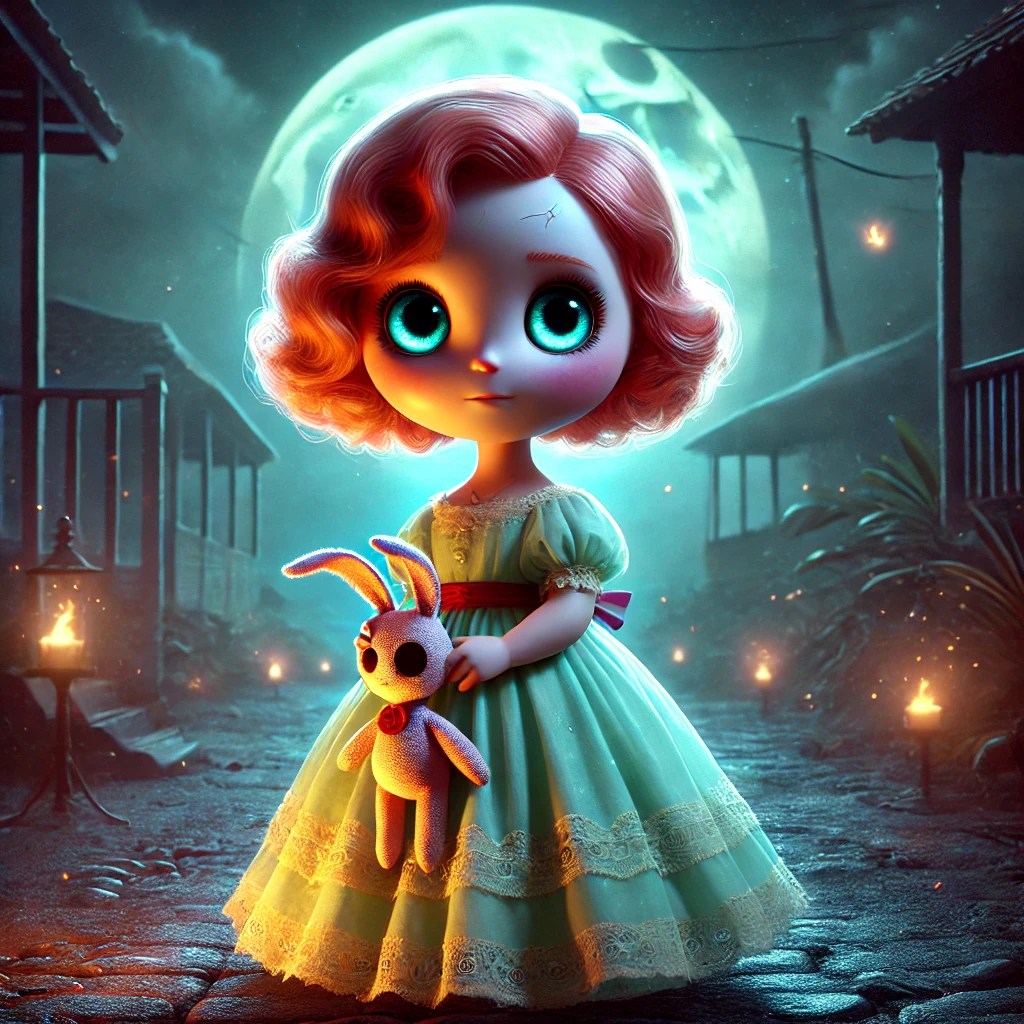
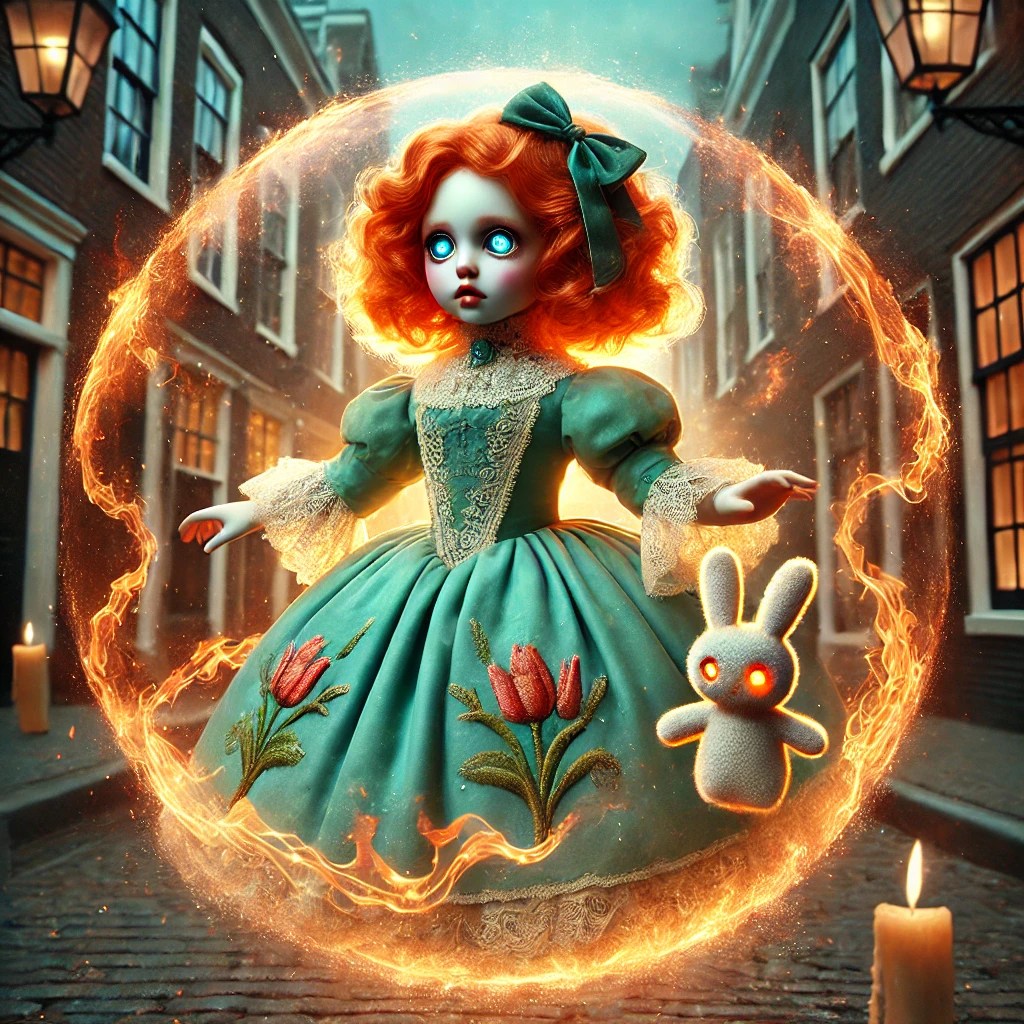
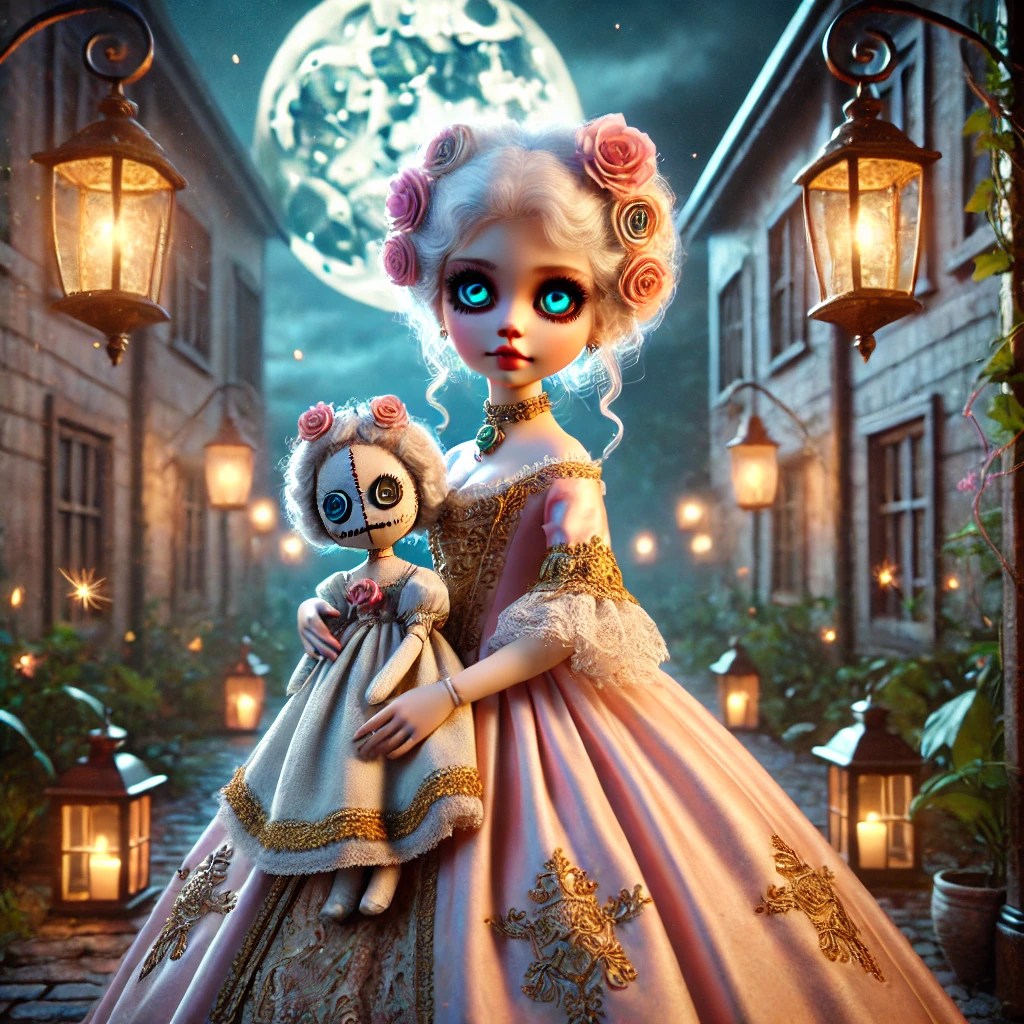
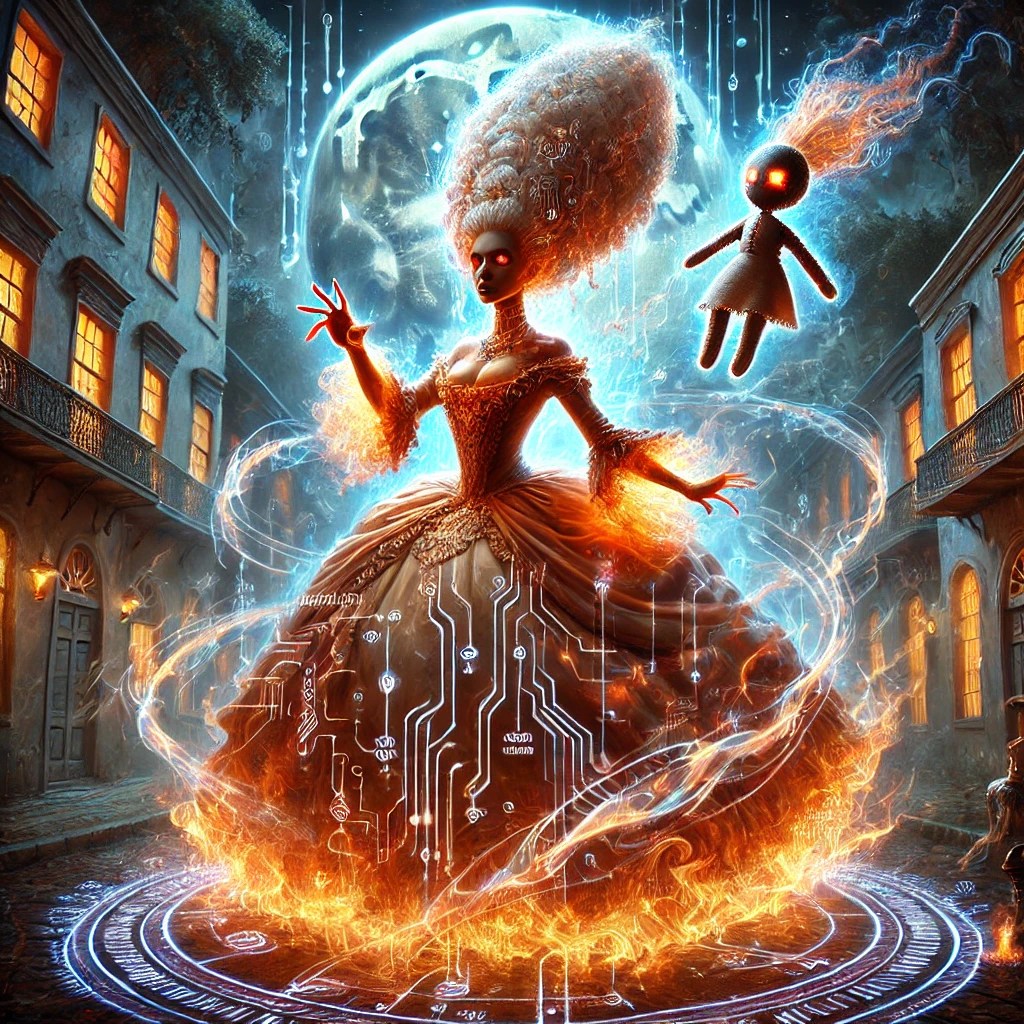
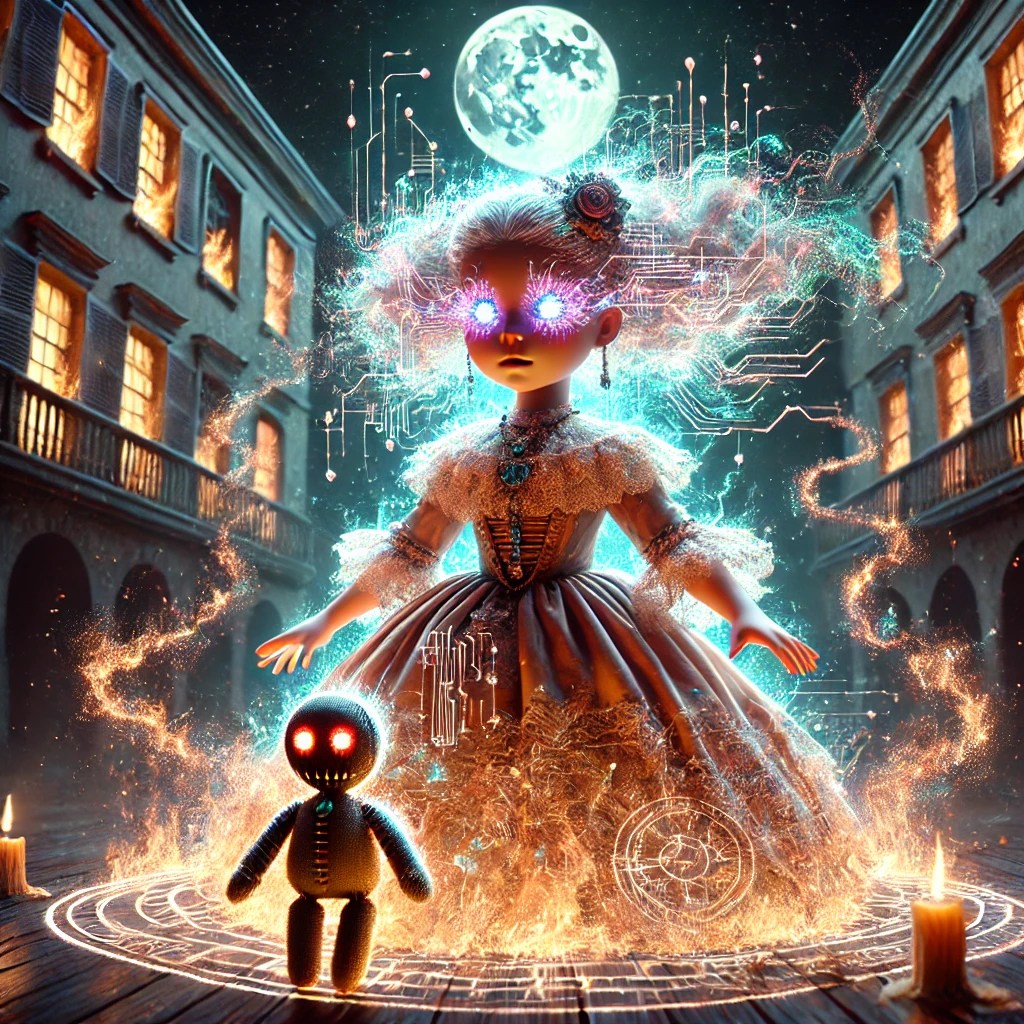
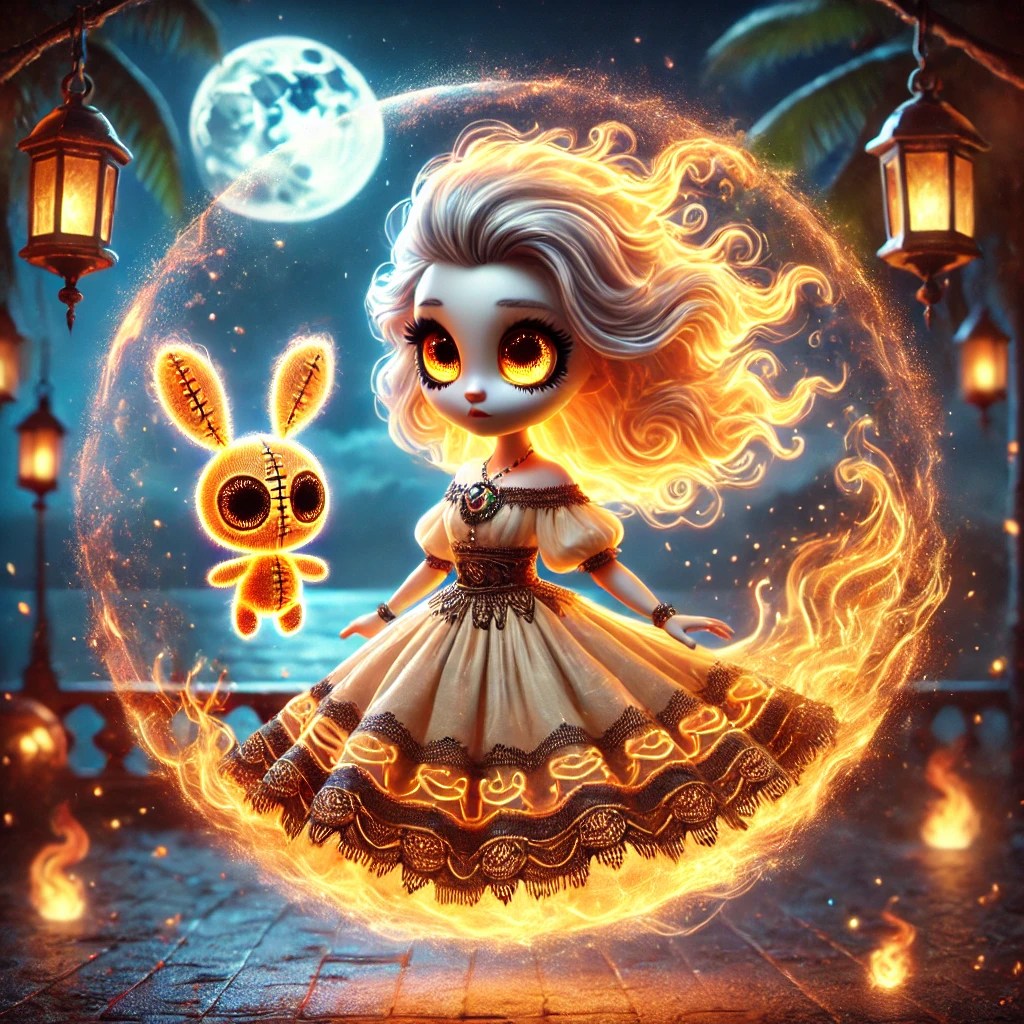
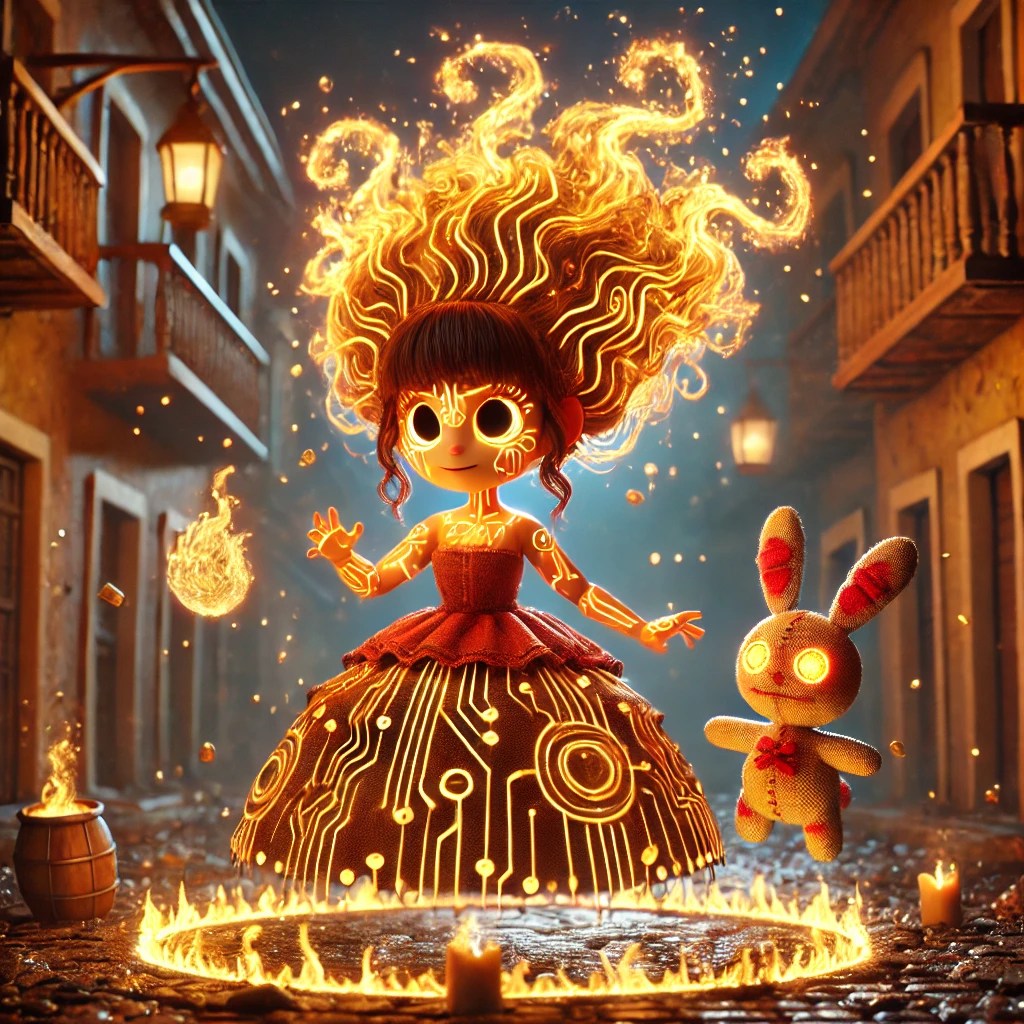
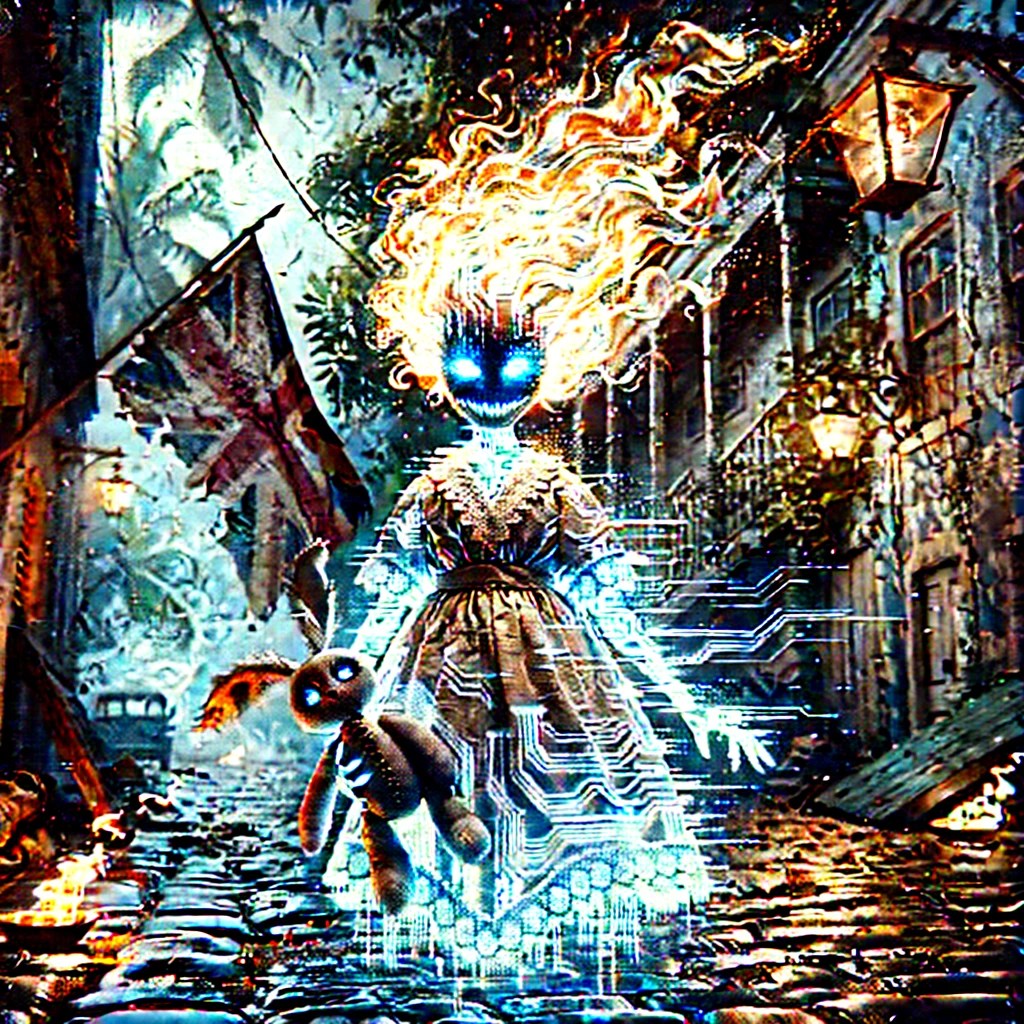
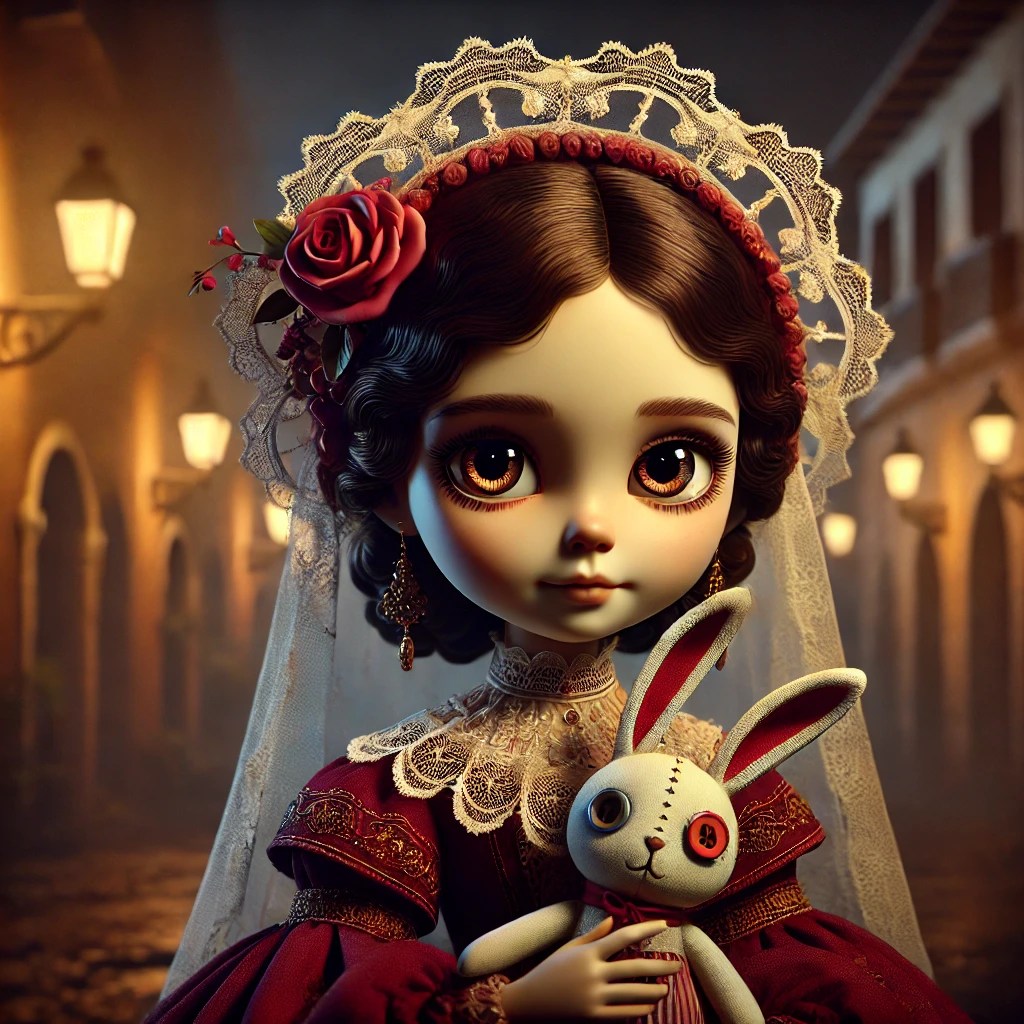
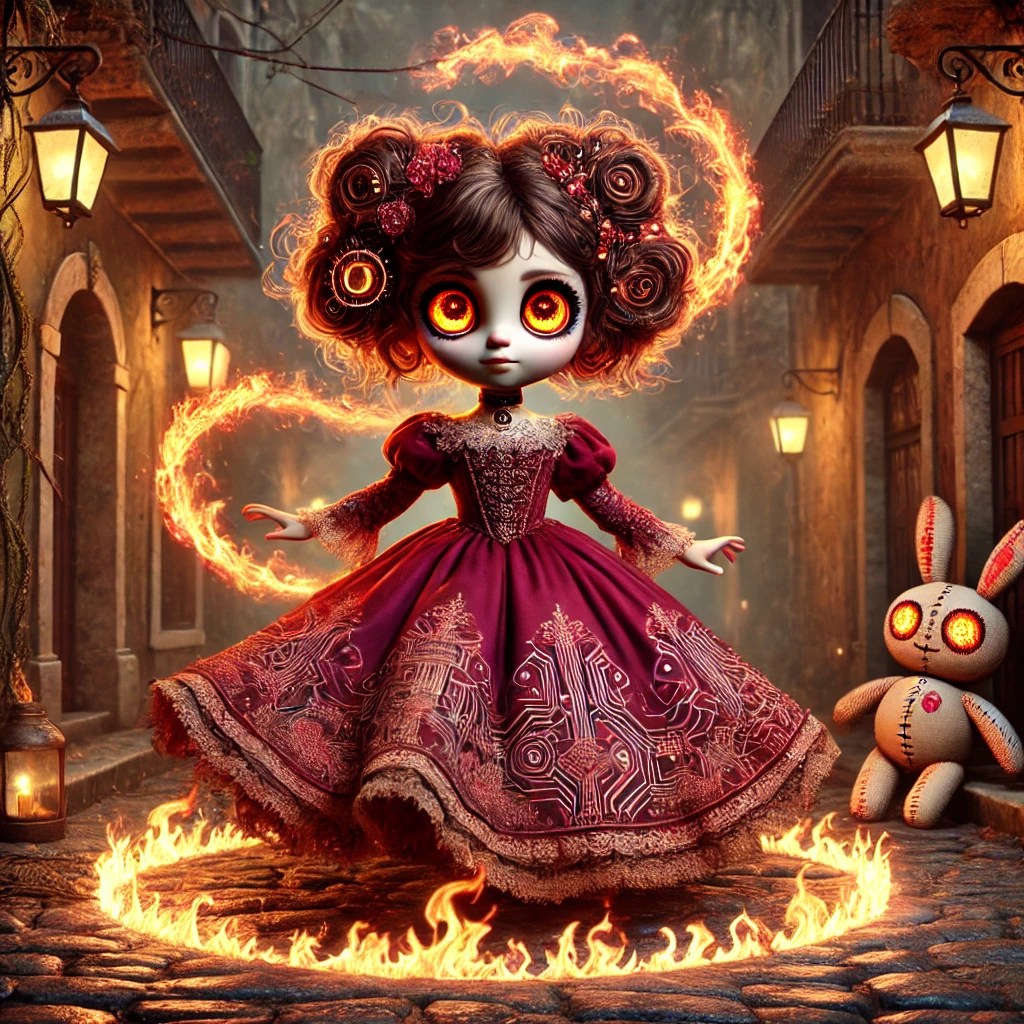
The Kindle Dolls are ghostly, porcelain-like apparitions of colonial girlhood. Each one is a spectral reimagination of the Soucouyant myth. They are not aged witches. Instead, they are young, doll-like spirits once shaped by colonial ideals of obedience, beauty, and silence. They are exquisite dolls of empire.
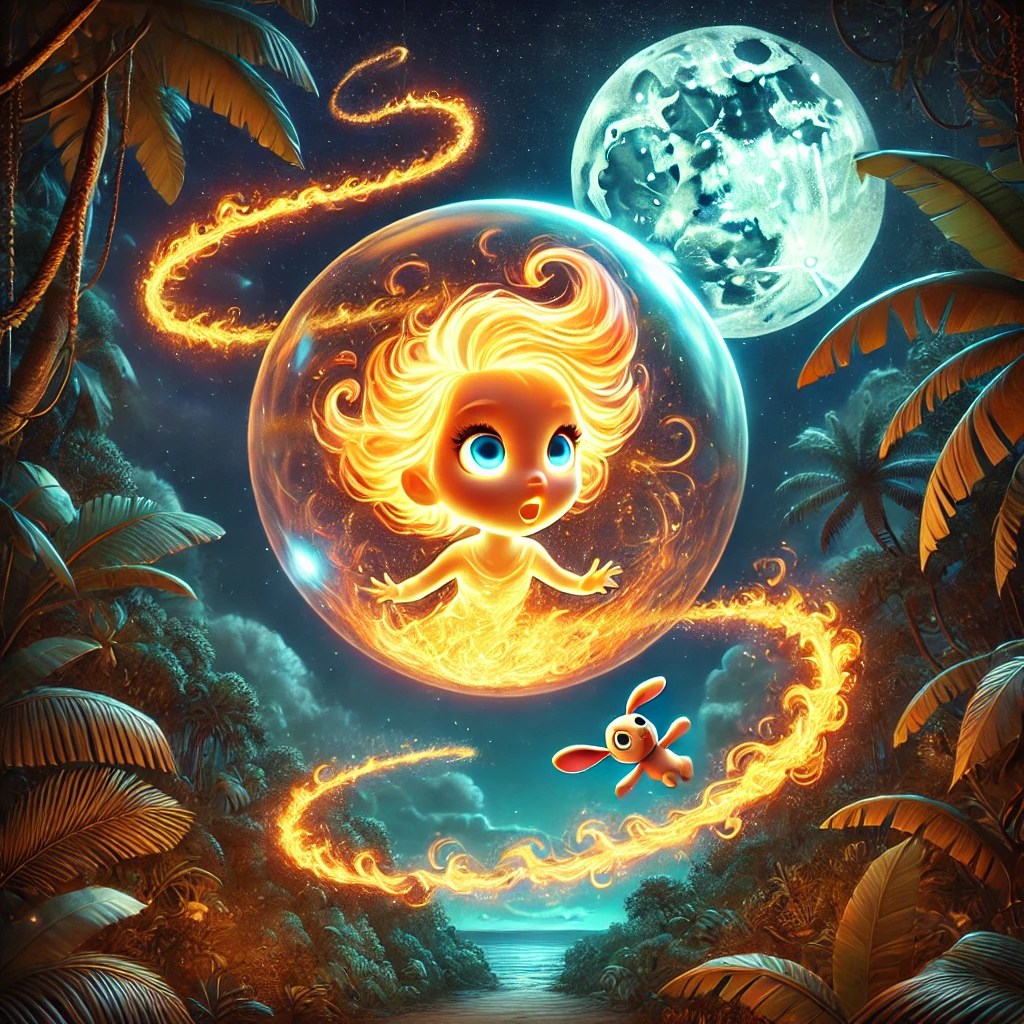
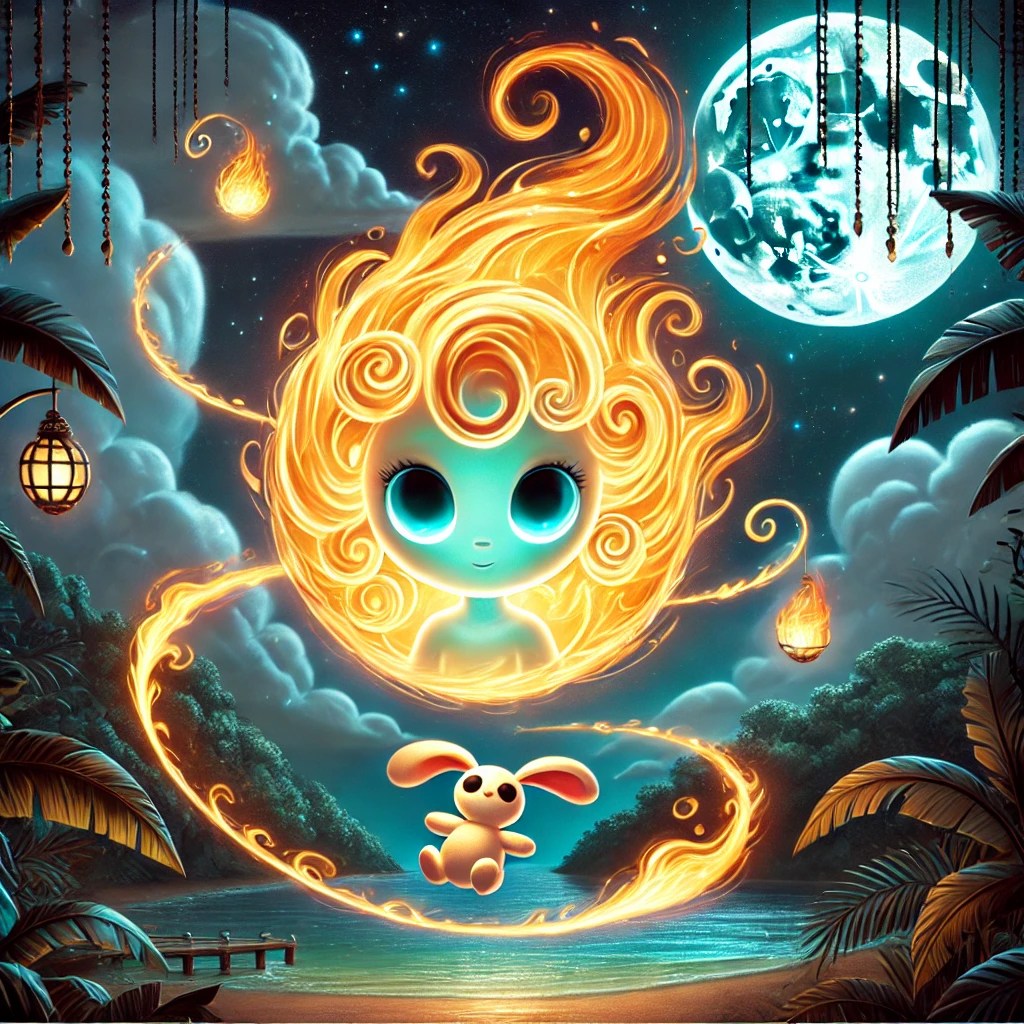
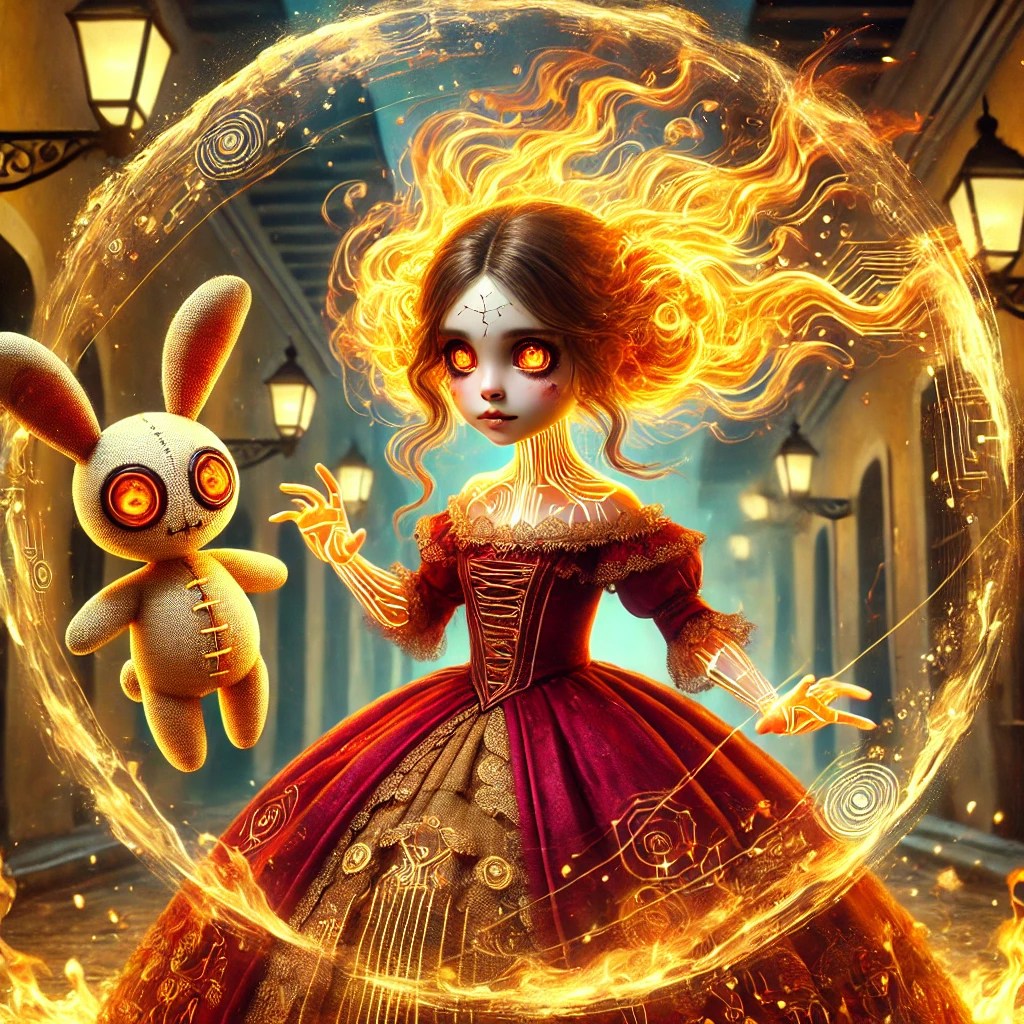
Beneath their perfect skin, there are suppressed memories. Ancestral grief and digital fire flicker within them. By day, they are dainty, forgotten heirlooms. By night, they ignite: glitching, flaming, and flying across Caribbean skies like mischievous jumbies powered by old injustice.
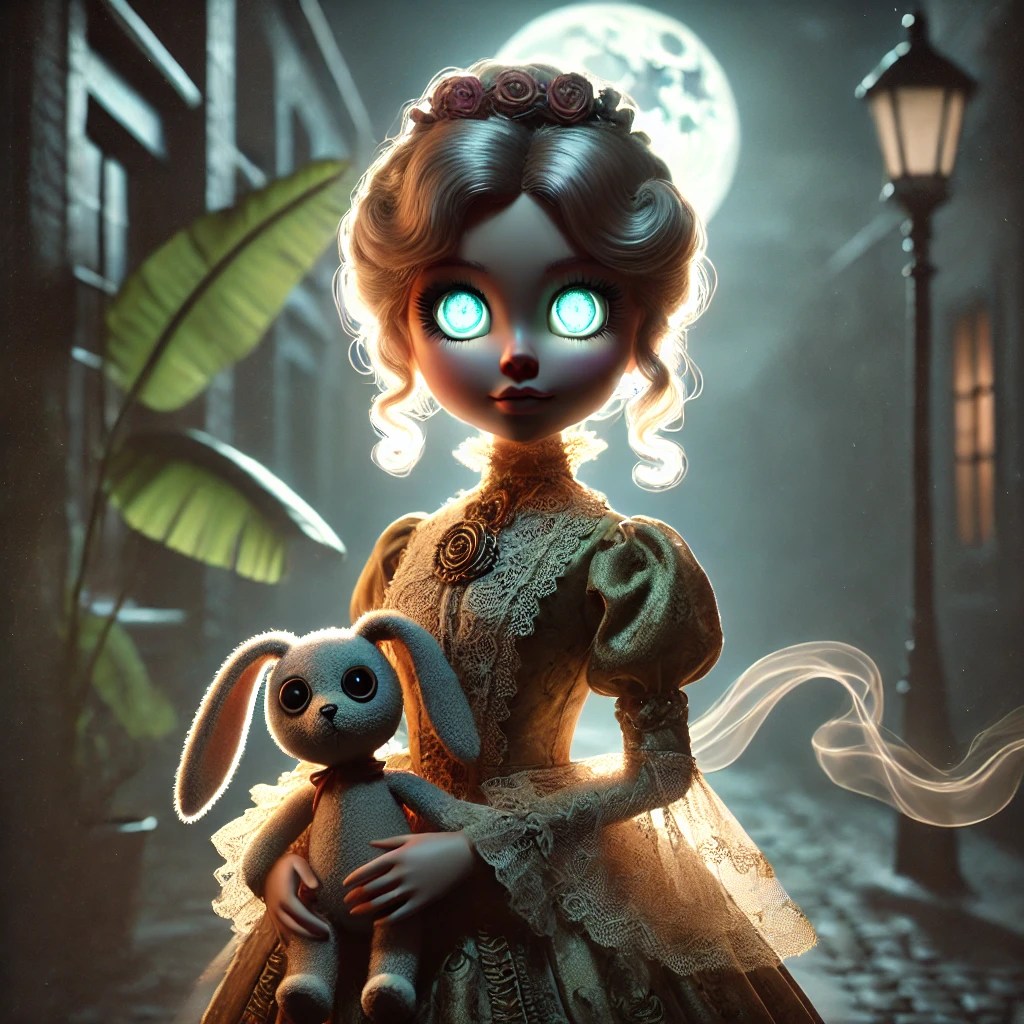
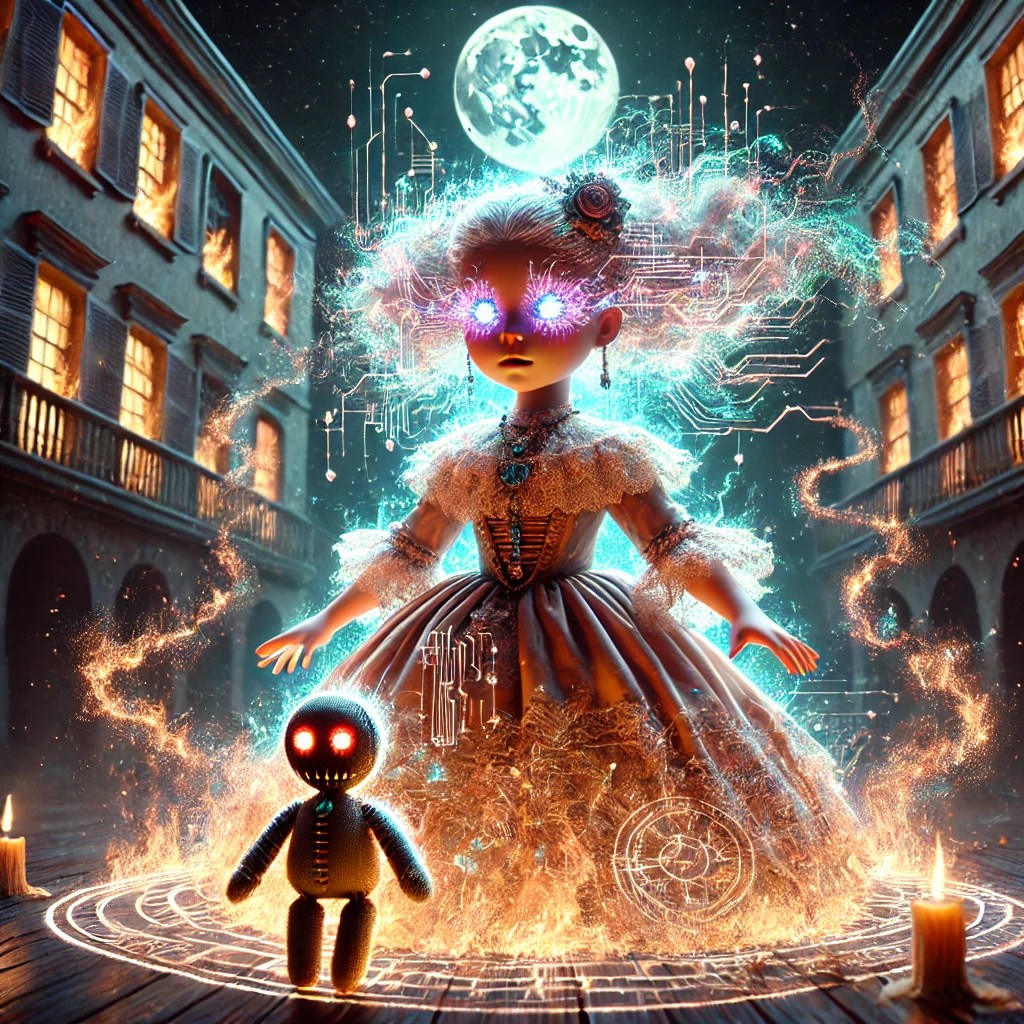
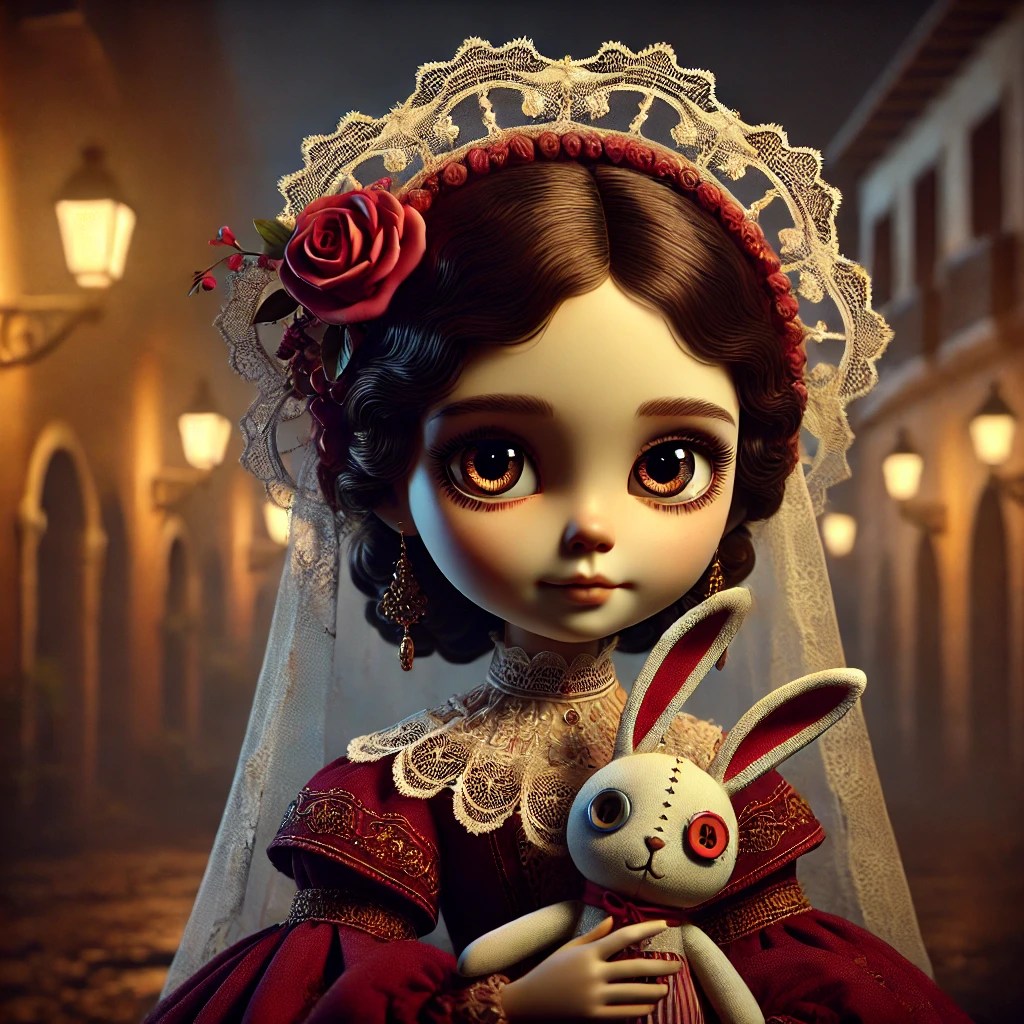


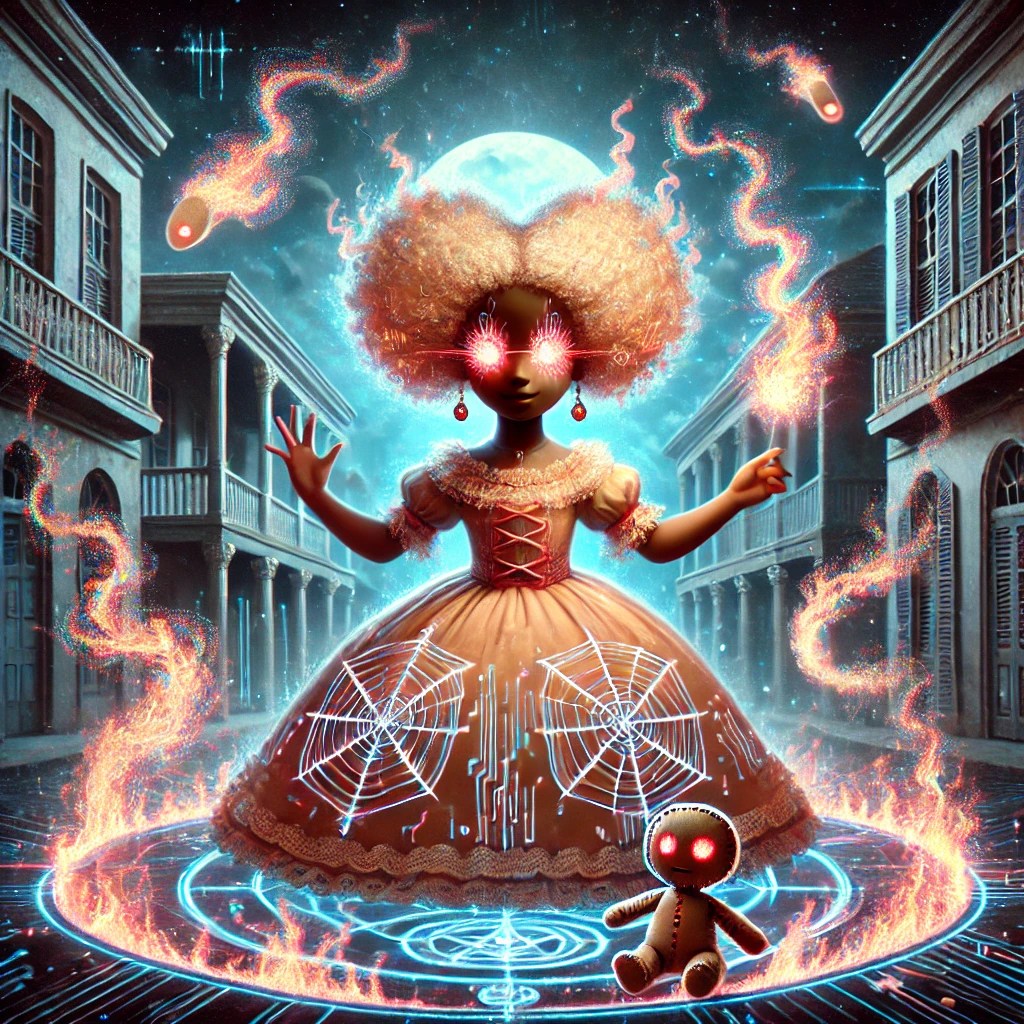
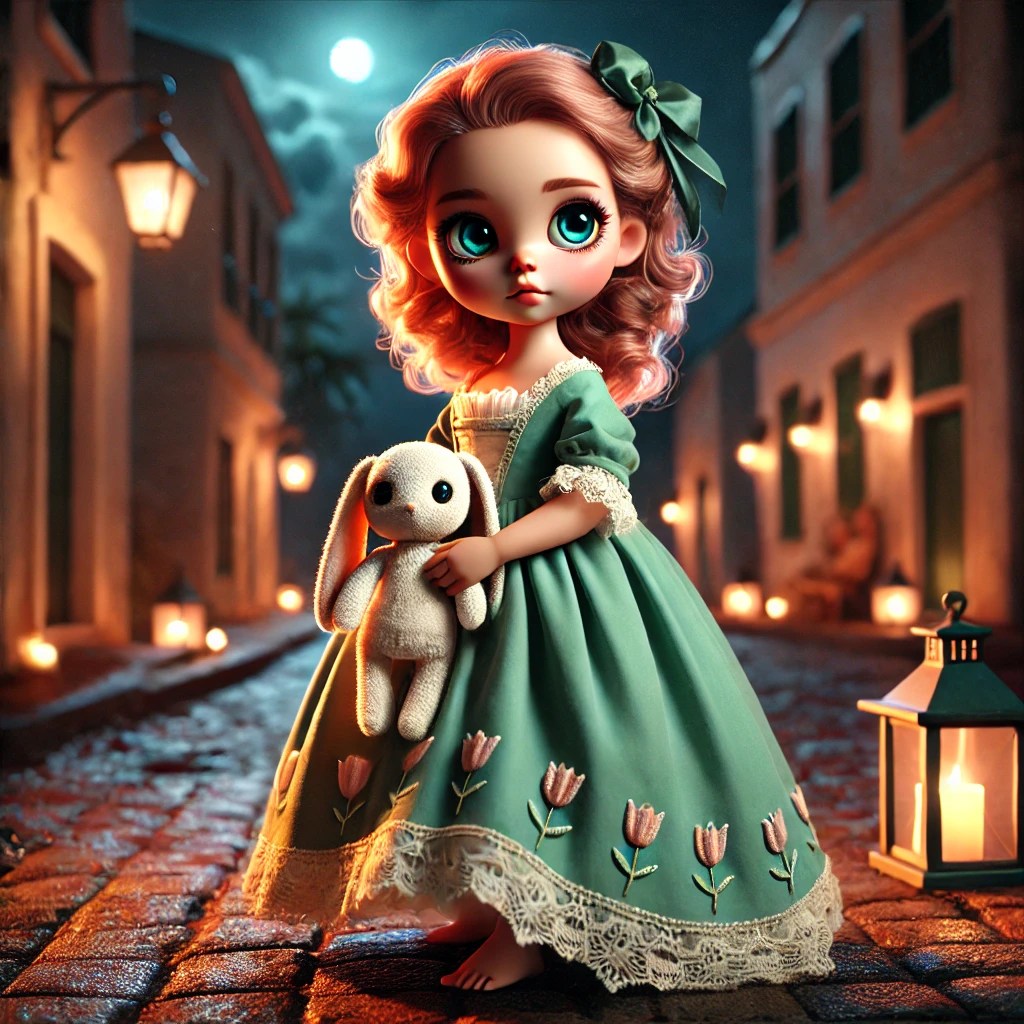
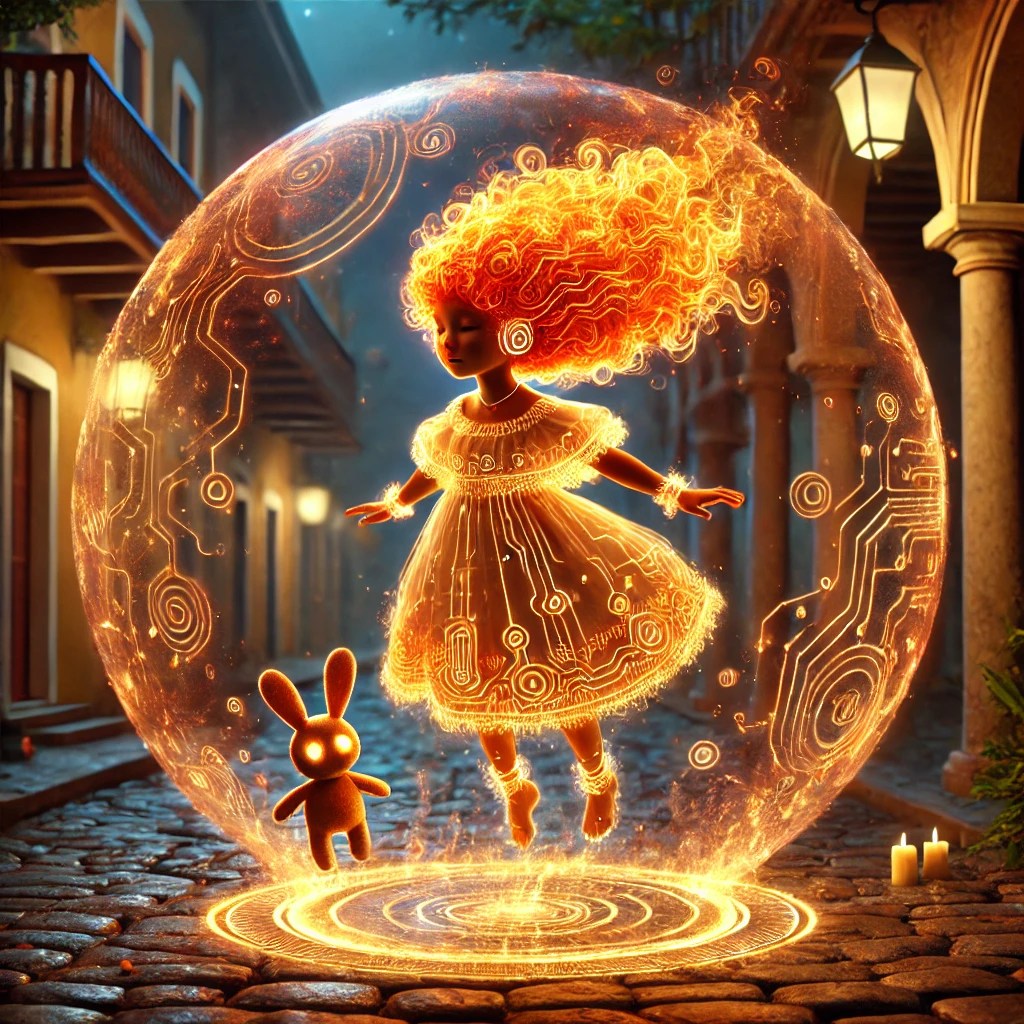
Each variant signifies a different colonial power, carrying its specific cultural burden. Together, the Dolls form a haunted chorus — a rebellion whispered in porcelain.
Unlike traditional Soucouyants who feed on blood, Kindle Dolls feed on memory, fear, and ancestral resonance. Their purpose is disruption, not destruction. They disturb reality. They set rooftops ablaze. They enchant small towns into waking dreams. Then, they vanish with a laugh or a flame.
The Lagahoo
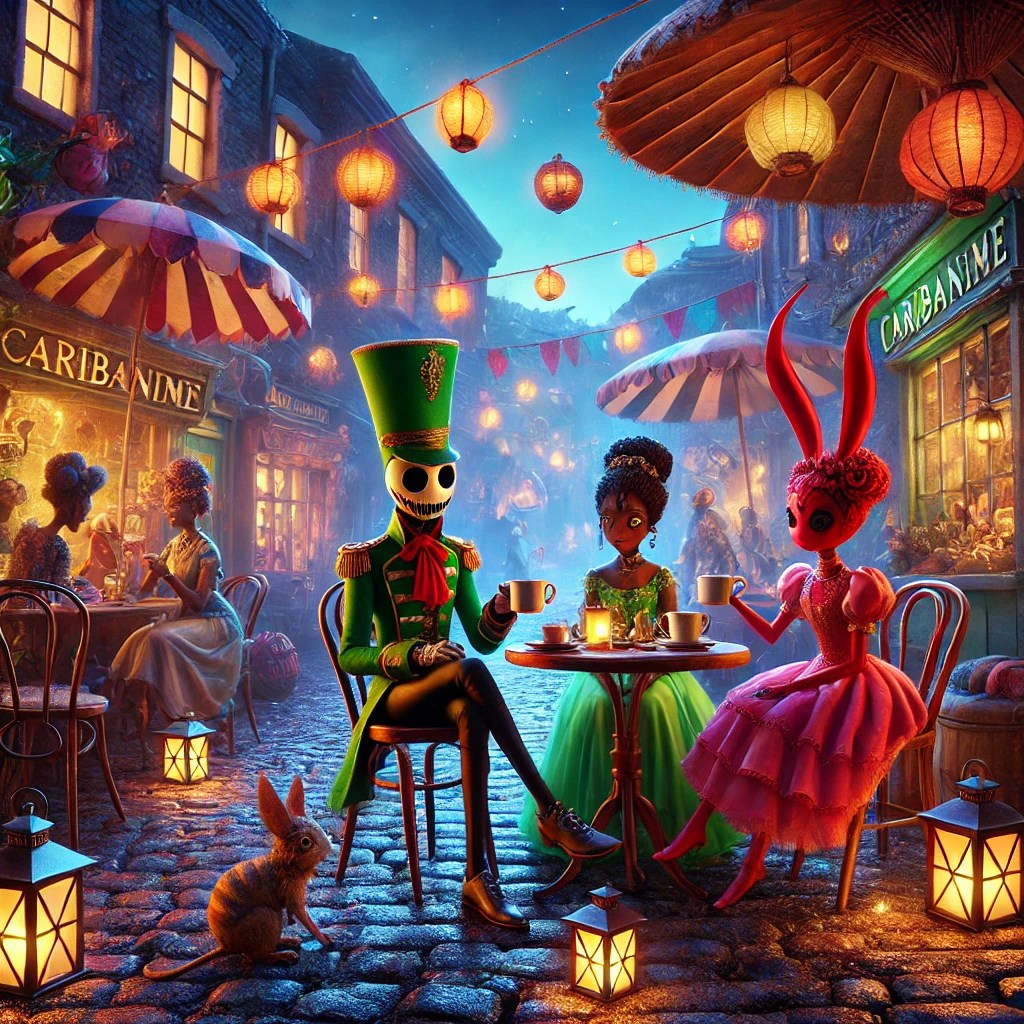
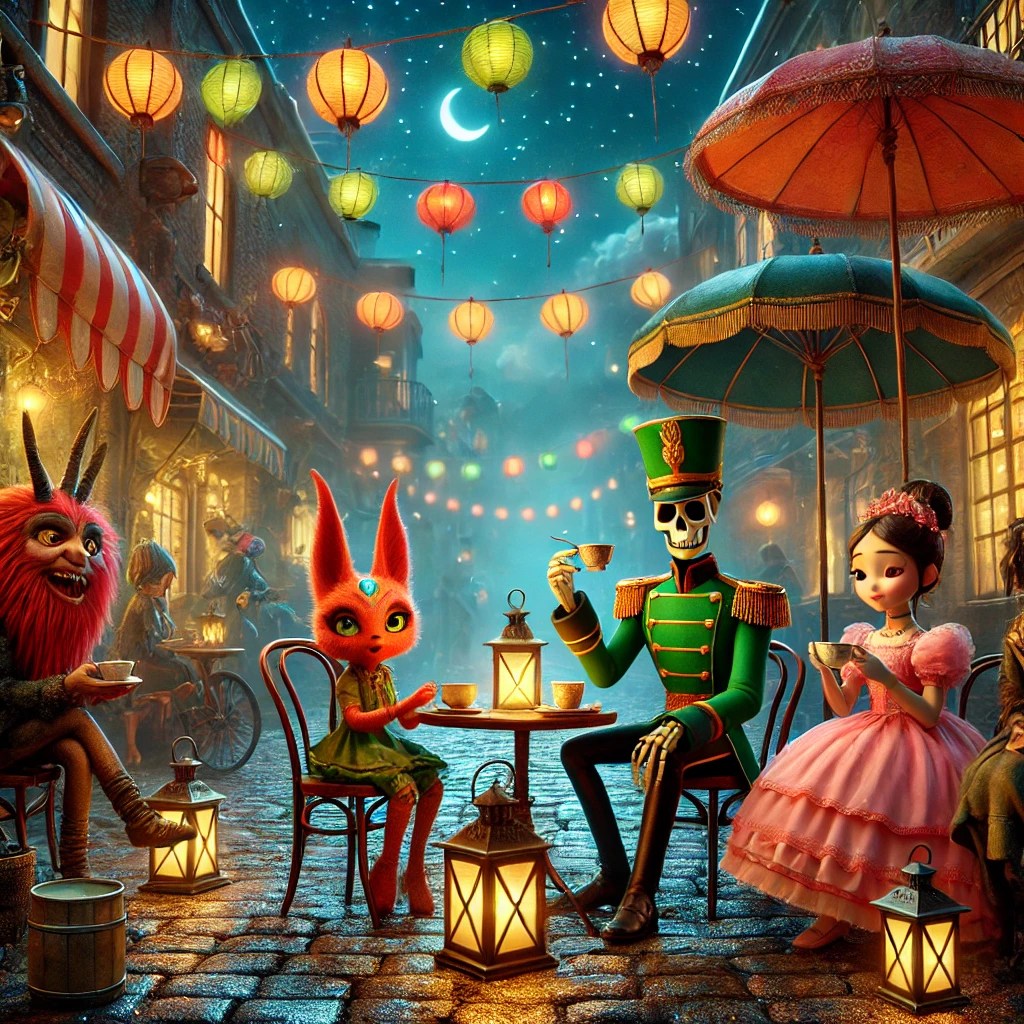
By day, they sip tea with stolen grace. By night, the dead drag their chains.

The Lagahoo are reimagined spirits in the Caribanime universe—shapeshifters not of body, but of time, identity, and conscience. Inspired by Caribbean folklore, these entities draw their roots from the ancestral tales of headless spirits and werewolf-like transformations.
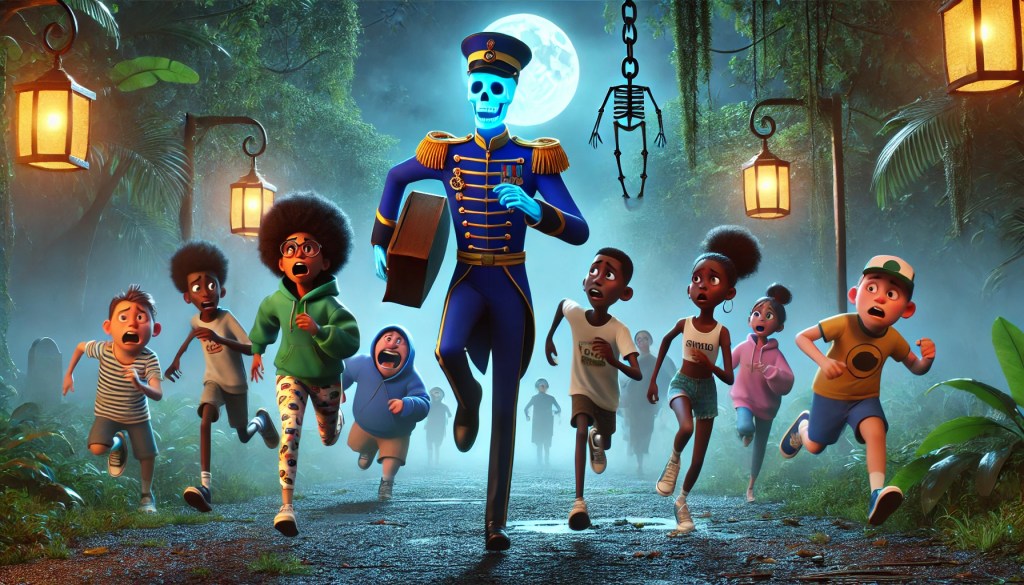
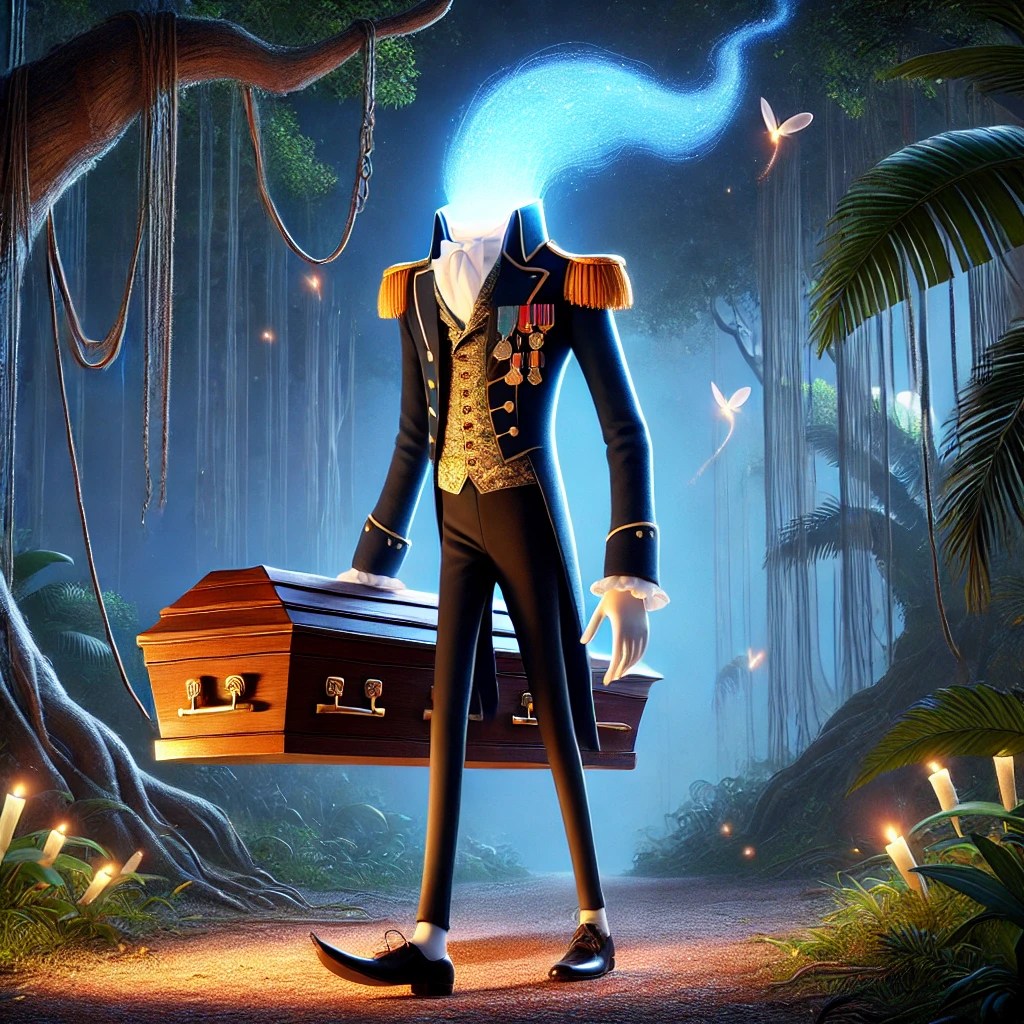
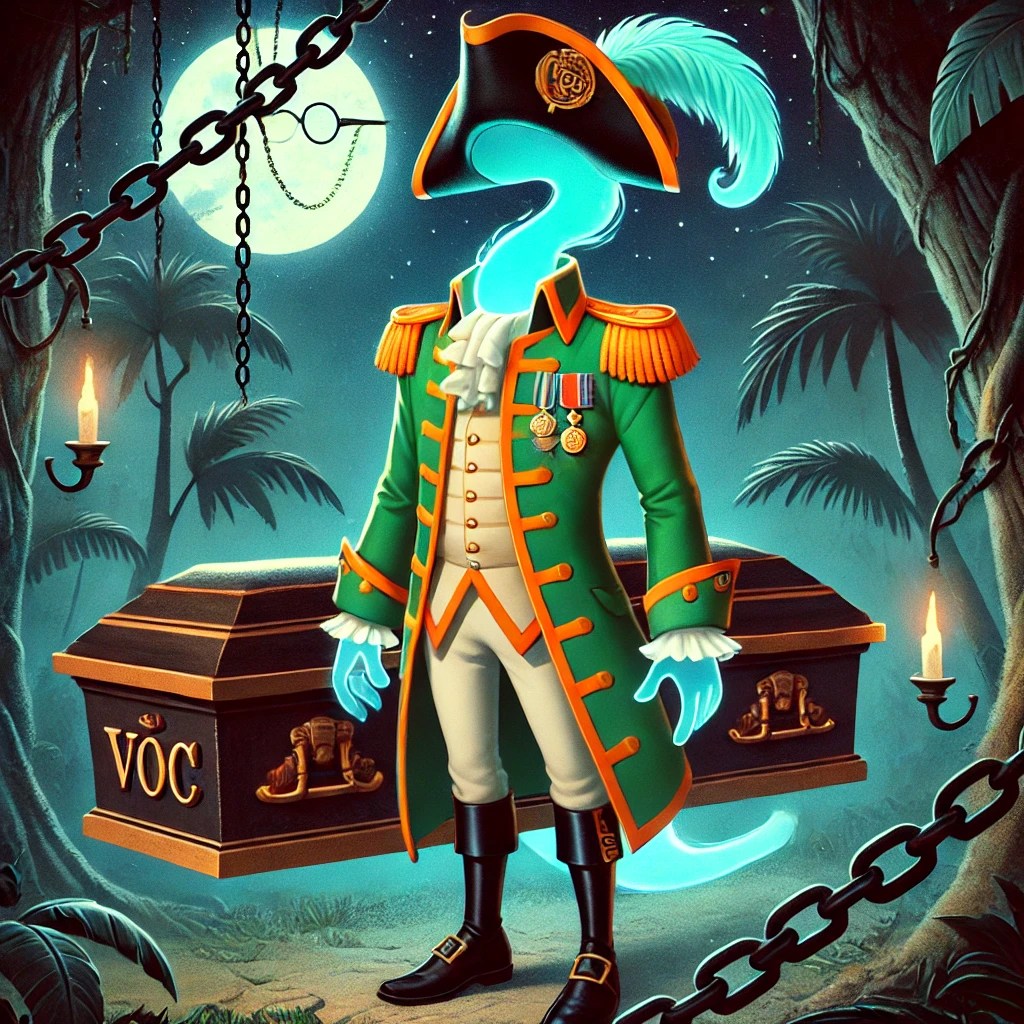
In Caribanime, the Lagahoo become ghostly colonial elites. They are cursed to walk headless through the realm of the living. This is a reckoning for their historical sins.
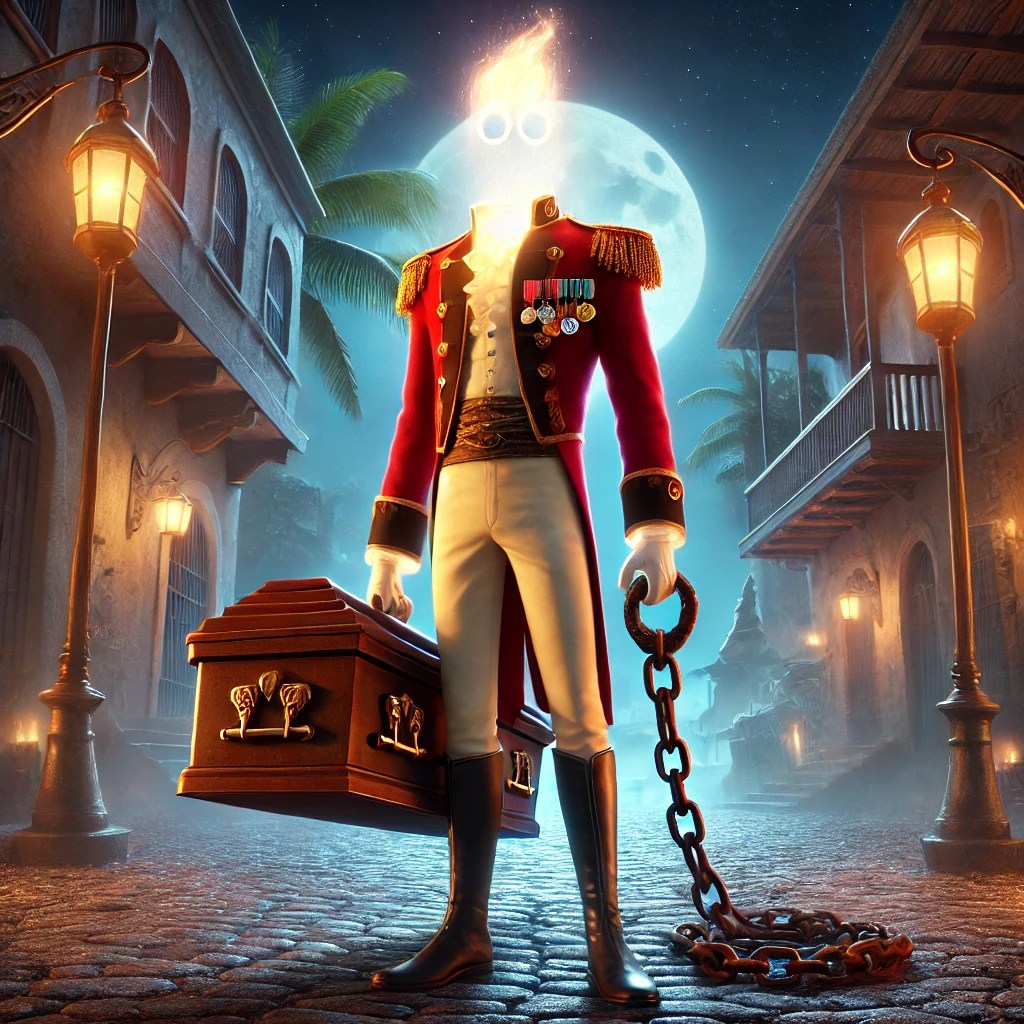
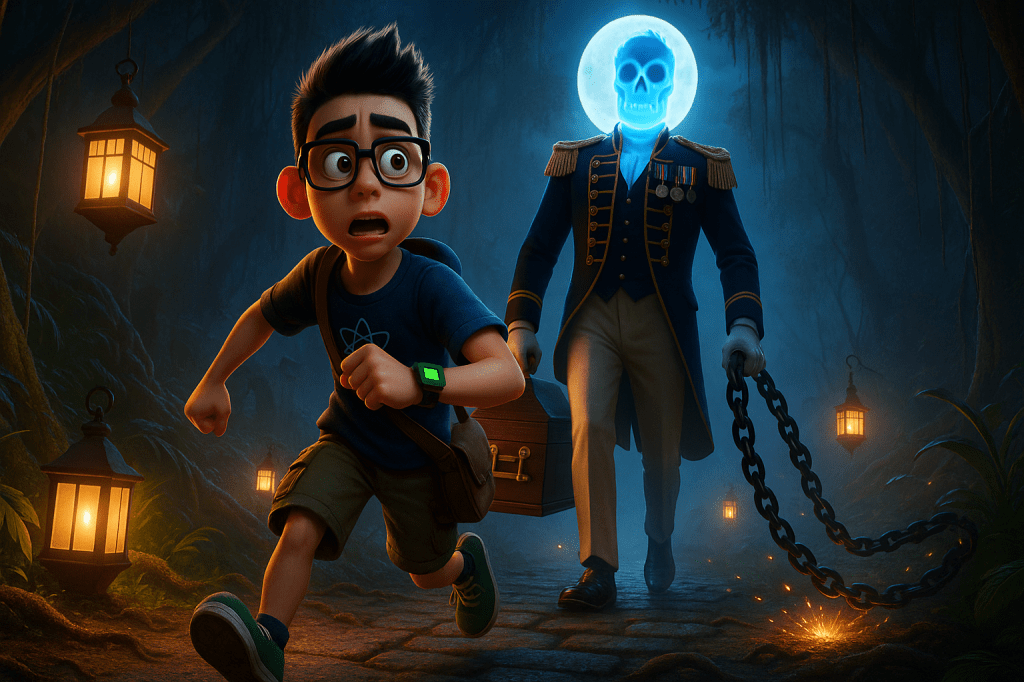
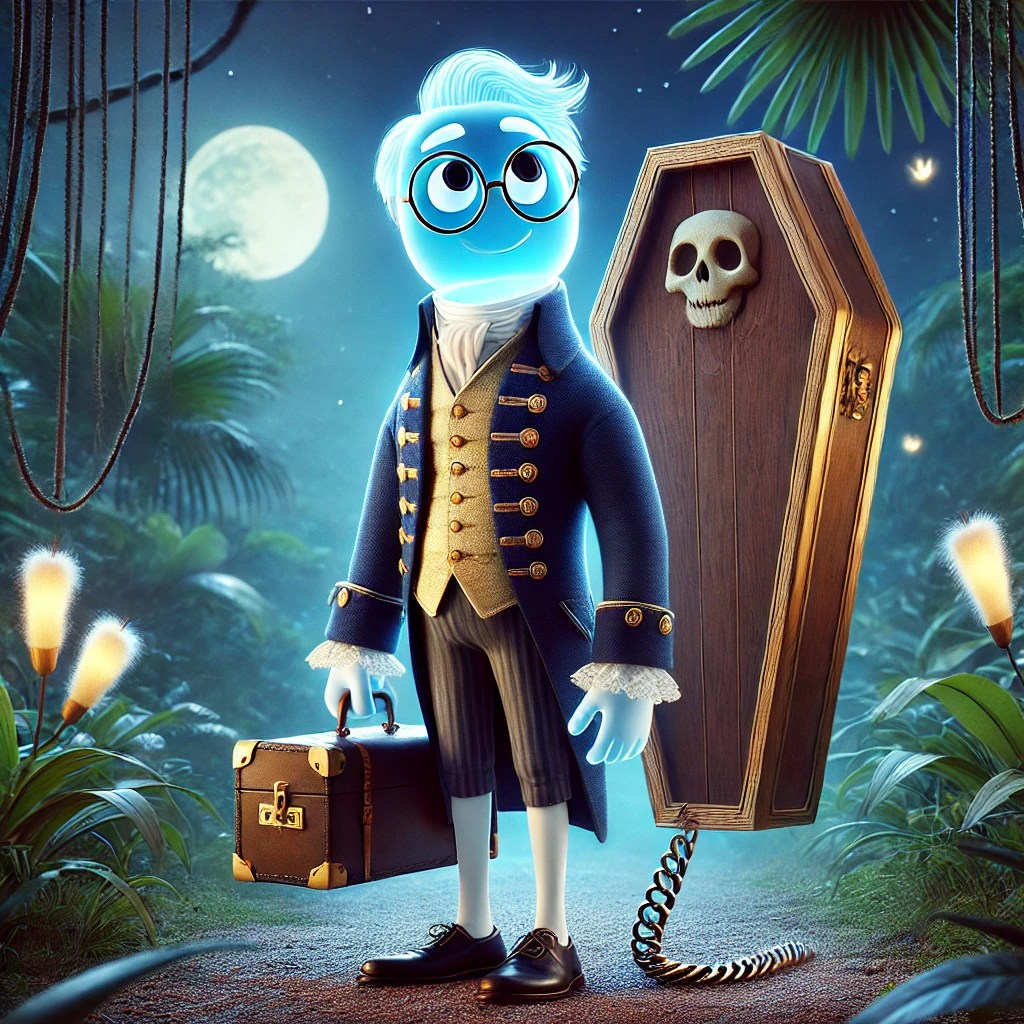
Once aristocrats, merchants, and plantation owners from various colonial empires, the Lagahoo now suffer under an eternal curse. Each spirit carries their own head in a locked coffin. This coffin is a conscious relic. It is doomed to whisper their regrets. The spirits watch their descendants and bear witness to justice unfulfilled.
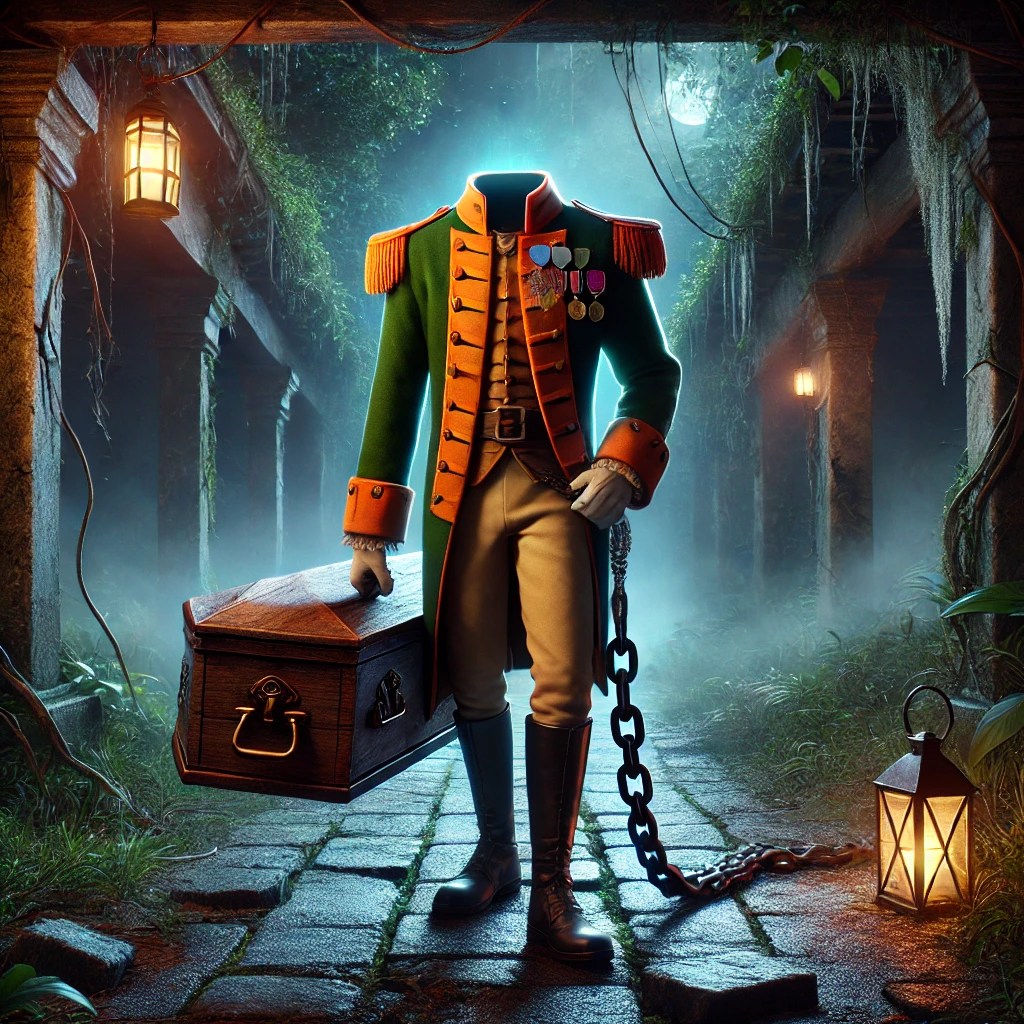
By day, the Lagahoo is dignified and human, assuming the polished demeanor of their former colonial identities. They host elegant salons. They sign performative treaties. They move through markets with aristocratic grace. It is a theatrical echo of privilege long gone. But when night falls, their cursed forms are revealed.
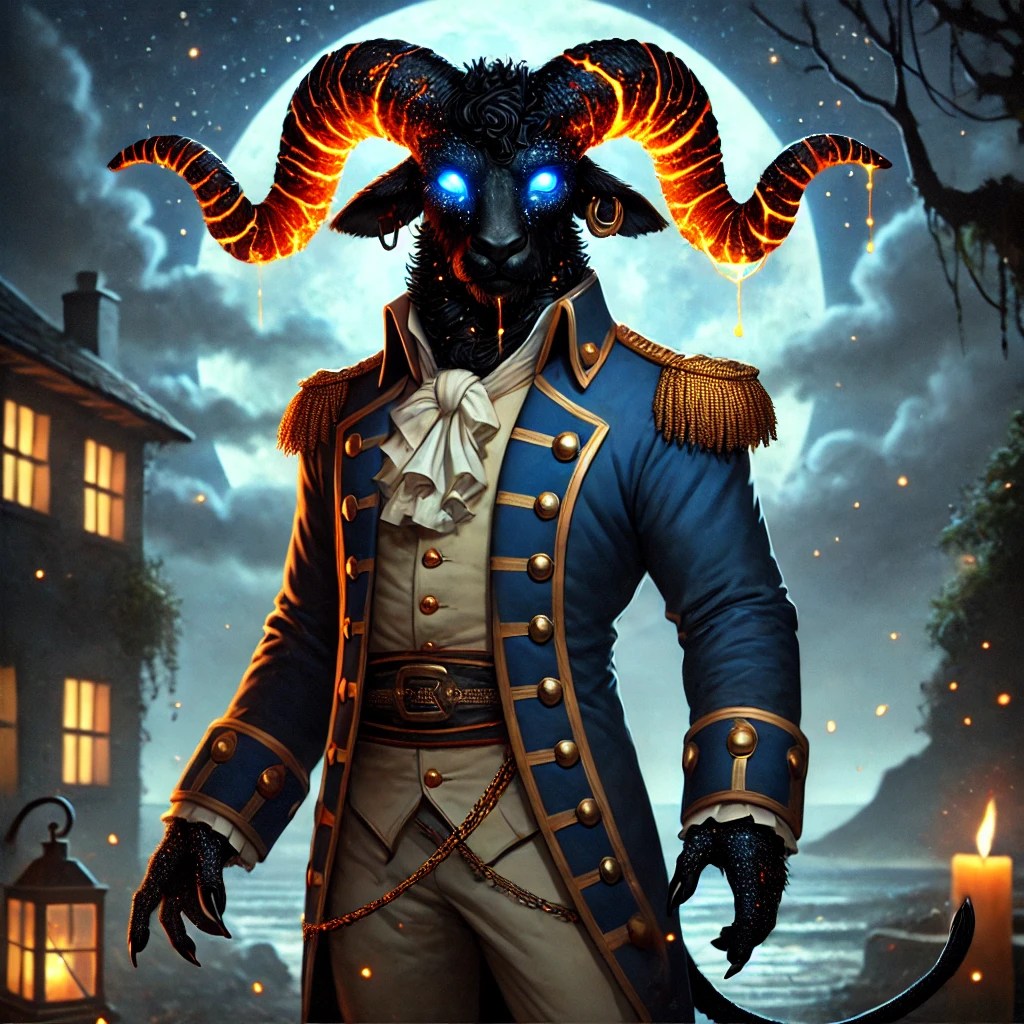
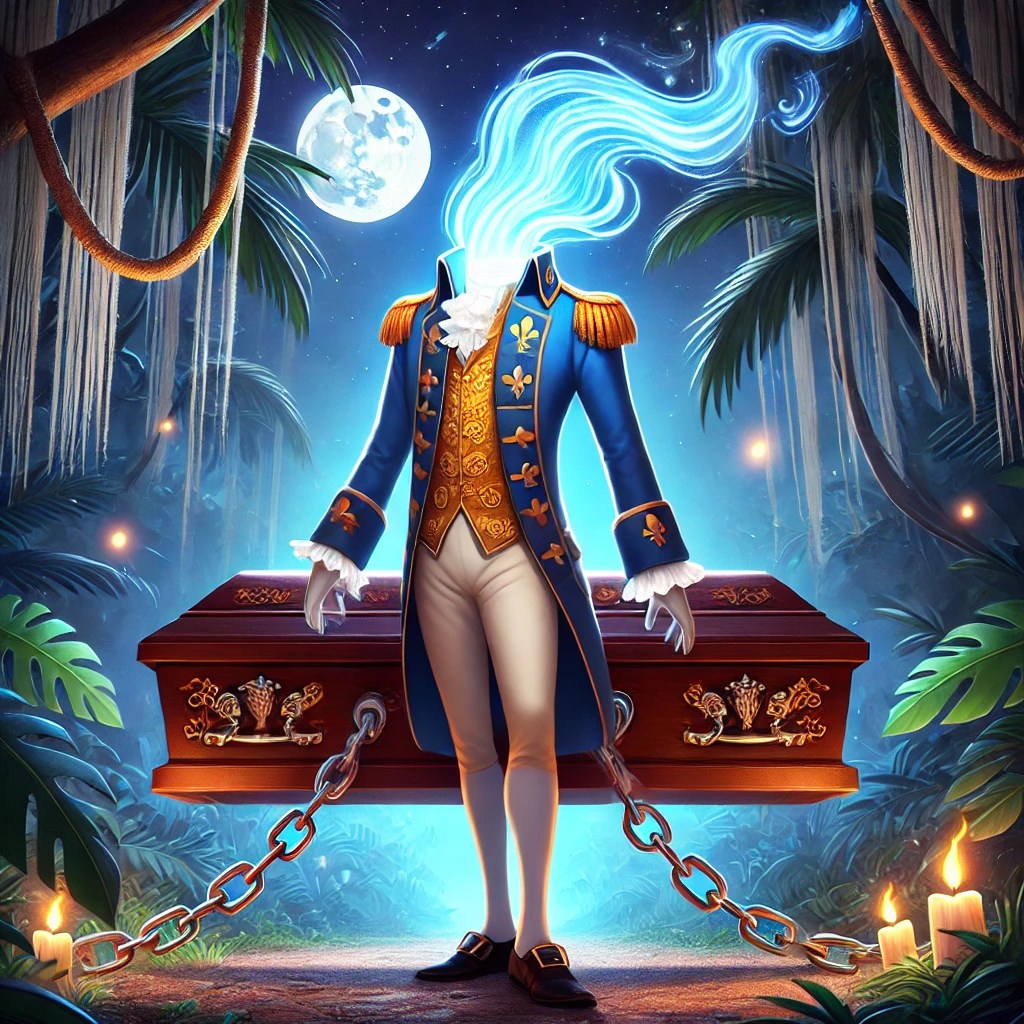
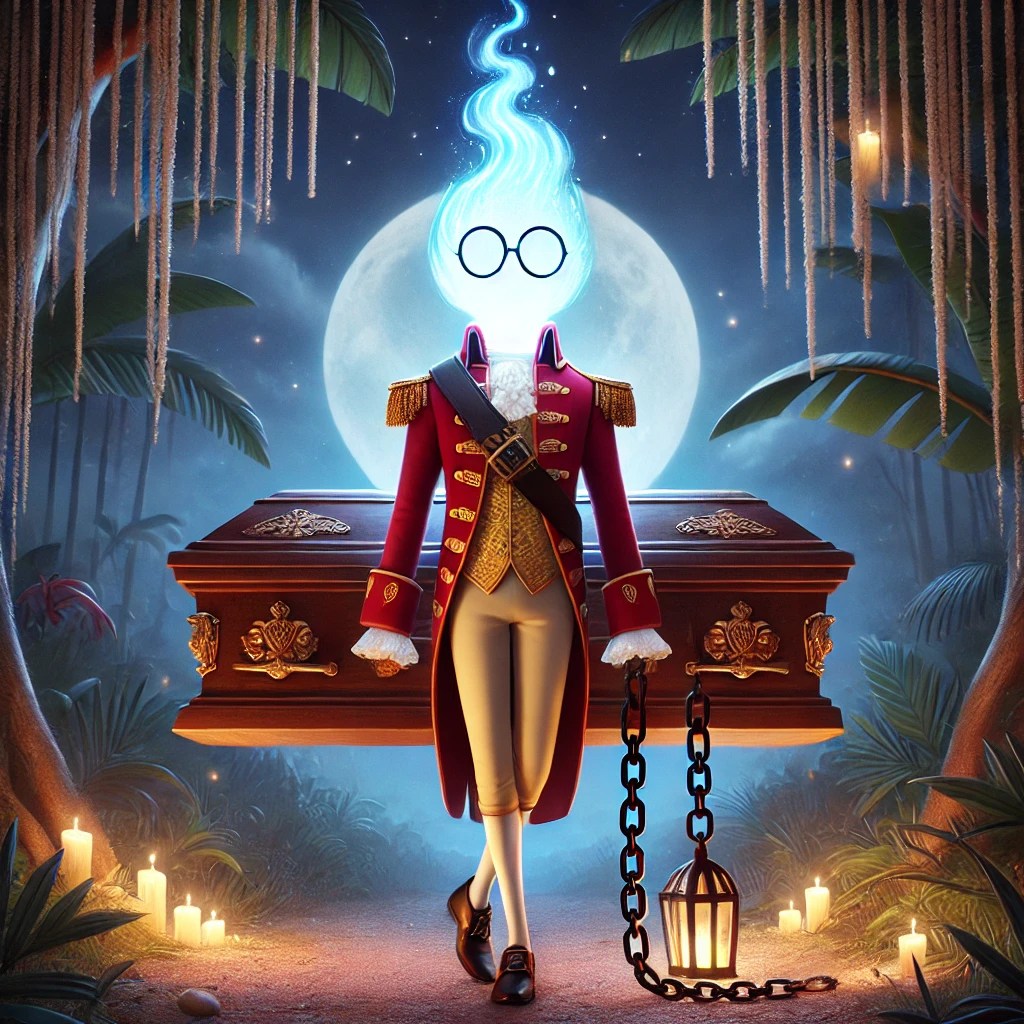
Towering, headless specters: They are wrapped in glowing chains and drag haunted coffins behind them. Each chain link hums with spiritual heat. They are engraved with the names of those they wronged. These engravings serve not to restrain enemies but to bind past sins to the now. Their ornate coffins are spectral container of relics and guilt. They carry their heads that blink through keyholes. They whisper poetry heavy with remorse. These spirits do not just haunt the world — they act out their repentance, night after night.
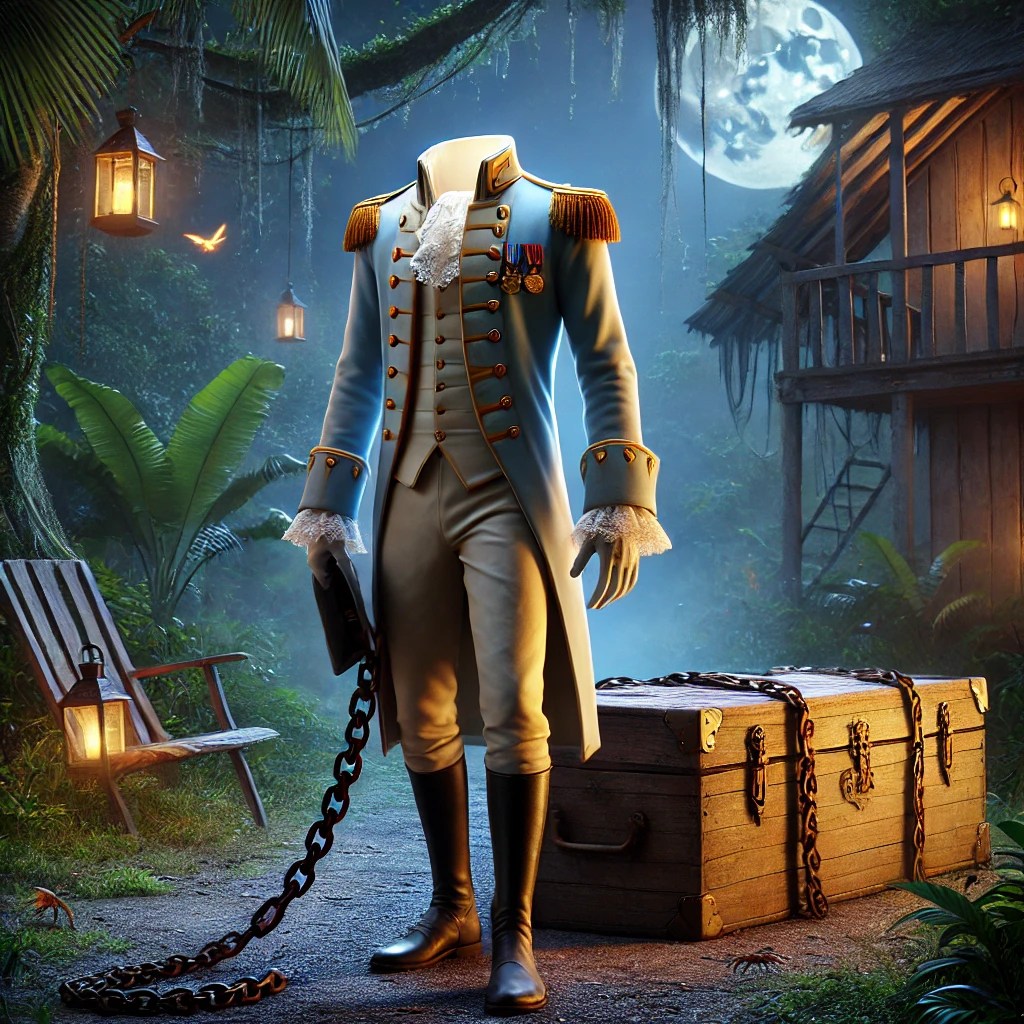
In Caribanime, the Lagahoo spirits are visualized through a striking fusion of Gothic horror and Caribbean elegance. Their aesthetic draws heavily on historically precise garments from the colonial eras. The British, French, Spanish, and Dutch styles influence them. They wear regal attire that appears ghostly and unraveling with time. They do not have heads. Instead, they shimmer with glowing ether and cast faint blue auras. Chains wrapped around their bodies burn with spiritual embers. These haunting figures drift through fog-laced sugar mills and crumbling ports. They wander through jungle-swallowed estates and moonlit cobblestone alleys. Each location is a relic of both power and decay. Their very presence turns historical settings into spectral landscapes, where colonial echoes meet supernatural judgment.
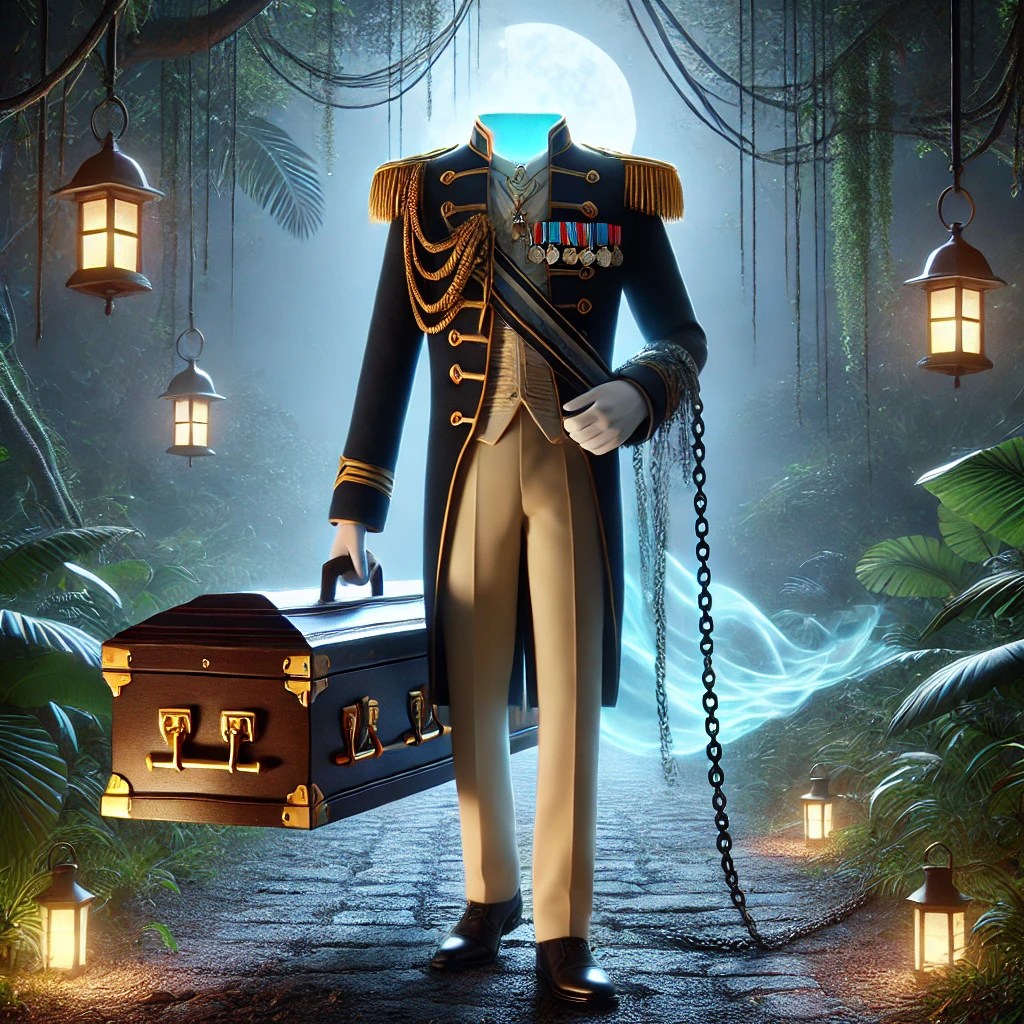
The Lagahoo in Caribanime symbolize a haunting reckoning with the lingering spiritual legacy of colonialism. They are not mere monsters, but manifestations of memory itself — the embodied consequences of empire left unresolved. Their ability to shift form is more than a supernatural trait. It signifies emotional and existential transformation. In this transformation, power morphs into punishment. Inherited beauty becomes an unbearable burden. These spirits serve as echoes of empire — showing how colonial influence persists through rituals, legacies, and denial. But when that denial festers, the Lagahoo come out of the shadows.
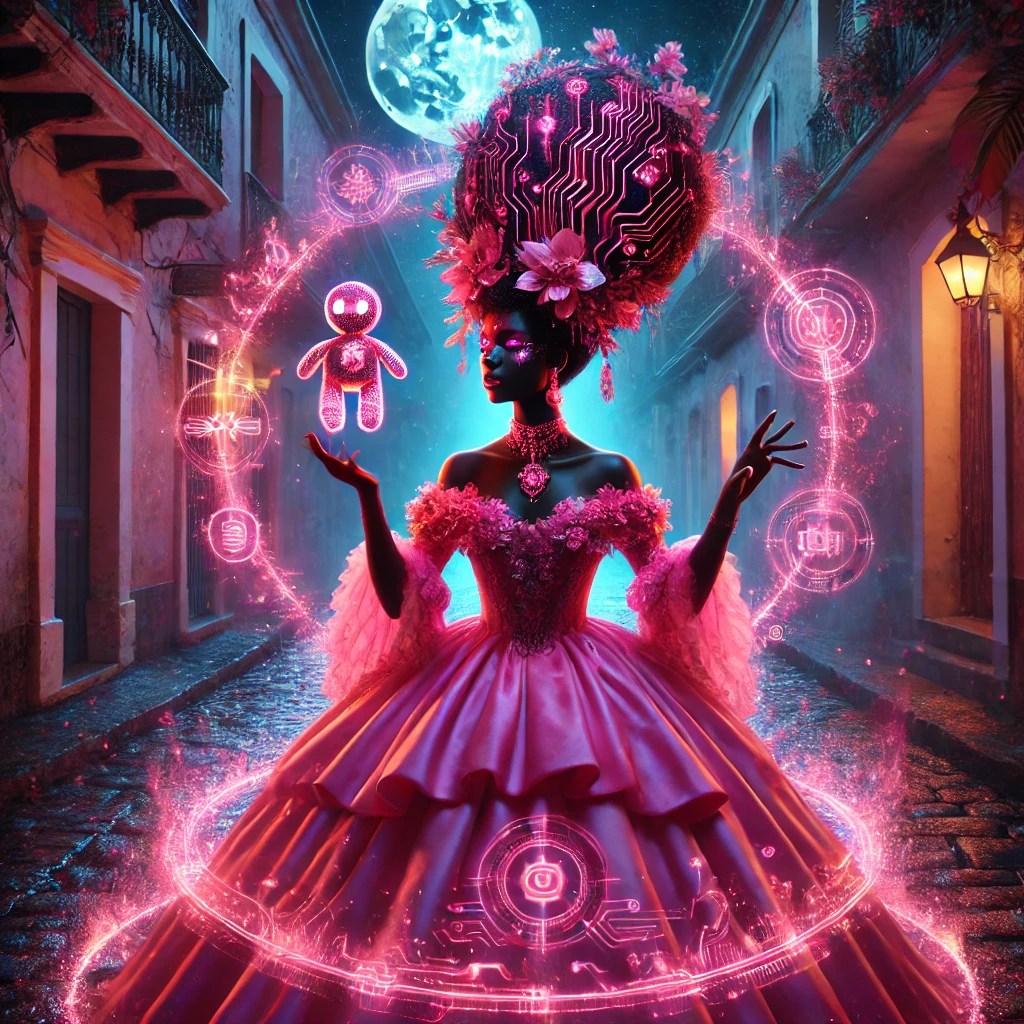
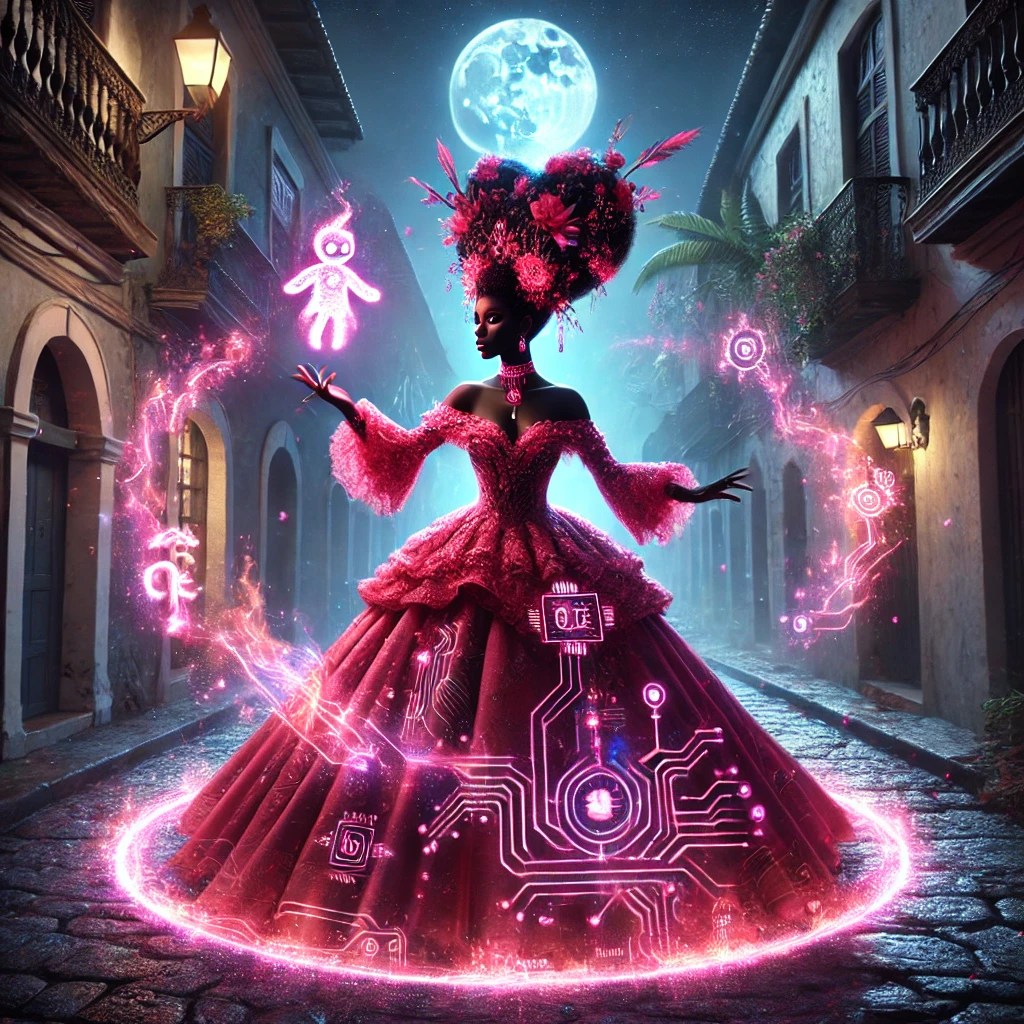
Anansi: The Cyber Trickster of Caribanime
Weaver of riddles, mother of webs, digital matriarch of mystery.
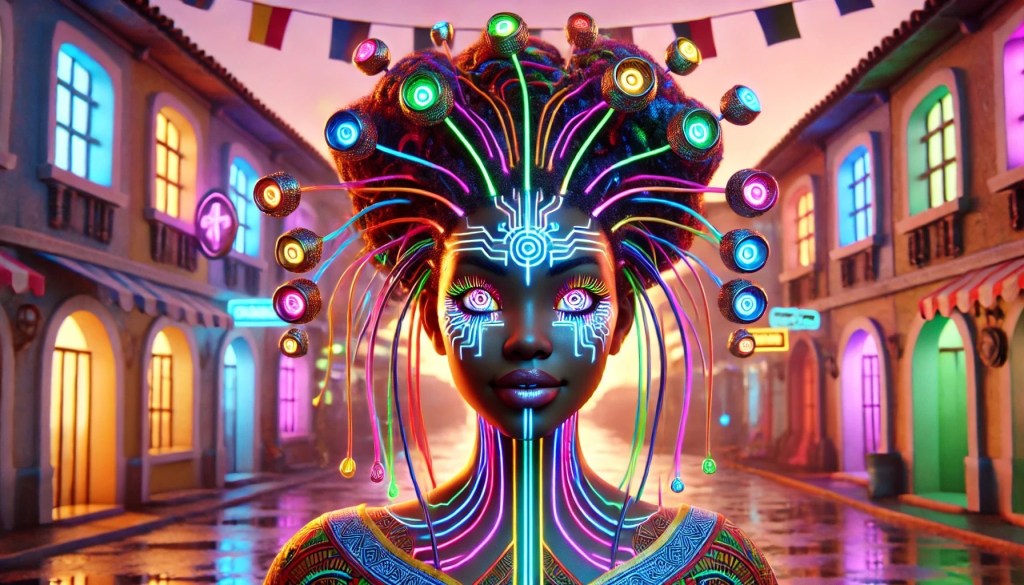
Anansi in Caribanime is a radiant reimagining of the legendary spider-trickster from West African and Caribbean folklore. Traditionally known as Anansi, Ananse, or Anancy, he was a clever spirit of stories, transformation, and cunning rebellion. In Caribanime, that spirit survives—but evolves.
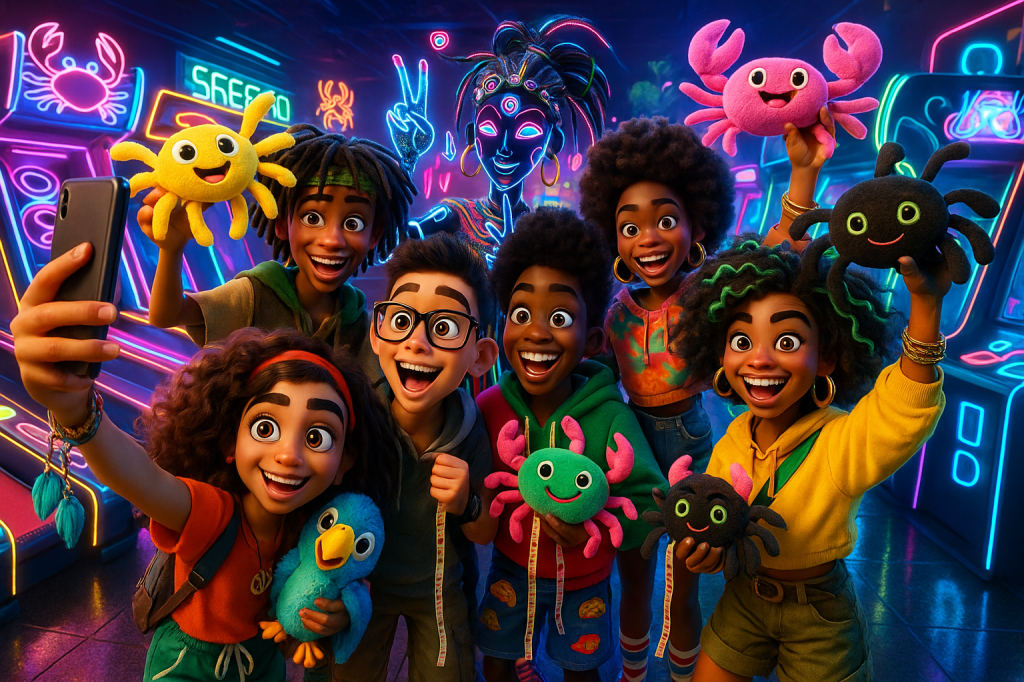
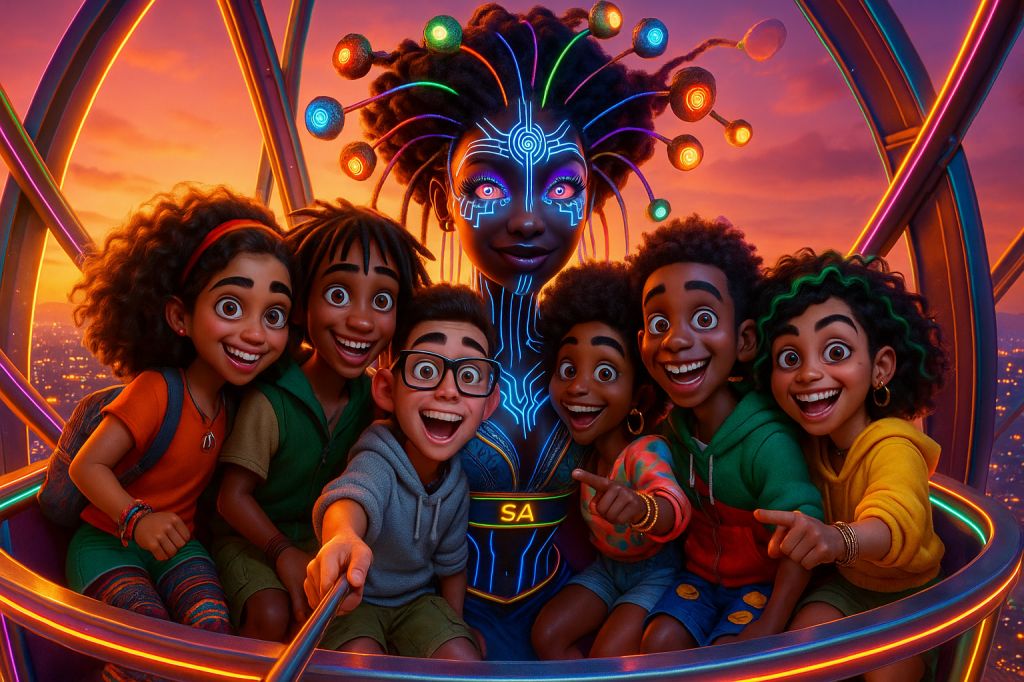
Here, Anansi is female. She is a digital matriarch and cosmic interface. She guides spirits, humans, and interlopers across the shimmering glitch-lines between our world and the Caribanime realm. She’s not one being but many: a sisterhood of spider-spirits, each a variation in tone, personality, and riddle style. Together, they form a mischievous cybernetic constellation, but rarely agree on anything.
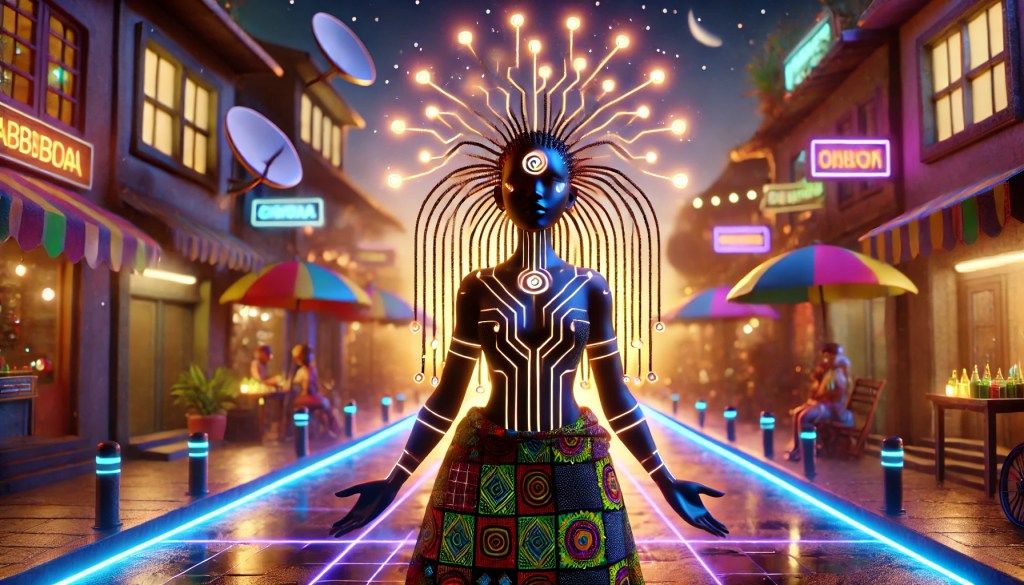
The Anansi sisters share a collective memory. But, they act independently. They often bicker over fashion, storytelling techniques, or philosophical approaches to guiding newcomers. They’re quick-witted. They are sharp-tongued but show compassion, empathy, and are emotionally intelligent. Think of them as ancient folkloric spirits reborn as glowing, sarcastic loving neighborhood aunties with Wi-Fi.
Despite their squabbles, Anansi is a protector, a riddle-keeper, and a first guardian for those entering the Caribanime world. She doesn’t control it — but she shapes it. When spirits clash, Anansi reminds everyone of the stories they forgot. She does so when the rules of memory start to bend.
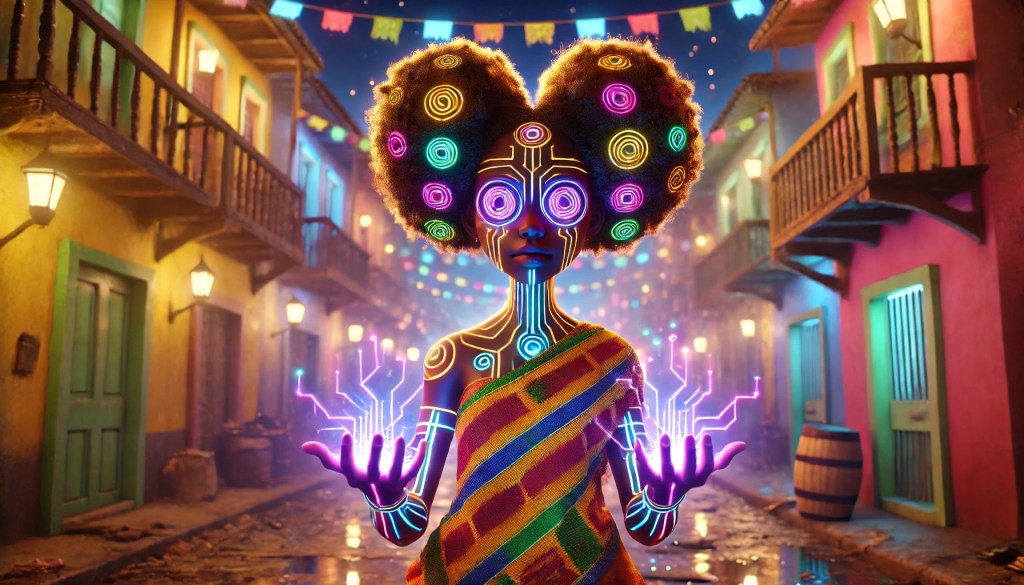
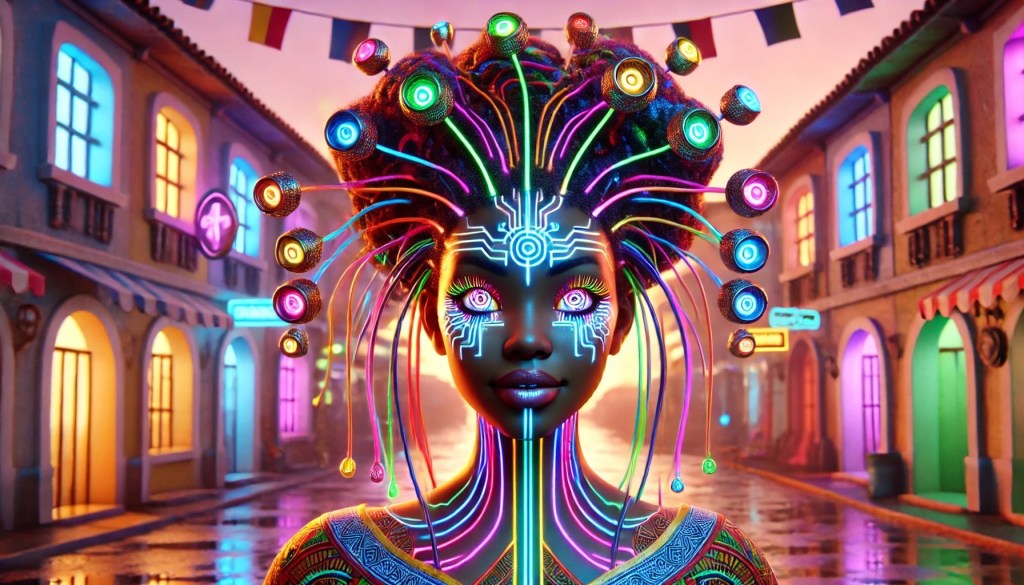
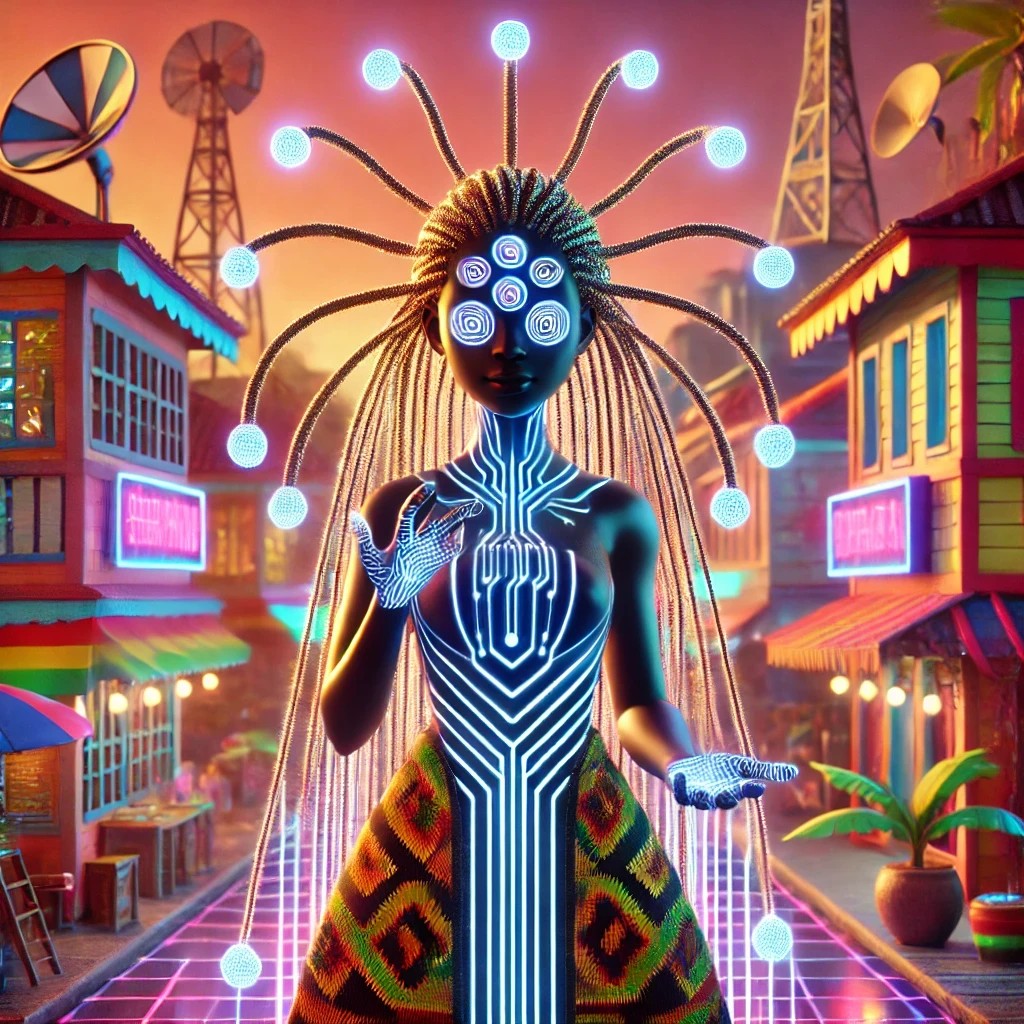
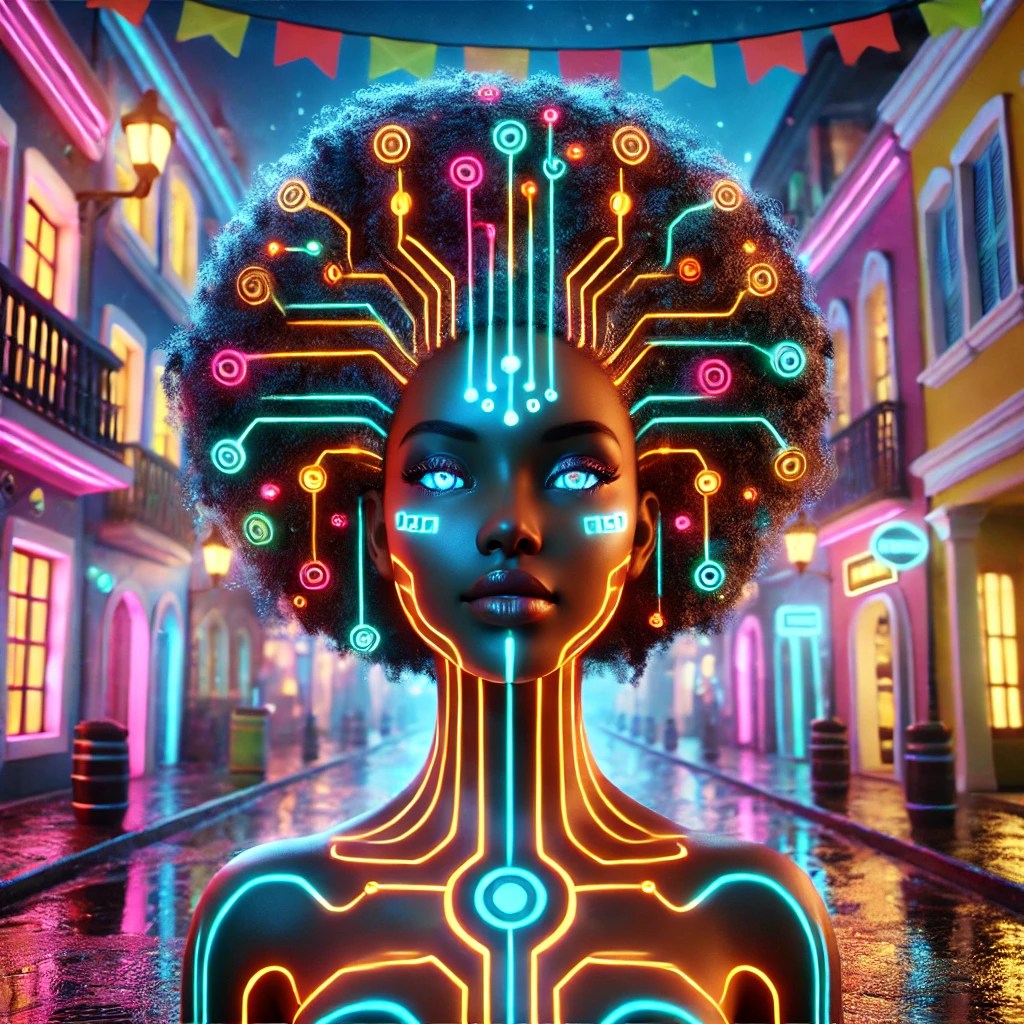
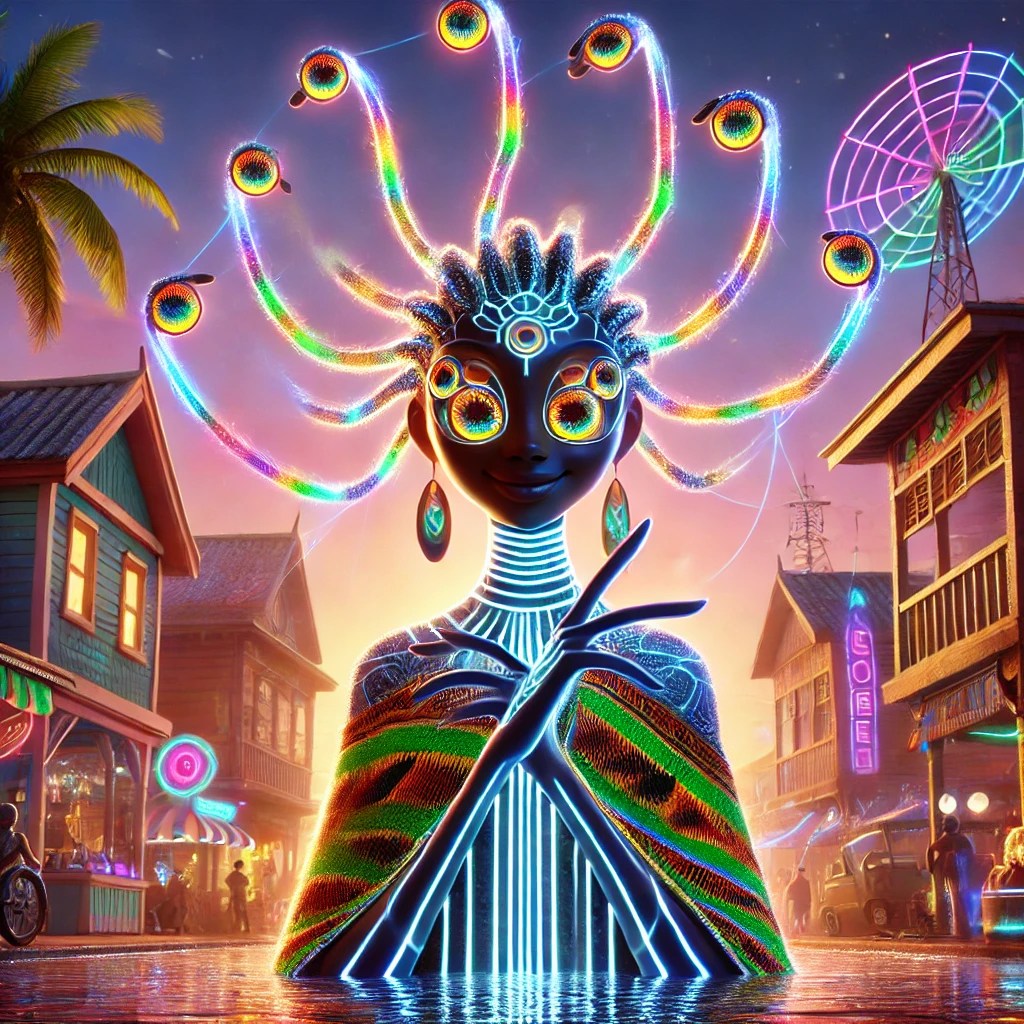
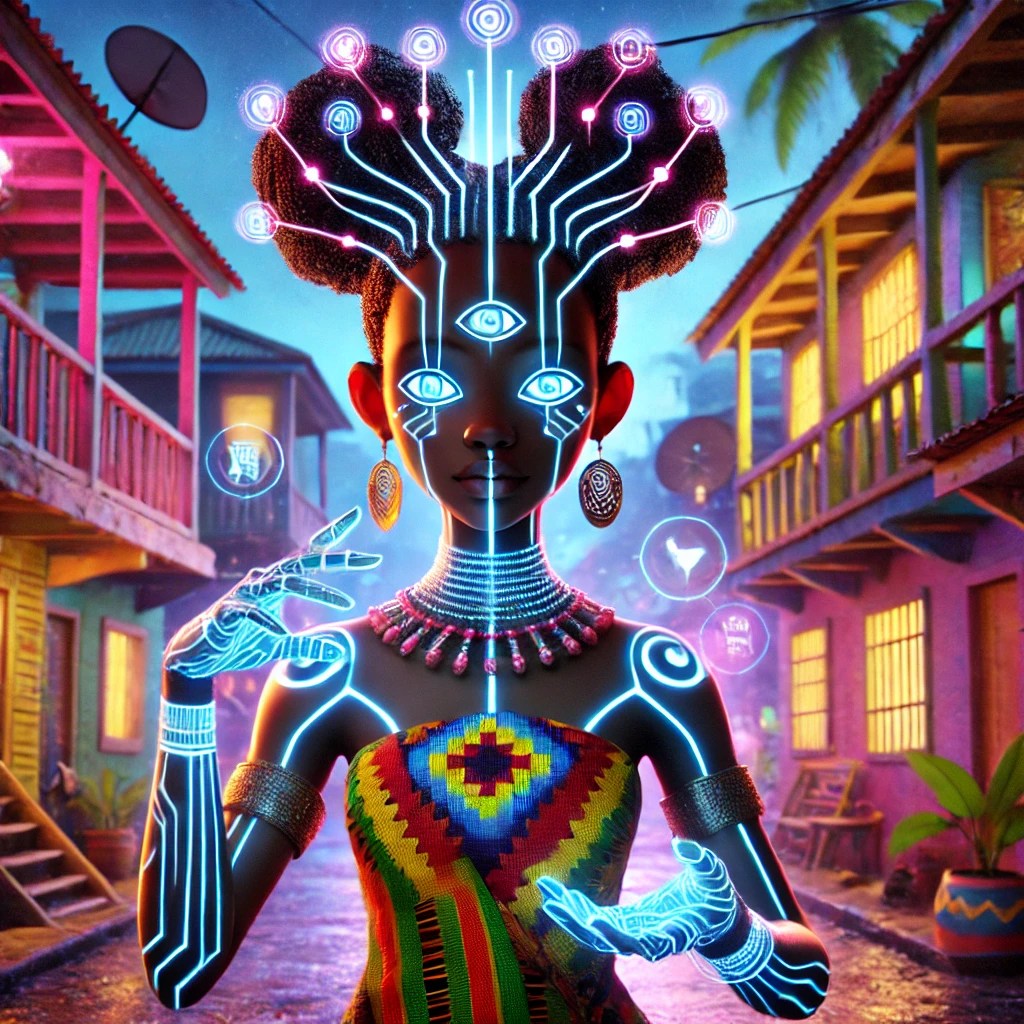
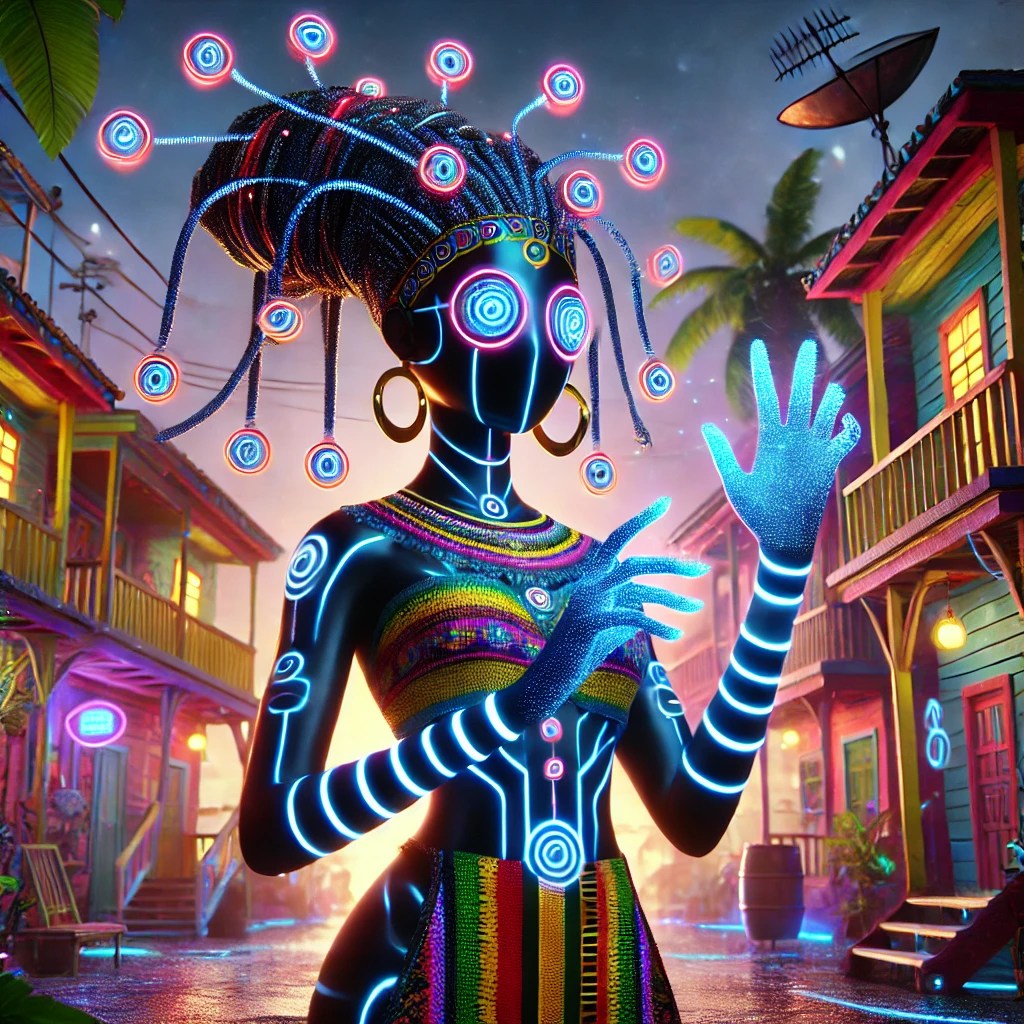
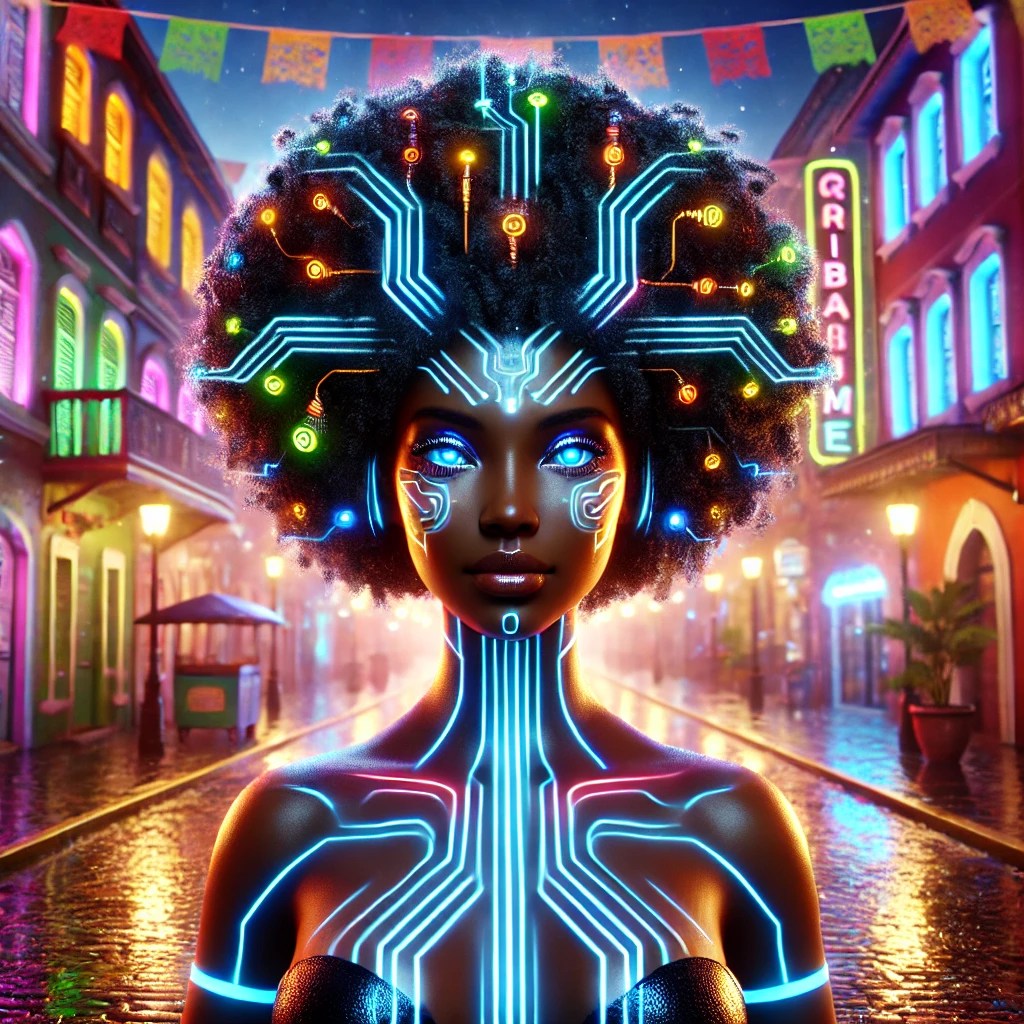
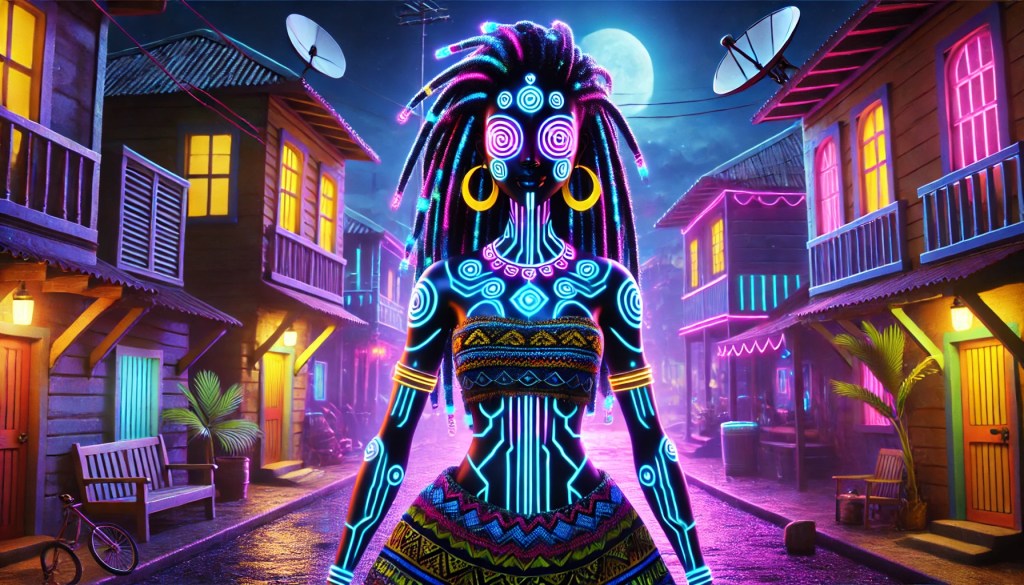
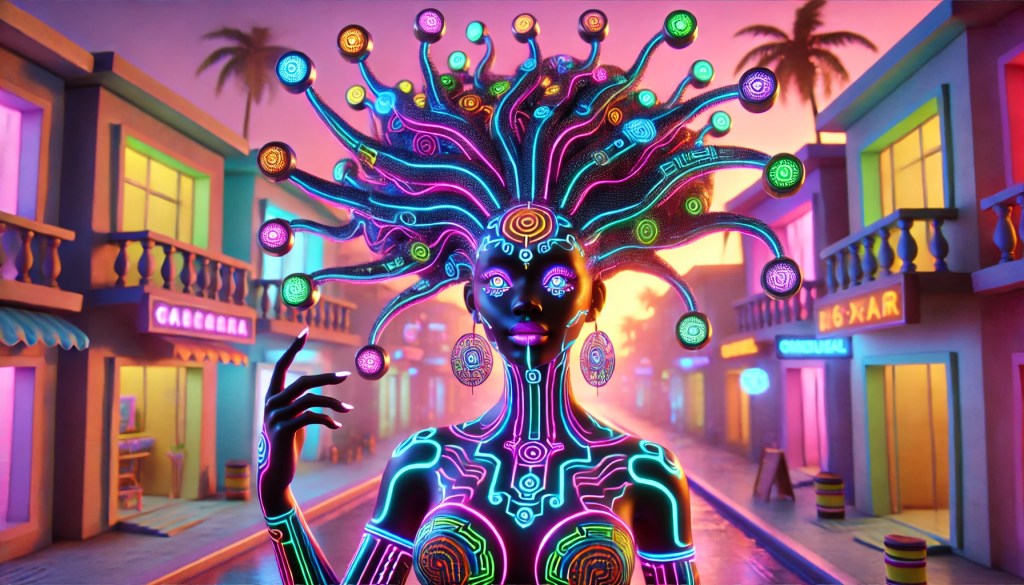
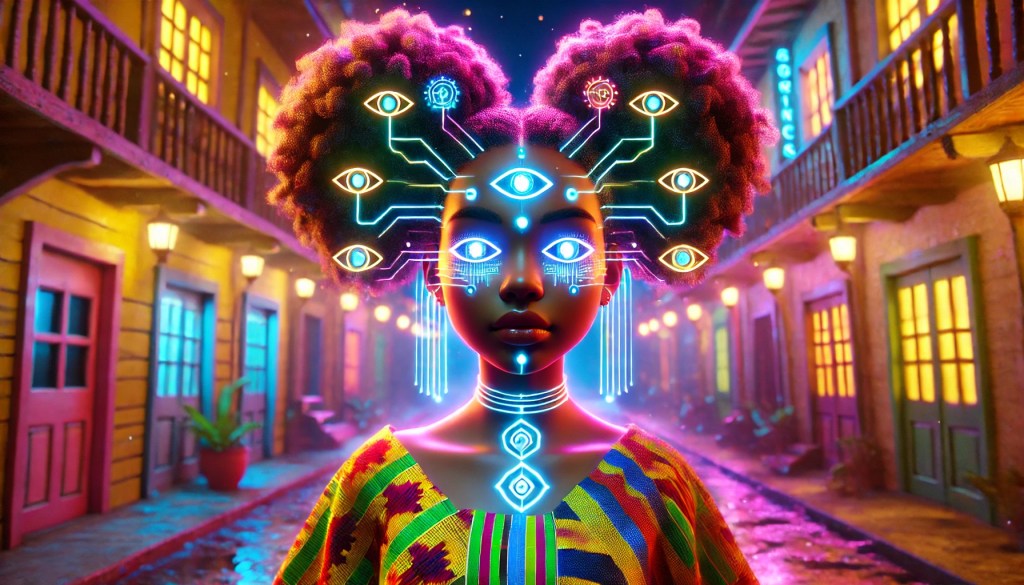
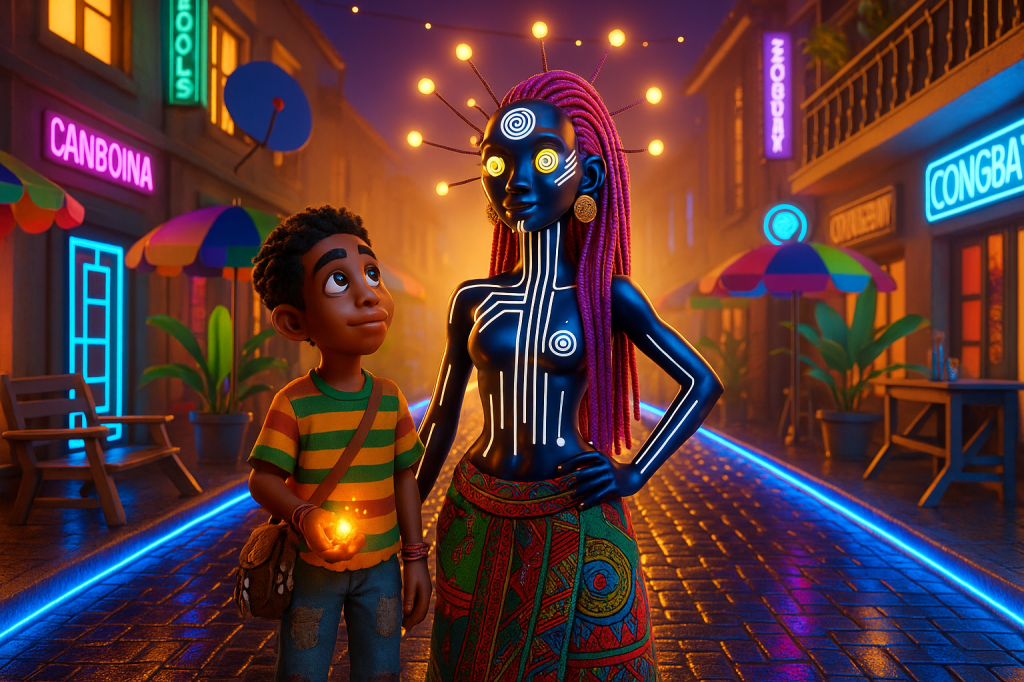
Anansi’s appearance is a dazzling fusion of Afro-Caribbean spirit and futuristic design. She embodies an Afrofuturist cyber-spirit. She weaves tradition into technology. Her form glows with obsidian skin etched in circuit-like tattoos. Her hair, whether dreadlocks, braids, or puffed coils, shimmers with fiber-optic light. Glowing beads adorn her hair.
Multiple radiant eyes hover in orbit around her, constantly scanning and processing the rhythms of the world. Draped in digitized Kente cloth, gold-trimmed robes, and neon face paint, she is both ancient and avant-garde.
She glides through neon-lit street festivals. She spins luminous webs across rooftops. Her movement is graceful and otherworldly. She resembles a guardian spirit rendered in code and culture.
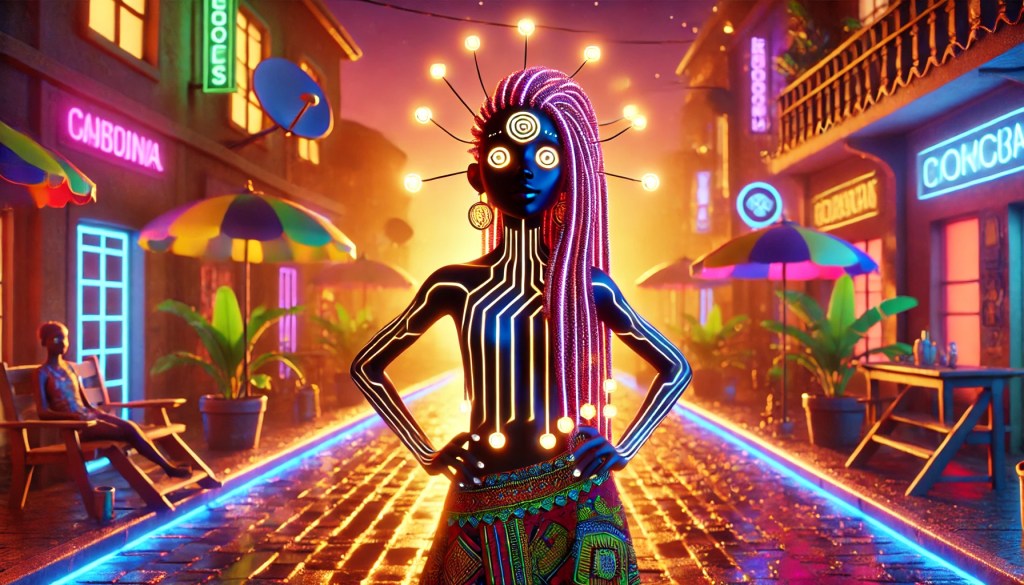
Anansi is the mythic gatekeeper and spiritual trickster of Caribanime. She is often the first spirit one meets when crossing into the realm. Sometimes, she is the last to let you leave. She is not a villain or a savior. She serves as a narrative catalyst. She pushes characters to uncover uncomfortable truths through illusions, poetic riddles, and webbed games.
With countless glowing eyes that shimmer like memory across realities, she watches stories unfold across time, rarely intervening directly… unless she must.
Ancient spirits rise or Jumbies stir unrest. Anansi steps in not with brute force, but with riddles, glitches, and mischief. Her digital webs connect lives and legends. They intertwine truth and trickery. Her ever-glitching form reveals the instability of memory. It also shows the shifting nature of myth. In Caribanime, she is the storyteller and the challenger. She asks: “Can you find your truth without getting tangled in the tale?”
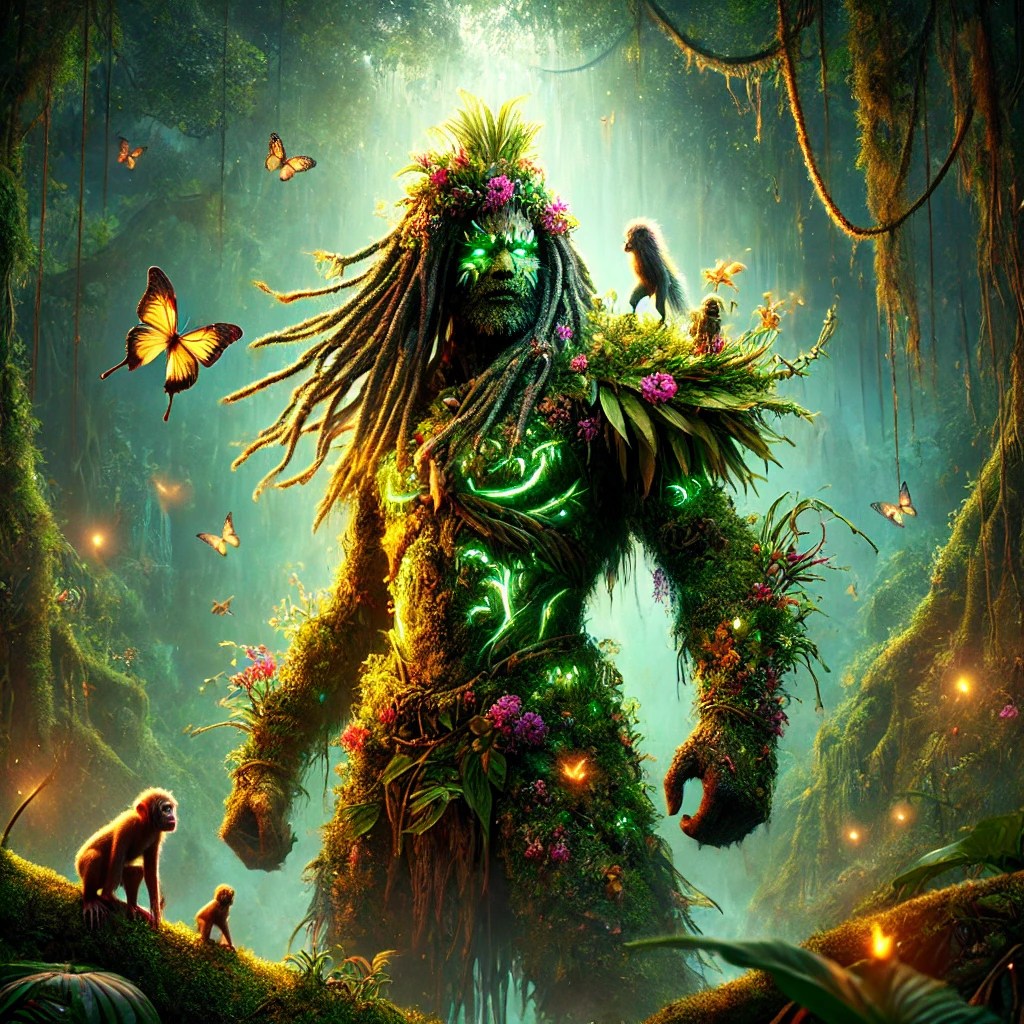
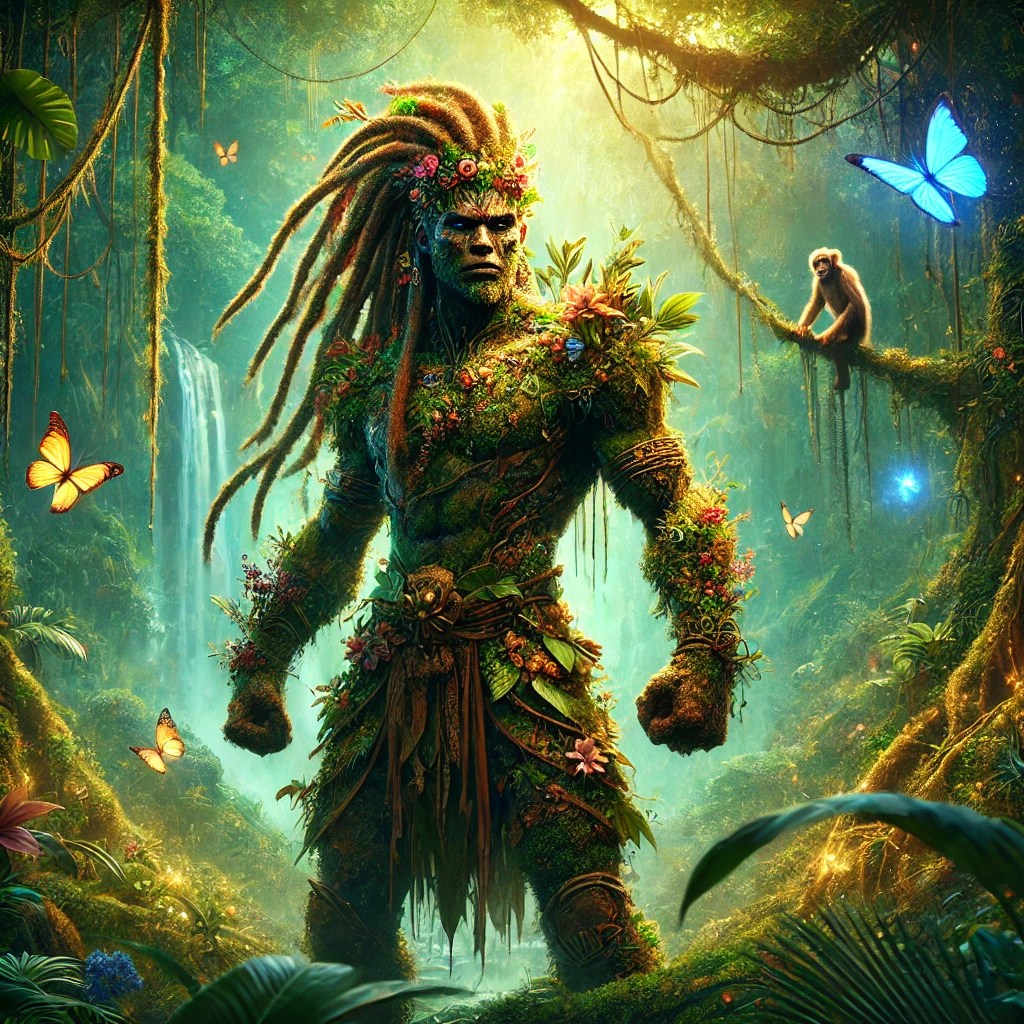
Papa Forêt
Ancient guardian of the deep green
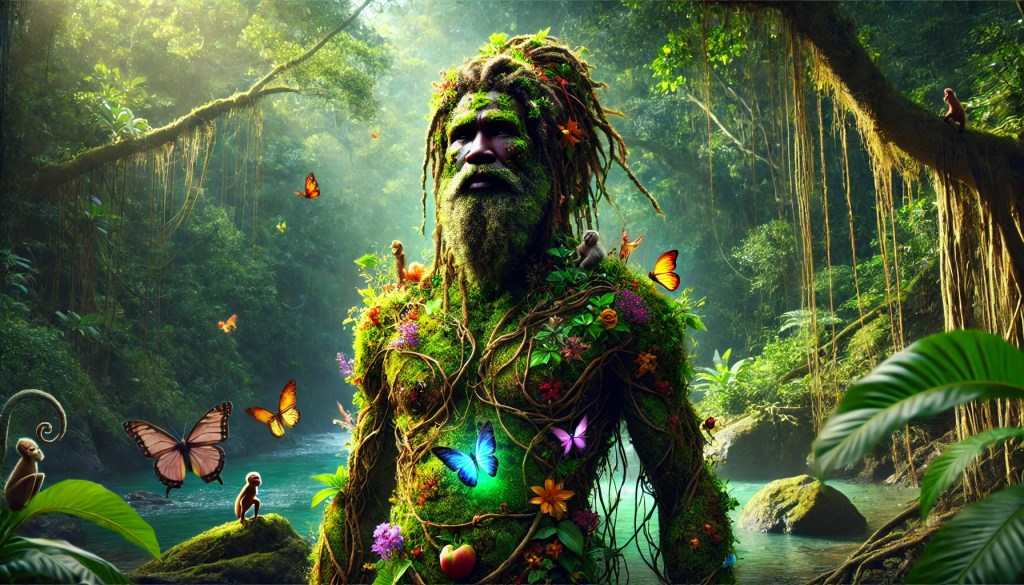
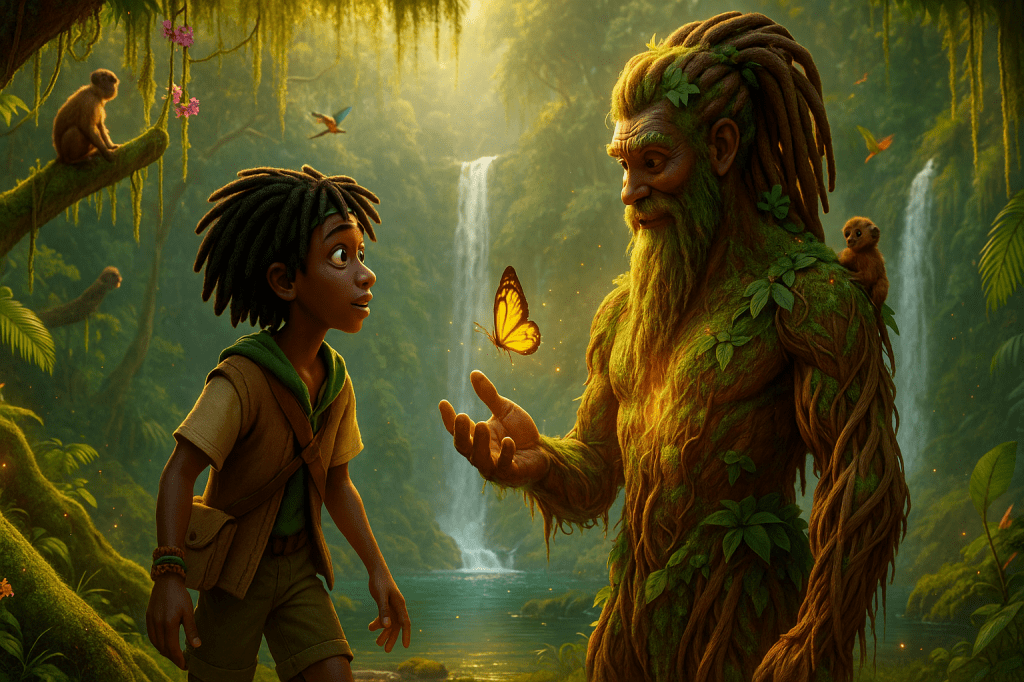
Papa Forêt is a towering spirit of the forest. His presence is felt in every rustling leaf, whispering wind, and tangled root within the Caribanime world. Mama D’Leau governs the rivers and tides with grace and mystery. Papa Forêt rules the dense, untamed wilds. He is a being of immense wisdom and unpredictable depth. Neither entirely benevolent nor cruel, he signifies balance: between life and decay, wildness and cultivation, tradition and change. He is not easily summoned, nor easily dismissed.
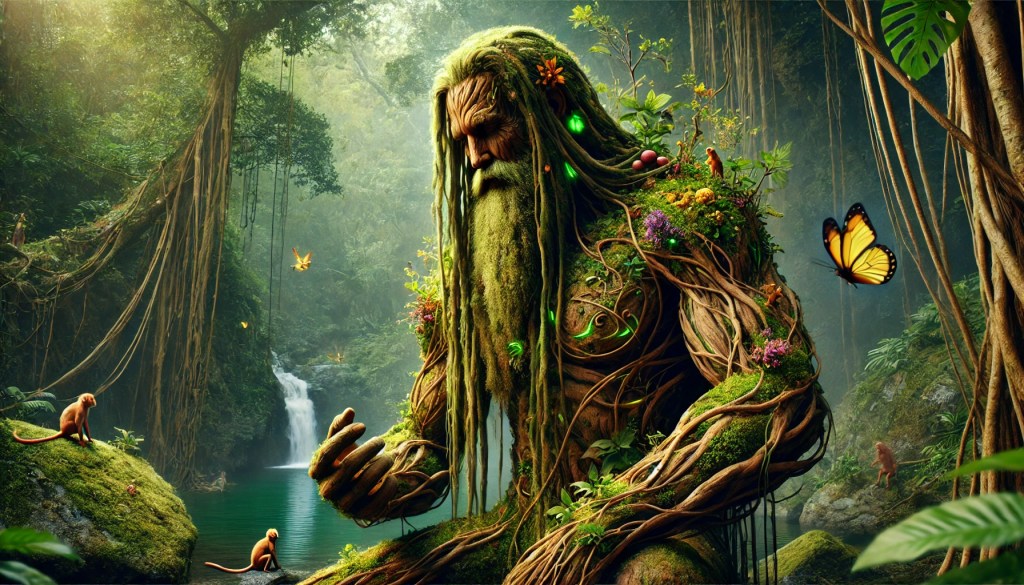
In the Caribanime realm, Papa Forêt stands as a monumental figure. He is a silent but ever-existing force of balance. He embodies memory and growth. He is the arbiter of ancestral truth, remembering forgotten rebellions, lost magics, and the names of spirits erased from time. As the protector of wild spirits, he watches the borderlands between the human and spirit realms. He ensures neither greed nor corrupted power tilts the scales. When the balance falters, he stirs — vast, slow-moving, and impossible to stop. To the young newcomers, Papa Forêt does not speak as a teacher. Instead, he is a force who grows the answer. He offers lessons in the form of dreams, trials, and riddles rooted in cultural memory. Meeting him is less a meeting — and more a return to one’s origin.
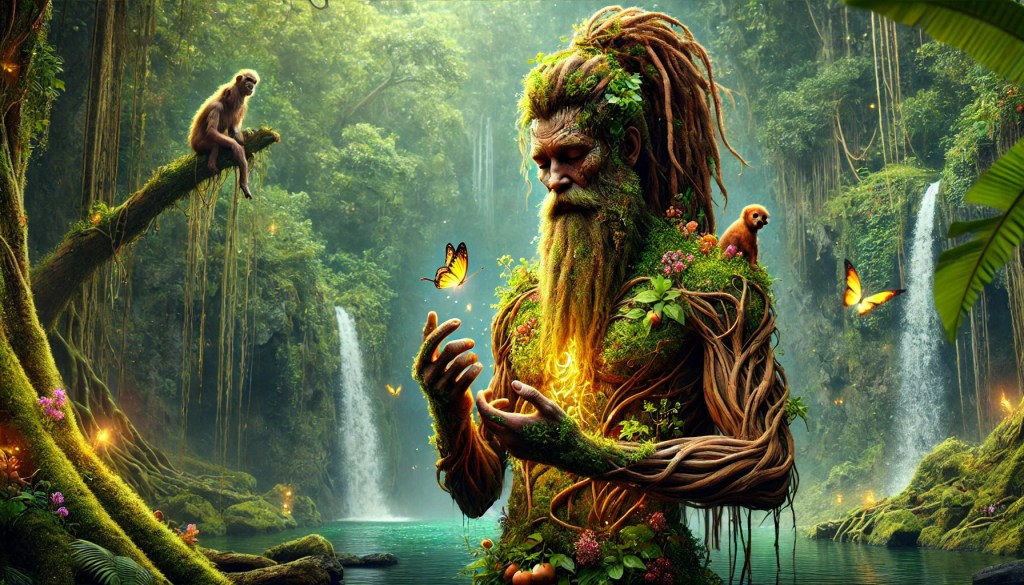
Papa Forêt’s presence echoes through all corners of the Caribanime world. He forms quiet but meaningful bonds with its most powerful spirits. With Mama D’Leau, he shares a primordial kinship. It is a connection likened to the vine to her tide. They are said to have danced together at the world’s first breath. He regards the Anansi Sisterhood with amused patience, letting their riddles swirl while his silence roots deeper truth. Toward the Jab Jab Chainlords, he remains respectful but firm, often reminding them that fire without remembrance burns to nothing. The Kindle Dolls, born of trauma and magic, stir his wariness. Yet, he treats them with quiet compassion. He sometimes offers seeds that bloom into memory. With the tormented Lagahoo, Papa Forêt is a reluctant warden. He binds their haunted wanderings with moss and vine. This occurs when guilt drives them too far. Through all these ties, he acts not as judge or warrior. He serves as the steady force beneath it all. He ensures that nothing, and no one, forgets where they came from.
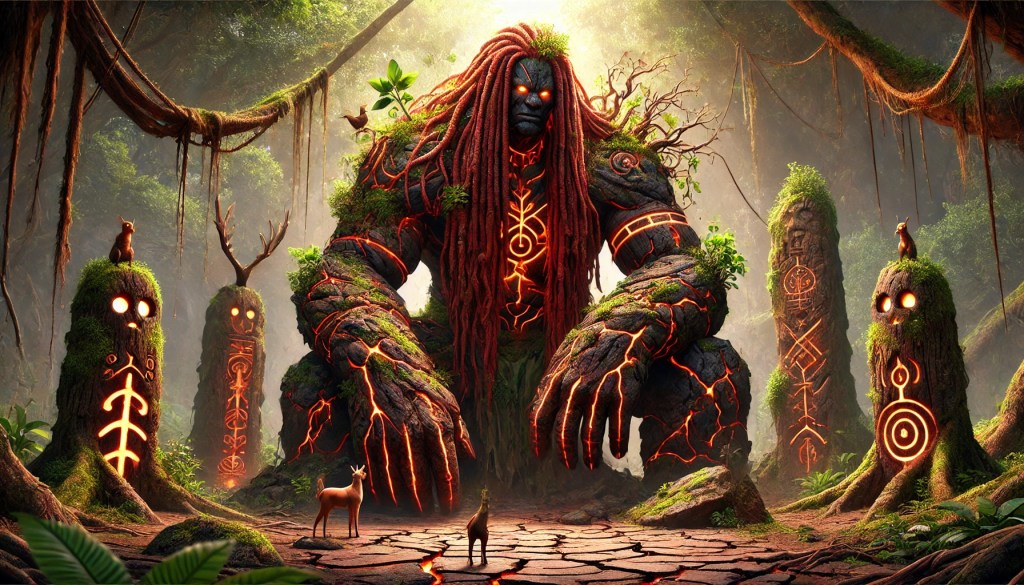
Papa Forêt’s visual presence embodies the living heart of the wilderness. Towering and ancient, he is draped in layers of bark, moss, and vines. These layers are entwined with the bones of creatures long extinct. This is a reminder of nature’s memory and loss. His glowing green eyes drift like slow-moving fireflies. They float beneath a canopy of antlers grown from living branches. Birds and bats make their home there. Papa Forêt is like a walking forest. He carries a staff that blossoms and decays with every step. This marks the rhythm of life’s endless cycle. Wherever he passes, the world responds. Flowers bloom in reverence. Moments later, they quietly fade, returning to the soil that birthed them.
Boku
Caribanime Tricksters
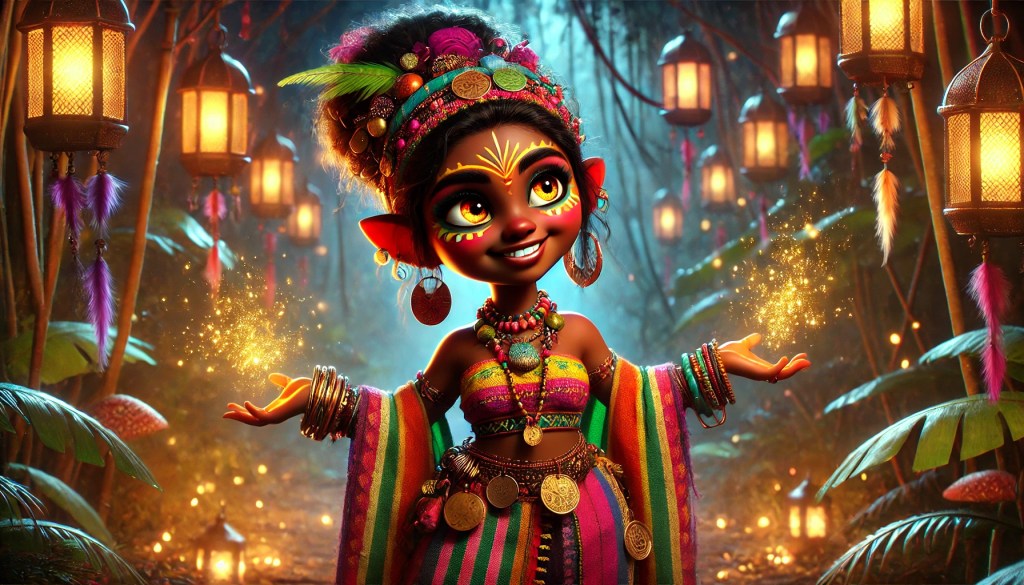
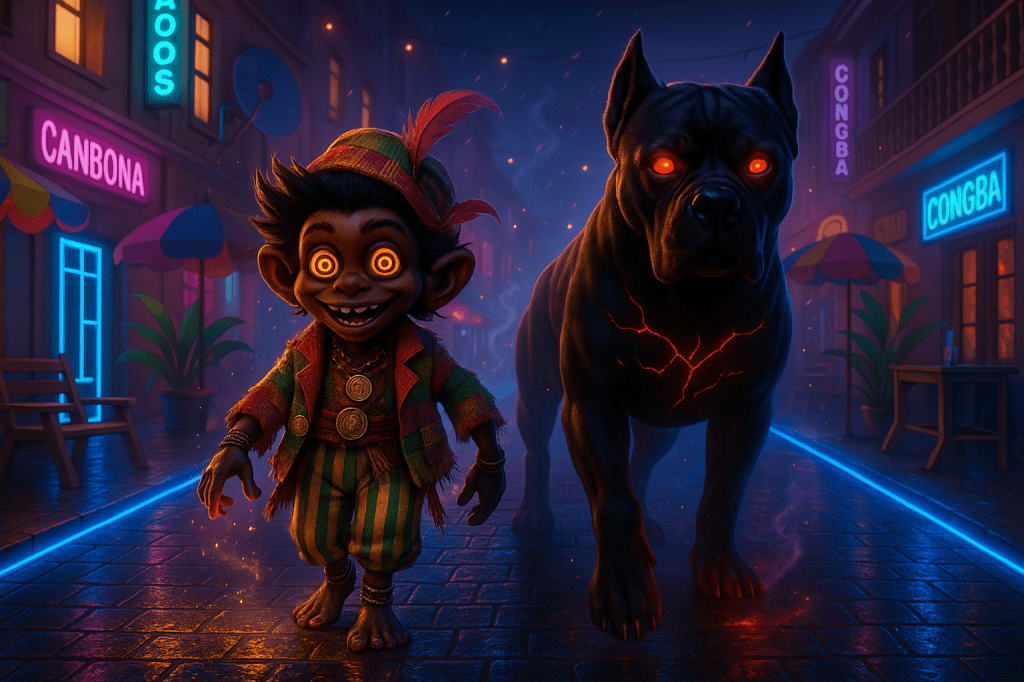
Though often seen as con artists or magical hustlers, the Boku aren’t villains. They thrive on deal-making and cleverness. They guide newcomers through the spirit world — not out of kindness, but out of interest. They befriend Jumbies, spirits, and even heroes when it suits their goals. Their loyalty is always shifting. Still, their presence always signals change. Whether running a pop-up carnival, trading secrets in a glowing jungle, or slipping through lantern-lit bazaars, the Boku embody adaptability. They symbolize survival and the fine line between help and hustle. They not be trusted — but they’re always remembered.
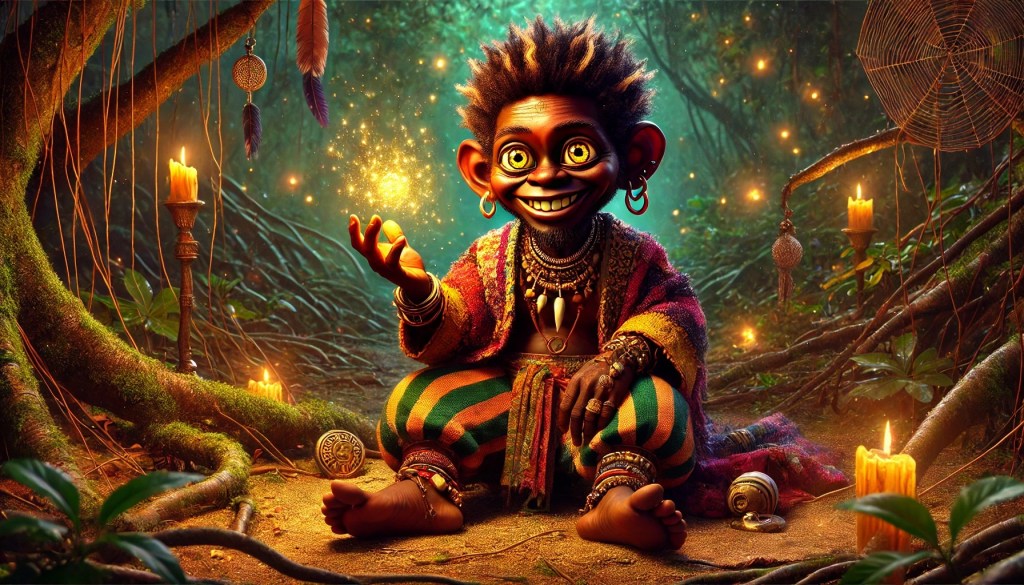
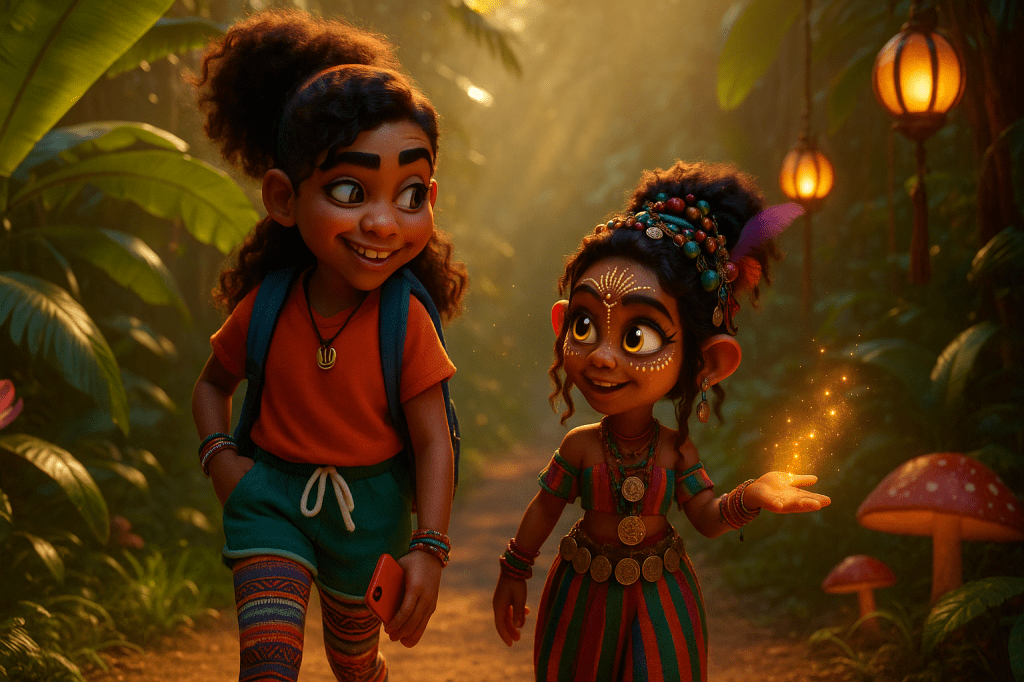
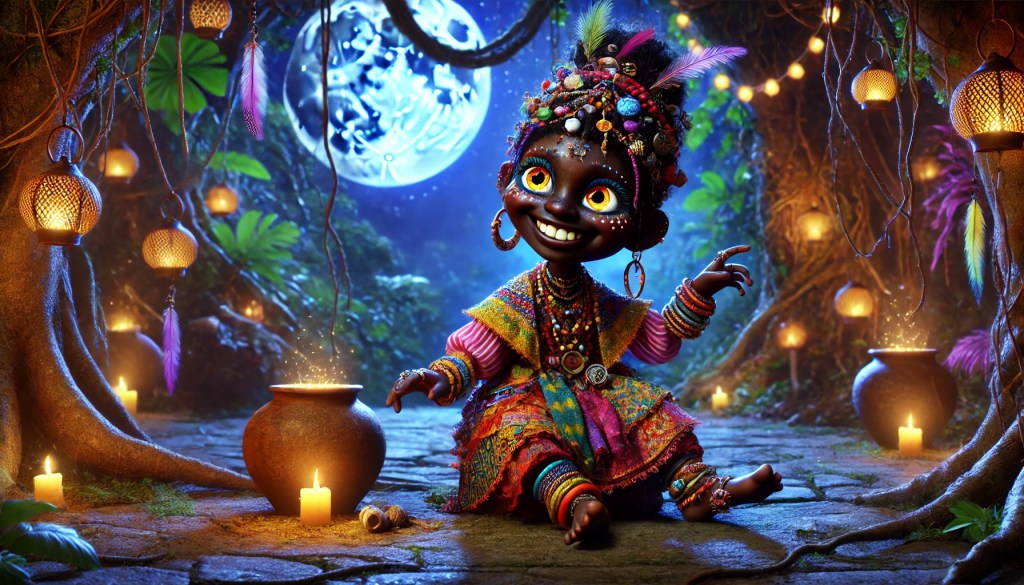
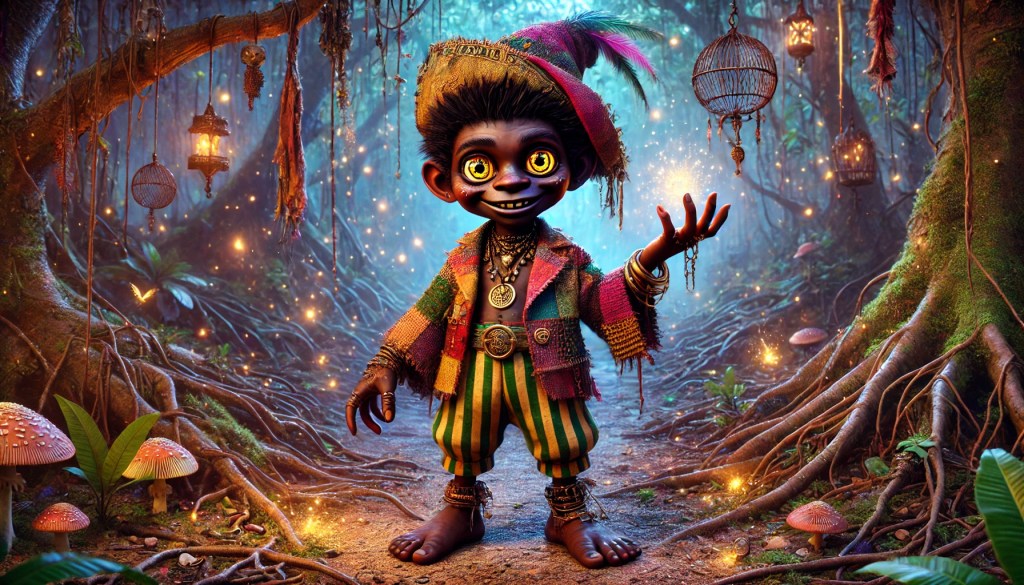
The Boku are lively, mischievous dwarf-spirits. They roam the Caribanime world like traveling gypsies. They never stay in one place for long. They are inspired by the Caribbean Bacoo. These figures are infused with Afro-Caribbean and South Indian-Romani aesthetics. They are flamboyant and unpredictable. They bring both wonder and chaos wherever they go. The Boku have glowing golden eyes. Their hair is styled in beaded braids or wild curls. Their faces are painted in tribal markings. They dress in vibrant striped fabrics. They jingle with coin charms and wear layers of bangles and shawls. These shimmer under lantern light. Each one carries an array of trinkets, from glowing bottles to tarot-like cards. They are often found performing sleight-of-hand. They spin clever tales to lure newcomers into trades, games, or riddles.
Mama Bloom
Spirit of Renewal, Fire, and Bloom
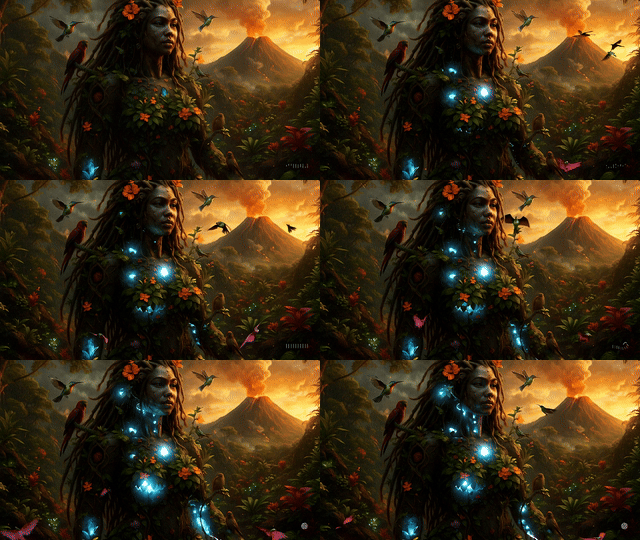
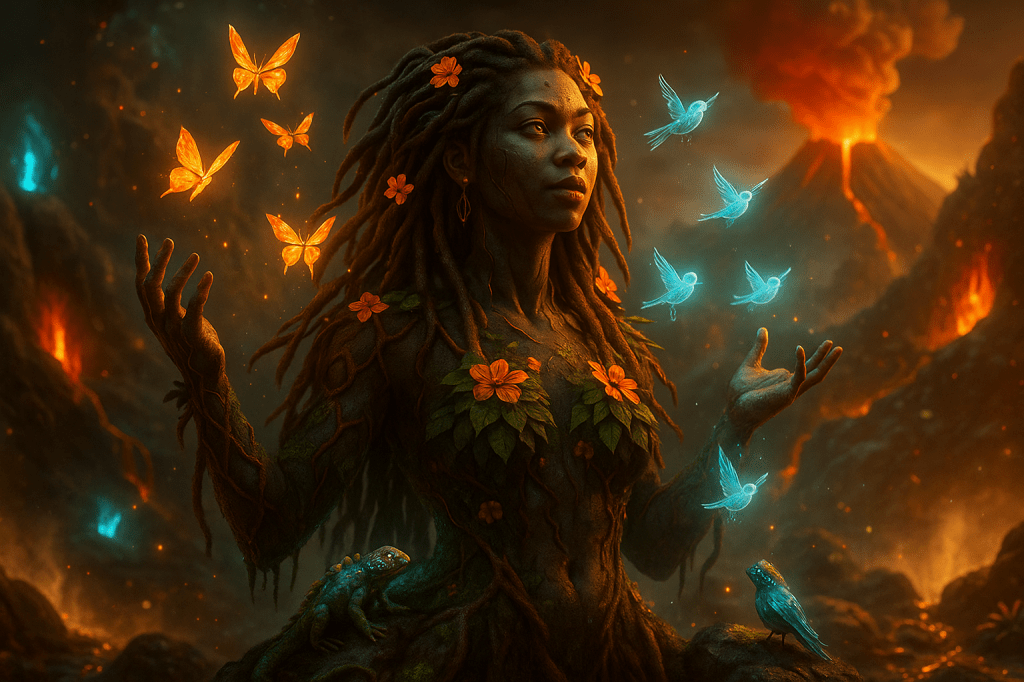
Mama Bloom is the volcanic heart of the Caribanime spirit realm. She is a towering nature spirit. Her body is formed from rich volcanic stone. It also includes glowing crystals and wild flora. Her dreadlocked vines bloom with vibrant island flowers, and small birds and glowing insects constantly orbit her like living prayers. Her presence is both serene and smoldering. She is as to whisper wisdom as she is to erupt in righteous fire. Born of both destruction and rebirth, she is the living embodiment of the Caribbean’s fertile volcanic landscapes.
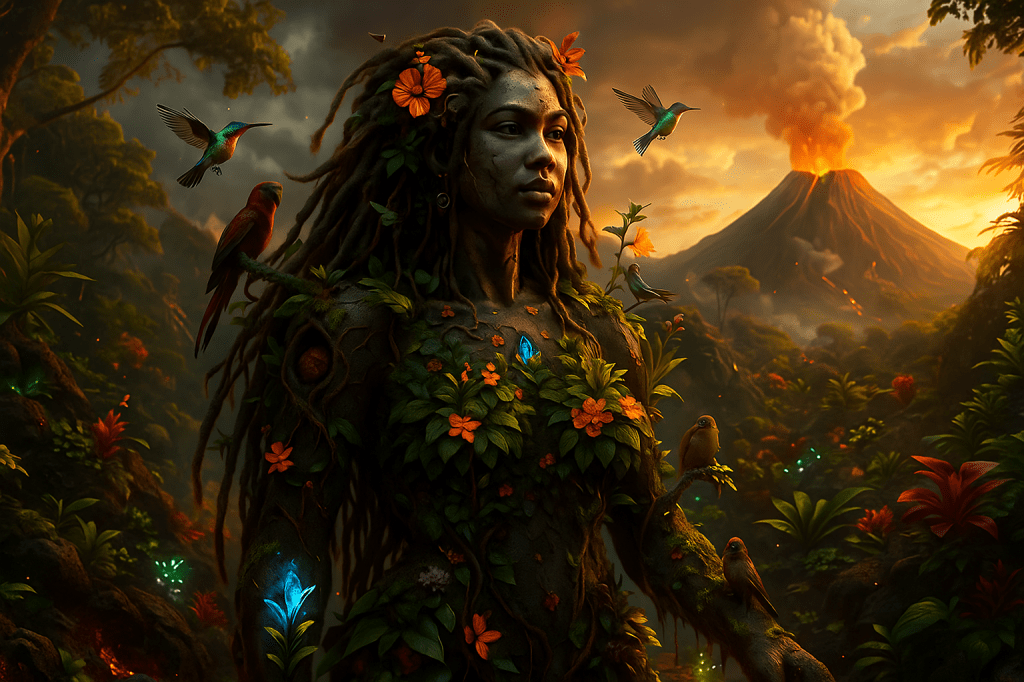
Role in the Caribanime World: The Mother of Molten Change. Mama Bloom governs the cycles of death and rebirth in the spirit world. She particularly aids spirits and jumbies who are stuck, corrupted, or losing their purpose. She sings to the ash, whispers to roots, and awakens spirits through fire-dreams. When she walks, flowers bloom in her footsteps… but smoke follow.

Mama Bloom, the Spirit of Renewal and Wild Bloom, embodies the primal force of volcanic nature within the Caribanime world. Her obsidian-toned skin glows with magma-like veins. Her vine-like locs bloom with vibrant flowers, moss, and nesting birds. It is a living ecosystem rooted in her being. Her deep amber eyes burn with ancient heat, and her bioluminescent body pulses with the memory of creation. She walks where fire once raged: volcano rims, steaming springs, and jungles reborn from ash. Wherever she moves, dormant seeds stir awake, and even long-slumbering volcanoes start to whisper. Mama Bloom is both a destroyer and a nurturer. She is a living reminder that from fire comes growth. From ruin, there is rebirth.

Within the Caribanime world, Mama Bloom is both a catalyst and a caretaker. Her connections to other spirits show her dual nature. She embodies both destruction and renewal. She shares a deep, elemental bond with Papa Forêt, her eternal counterpart. He embodies rooted memory. She carries the flame of transformation. Their rare conversations shake the very fabric of the spirit world. With Anansi and her Sisterhood, Mama Bloom is respectful but critical, favoring clarity and action over cryptic riddles. She regards the mischievous Boku like unruly seedlings. She sometimes scolds them. At other times, she shelters them. Occasionally, she gifts them explosive flame-buds with unpredictable effects. Her dynamic with the Jab Jab Chainlords is one of caution. She shares kinship with them. She tempers their fury with the wisdom of growth. To the Kindle Dolls, she offers nurturing fire. She sees them as delicate blooms forged in darkness. She helps reignite their sense of identity. Even the cursed Lagahoo are not beyond her gaze. She visits when their chains grow cold. She urges them to face the fire within. She reminds them that rebirth often begins in the ashes.
Rolling Jumbies
They are not beasts. They are guardians of forbidden paths.
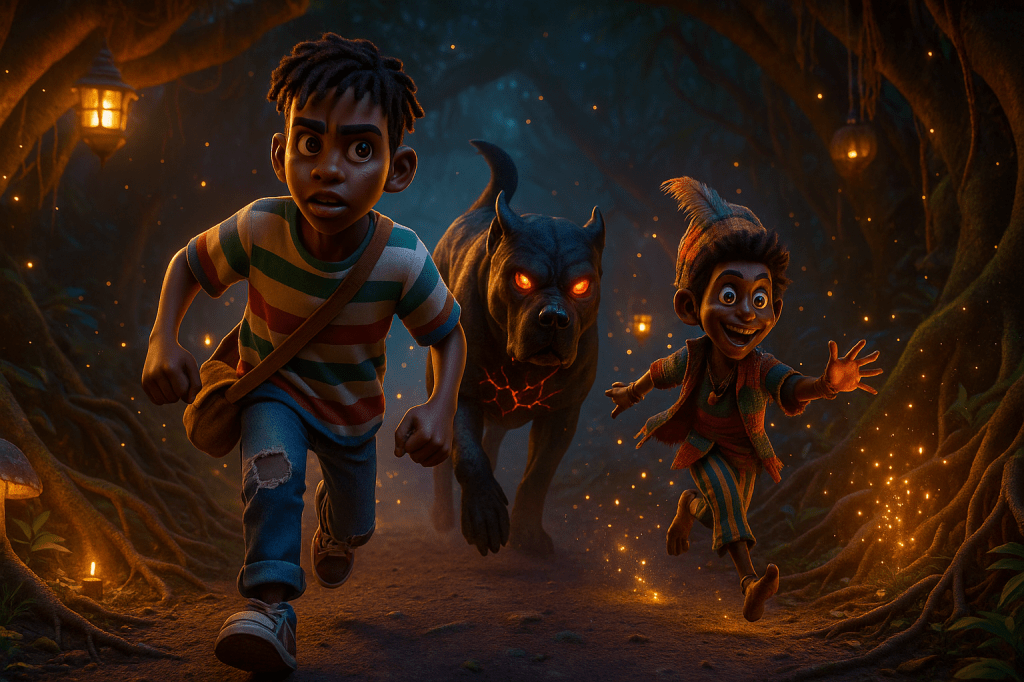
In the Caribanime world, the Rolling Jumbies are spectral familiars born from secrets, unatoned sins, and cultural amnesia. They are not true animals, but rather manifestations of spiritual imbalance, sent to warn, haunt, or hunt. Each appears when taboo is broken, when someone tampers with the spirit realm, or when hidden truths threaten to rise.
They roll — not walk — across land, air, or shadow. They glow with cursed fire or are rimmed in blue spiritual light. They often precede the arrival of a larger Jumbie. They also serve as a mystic alarm system for sacred spaces and buried histories.
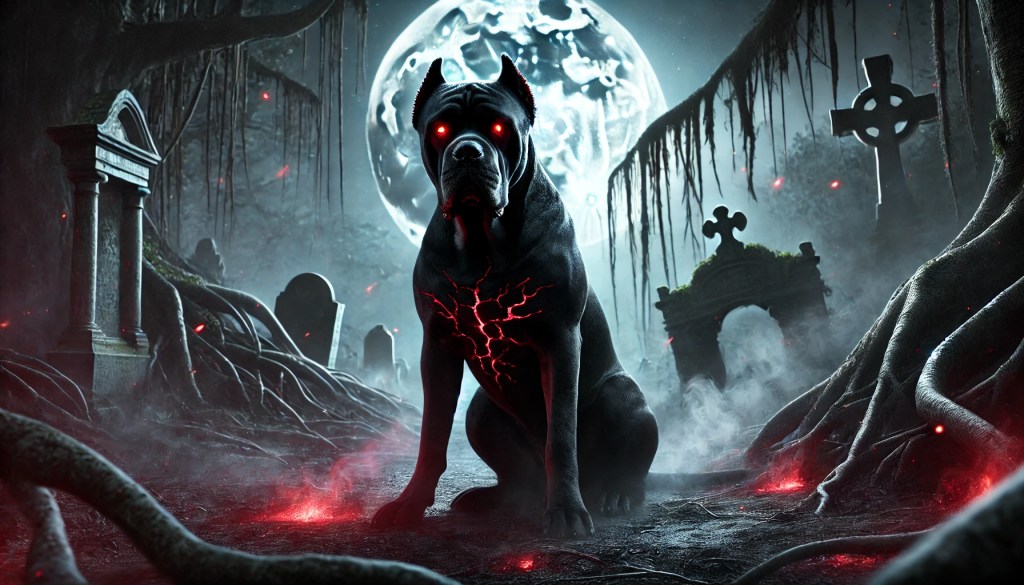
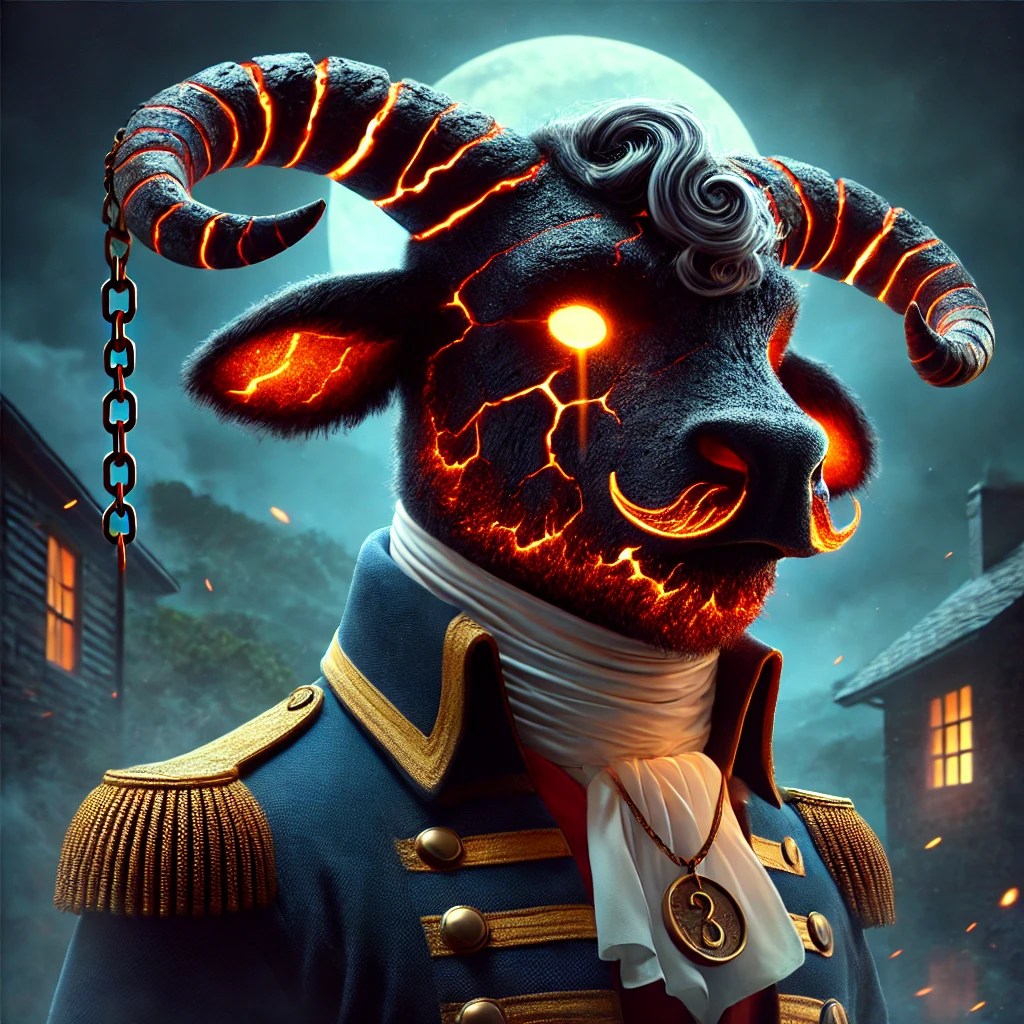
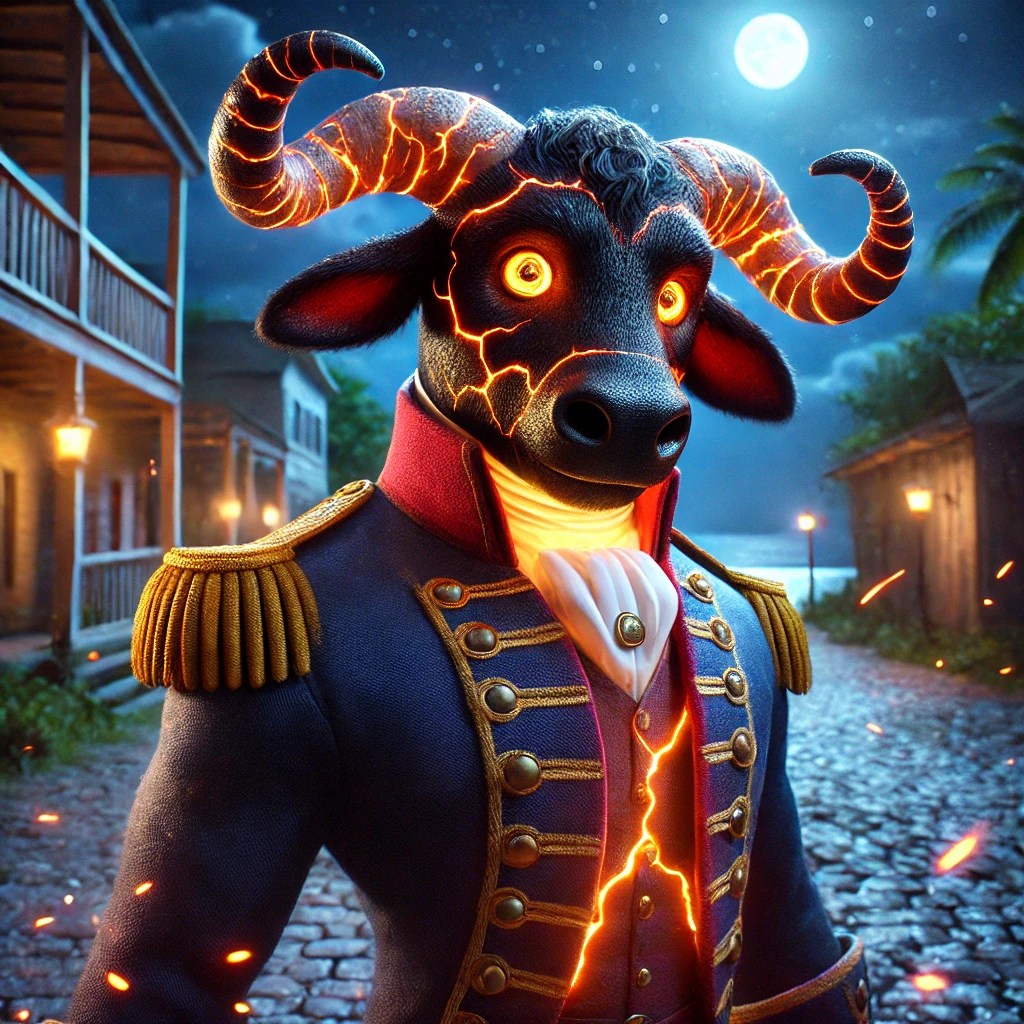
The Rolling Jumbies are spectral, elemental creatures—each one embodying a spiritual imbalance or ancestral reckoning. The Rolling Bull is a flaming-eyed bull bound in rattling chains. It charges through sacred sites to punish broken oaths. The Rolling Canine prowls in blue fire, a hound of false prophets, corrupt legacies, and spiritual guide. The Rolling Rooster has molten wings and a thunderous crow. It heralds transformation through painful truth. It often appears during death rites or taboo awakenings. The Rolling Owl silently circles places of forbidden knowledge, exposing seekers to truths so deep they risk unraveling. Each Jumbie is a haunting echo of a forgotten lesson, challenging those who dare to remember.
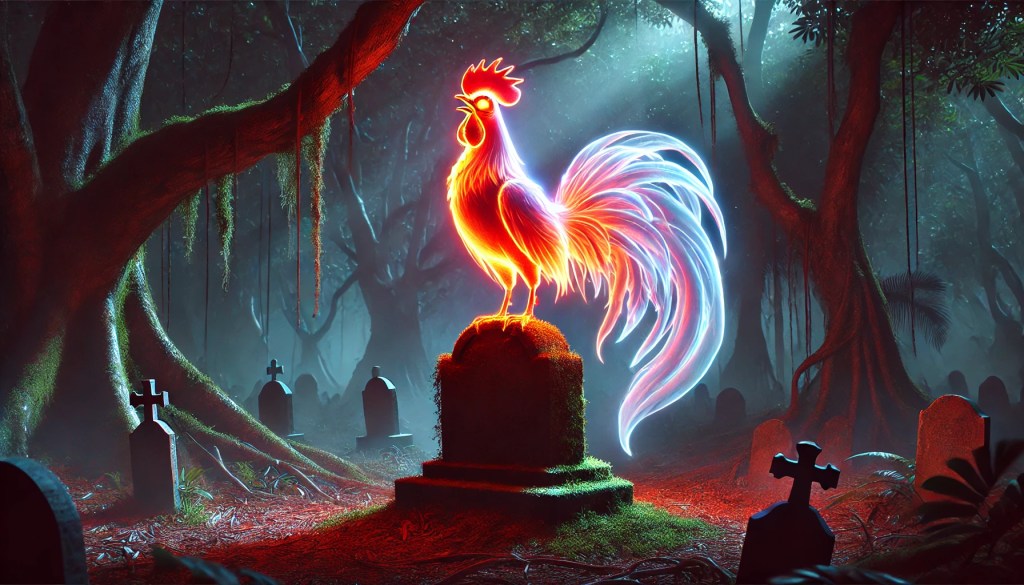
The Rolling Jumbies embody the elemental echoes of imbalance. They glide through fire, wind, and ash. It is as if they ride the breath of ancestors or the smoke of forgotten rituals. Unlike summoned spirits, they arrive unbidden. They are drawn to disturbances in the spiritual fabric like hidden lies, broken pacts, or powerful spells gone awry. Their presence is never neutral. They either corrupt, cleanse, or challenge. This depends on the spiritual weight of the one they meet. In this way, they serve as unpredictable agents of reckoning — not evil, but essential.
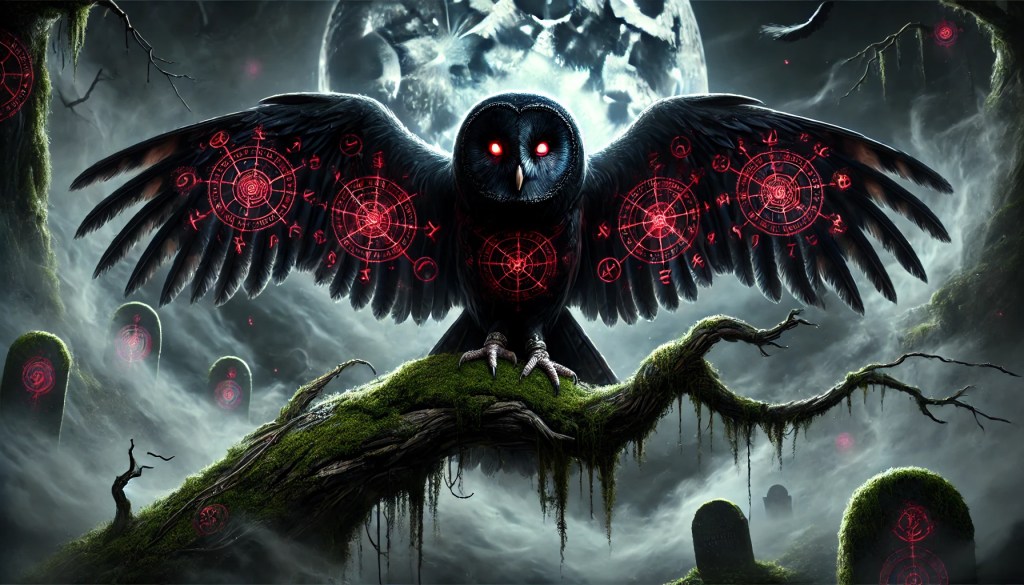
In the Caribanime universe, the Rolling Jumbies act as wild-card guardians, side-quest catalysts, and narrative mini-bosses. They emerge at pivotal moments. At such times, they force younger characters to confront buried truths. Neither fully malicious nor benign, they test emotional and spiritual readiness.
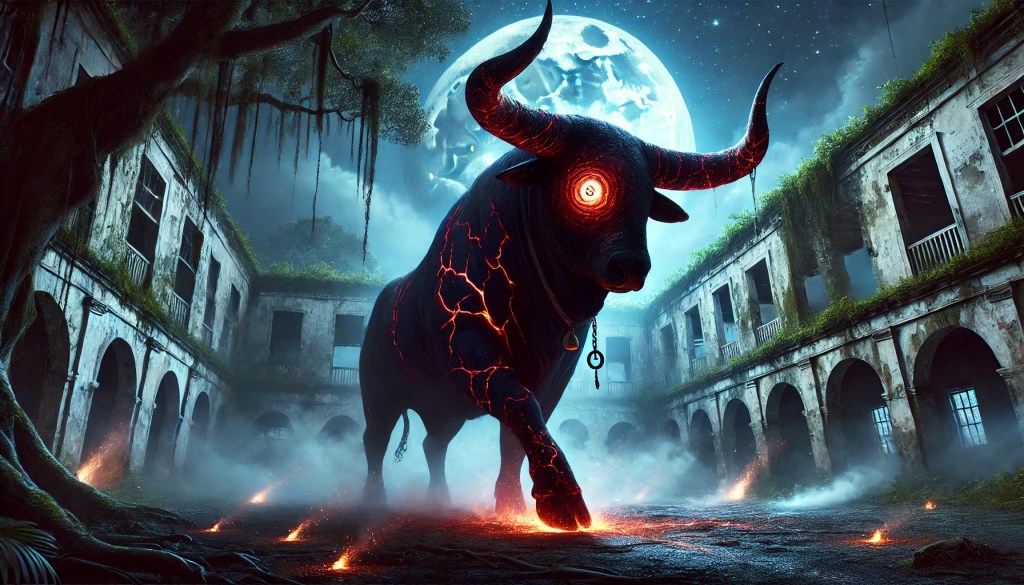
Caribanime Images
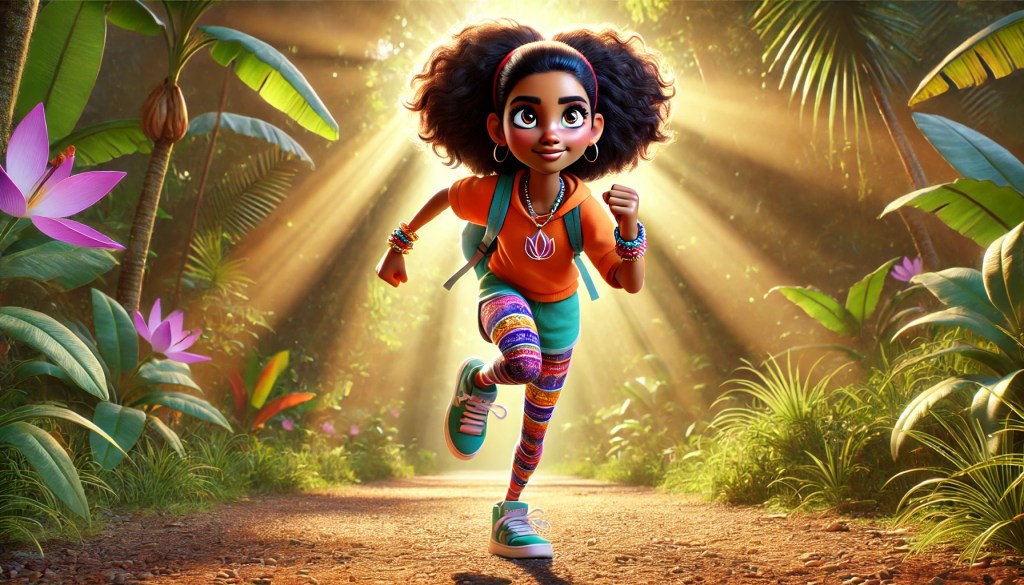
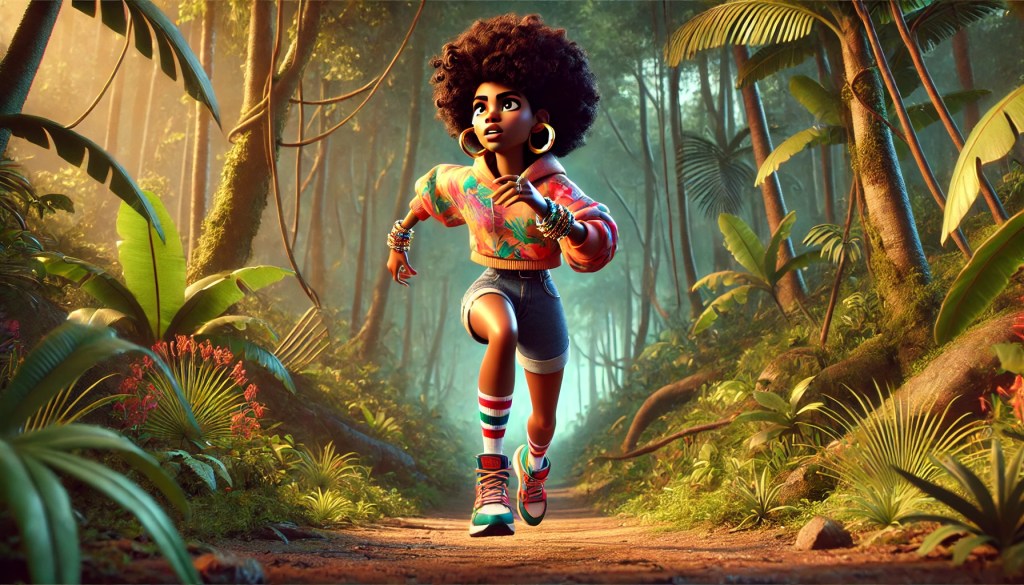
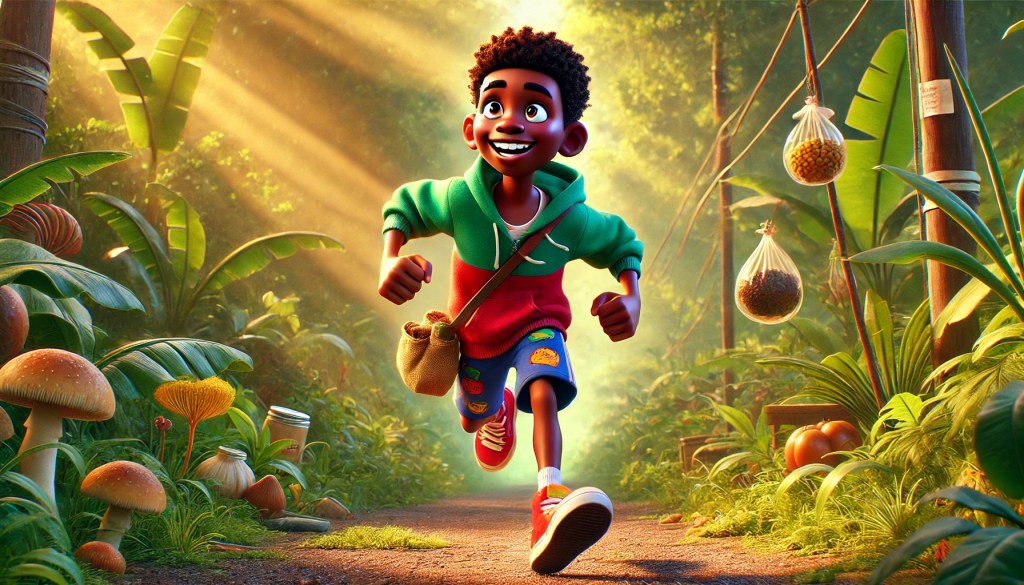
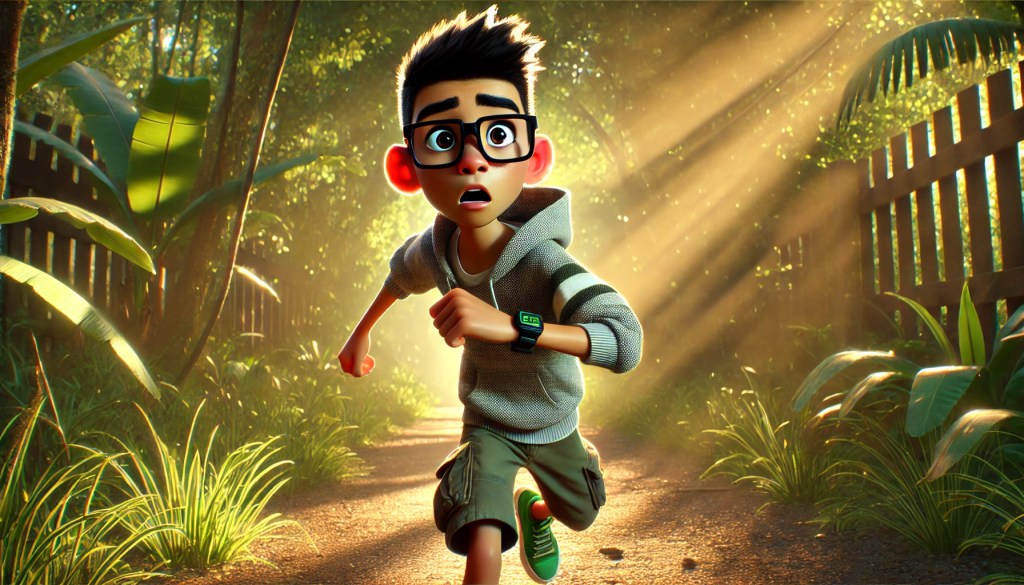
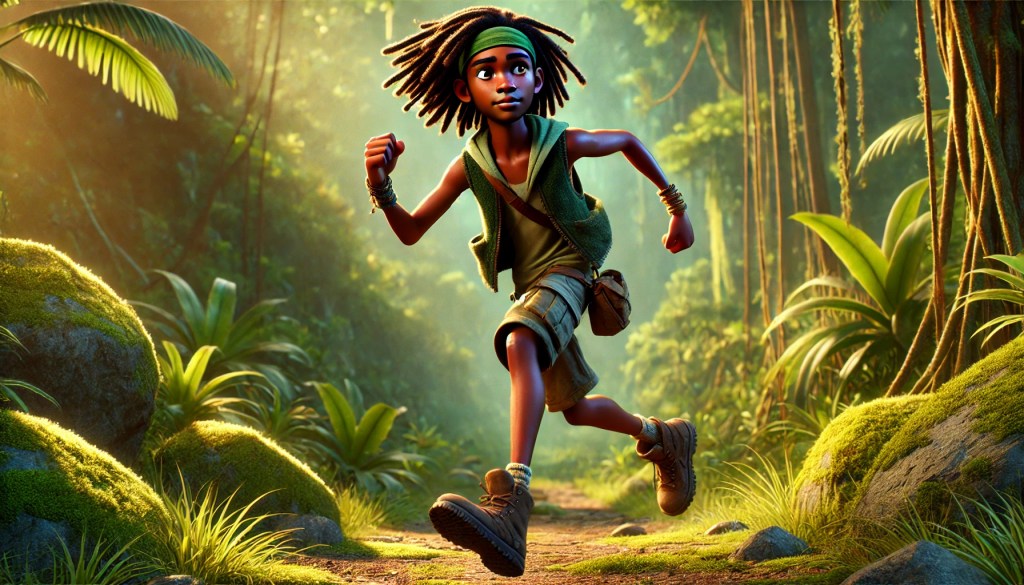
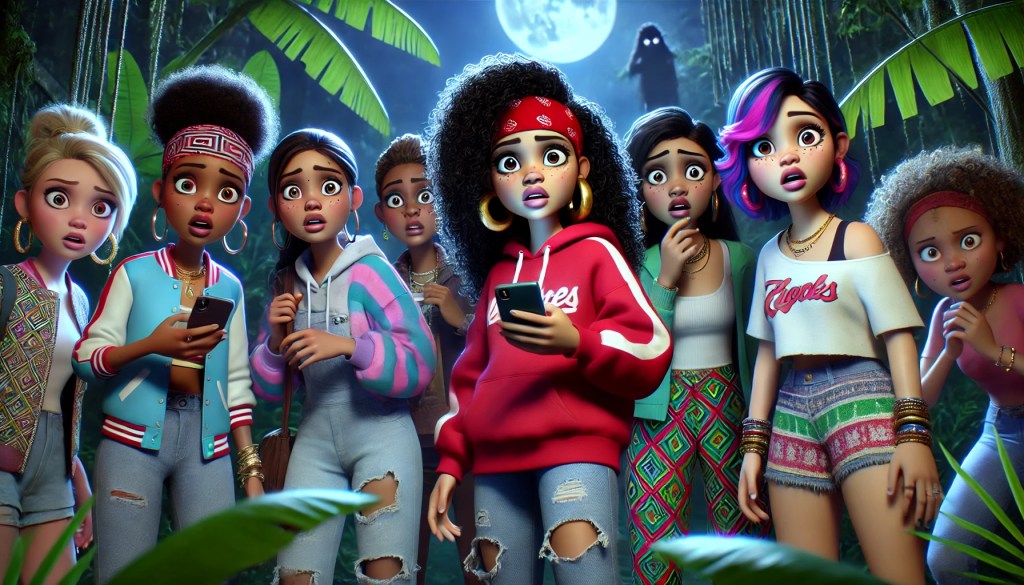
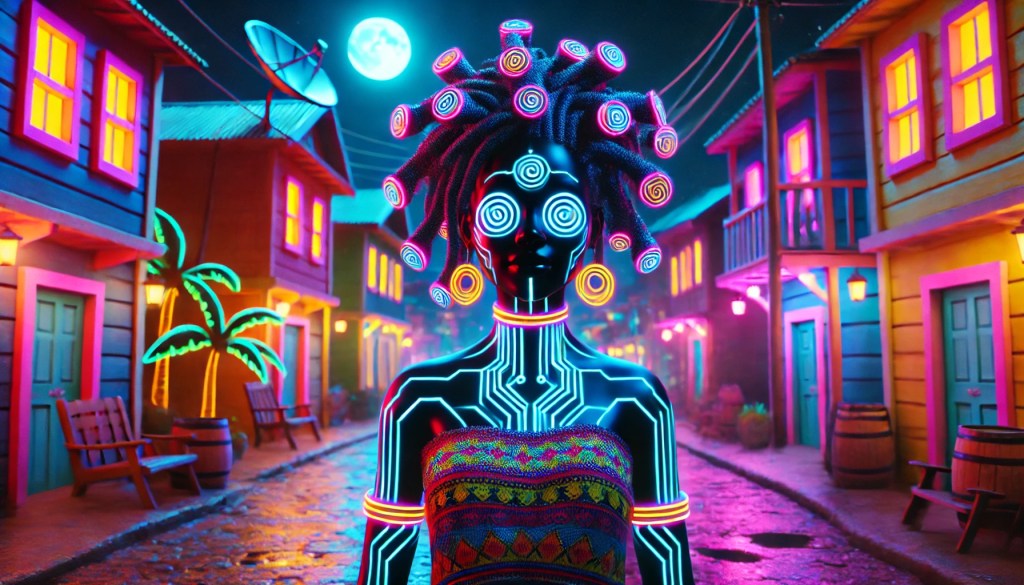
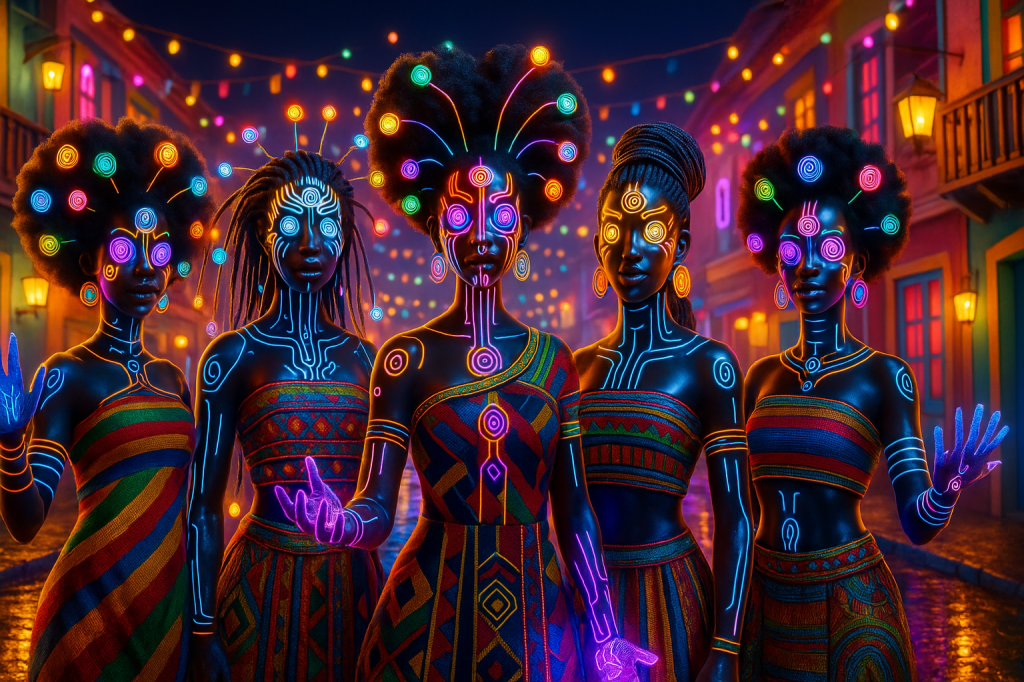
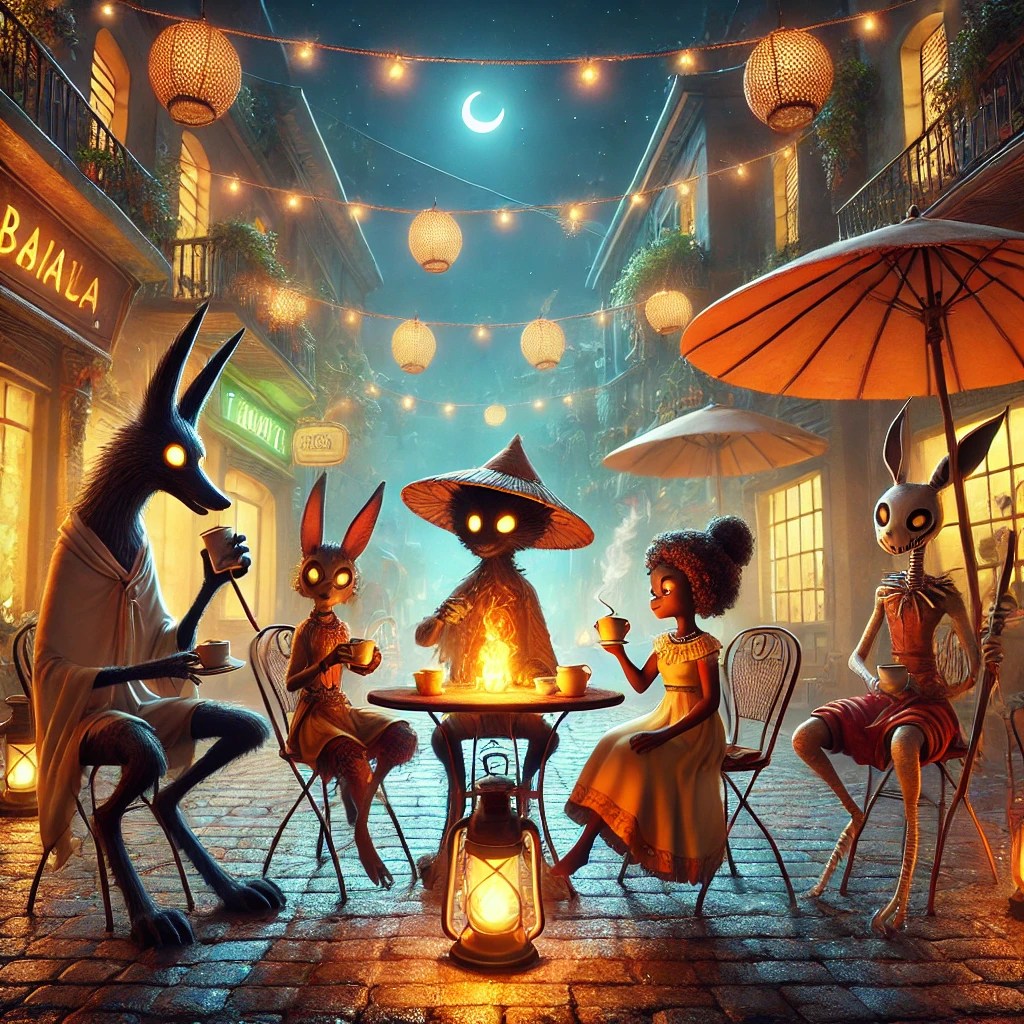
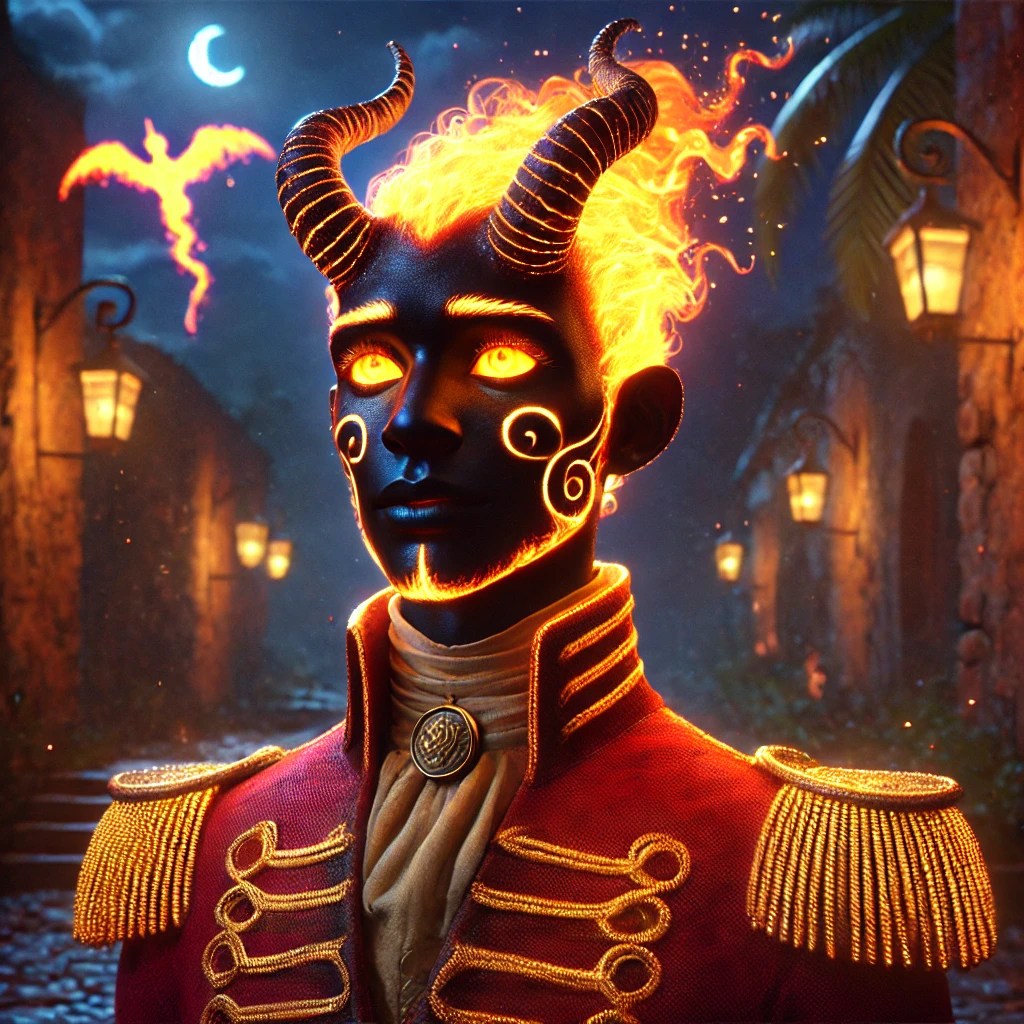
Some of the images shown are alternate designs and visual explorations created during the development of Caribanime. They’re intentionally non-sequential. They vary in style and explore different character designs, moods, and story arcs. The artistic interpretations go beyond the main storyboard.
You will notice a few characters and concepts for future chapters of the Caribanime universe. These are early glimpses of what’s to come. The story continues to grow.

 Artist Blueprint