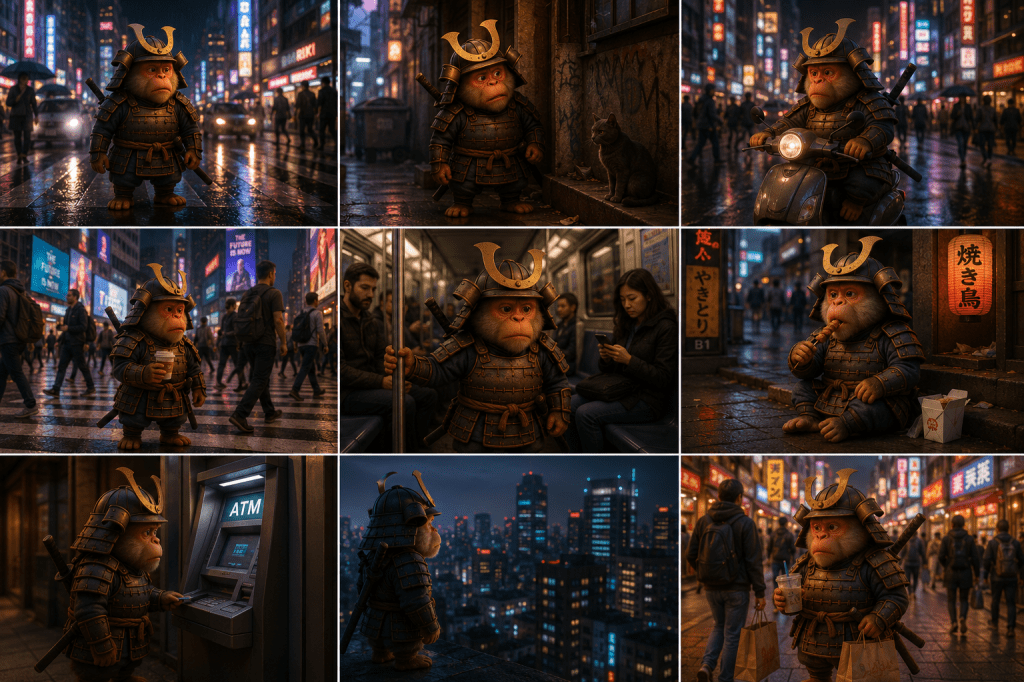
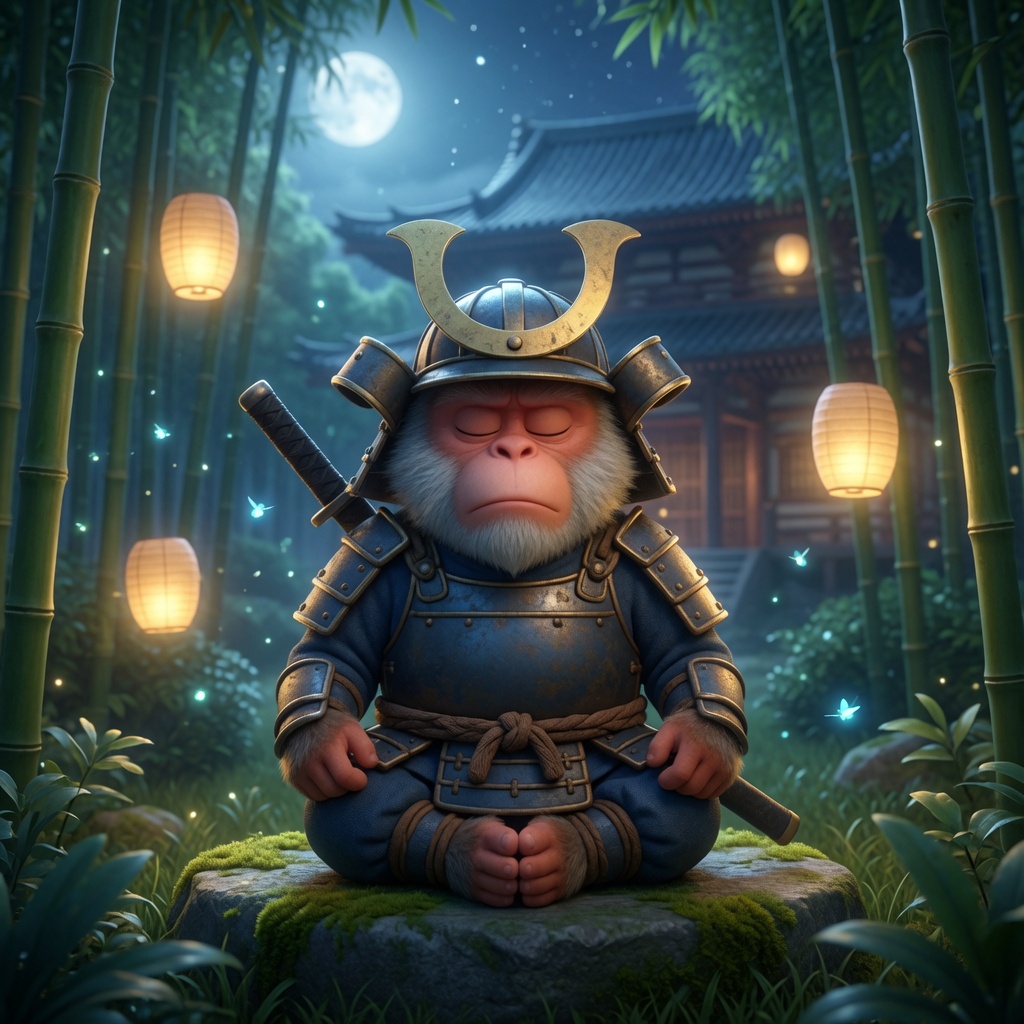
When people first hear about Samurai Suji, they often focus on the obvious.
A monkey samurai from the past is transported into the modern world.
It’s a fun idea. A fish-out-of-water adventure. A clash between ancient traditions and modern technology.
But beneath the comedy is a much bigger question.
What would someone from another era think about the world we have built?
Imagine a traveler arriving from centuries ago.
They would be amazed.
Towering skyscrapers reaching into the clouds.
Machines that fly across oceans.
Devices that can access the knowledge of the world in seconds.
Maps that guide us anywhere.
Messages that travel across continents instantly.
Technology that would seem like magic.
Yet after the wonder fades, they might begin to notice something else.
Something we rarely see because we have become so accustomed to it.
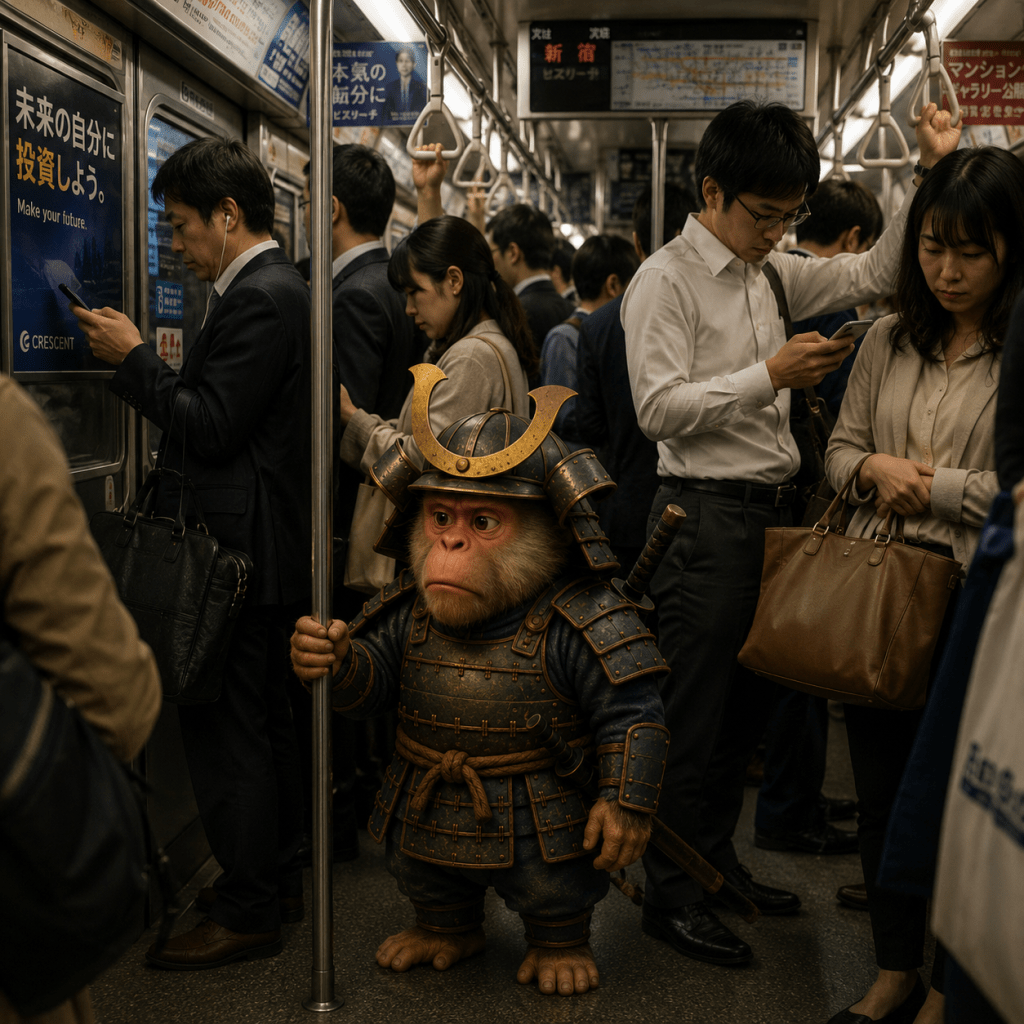
People standing together, but not speaking.
Families sitting together, but looking at separate screens.
Crowded trains filled with silence.
Parks filled with distractions.
Cities more connected than ever before, yet many people feeling more isolated than ever.
Samurai Suji is not a story about technology being bad.
Technology is extraordinary.
It has connected cultures, opened opportunities, and given humanity tools that previous generations could never have imagined.
The question is not what technology has given us.
The question is what we may have forgotten along the way.
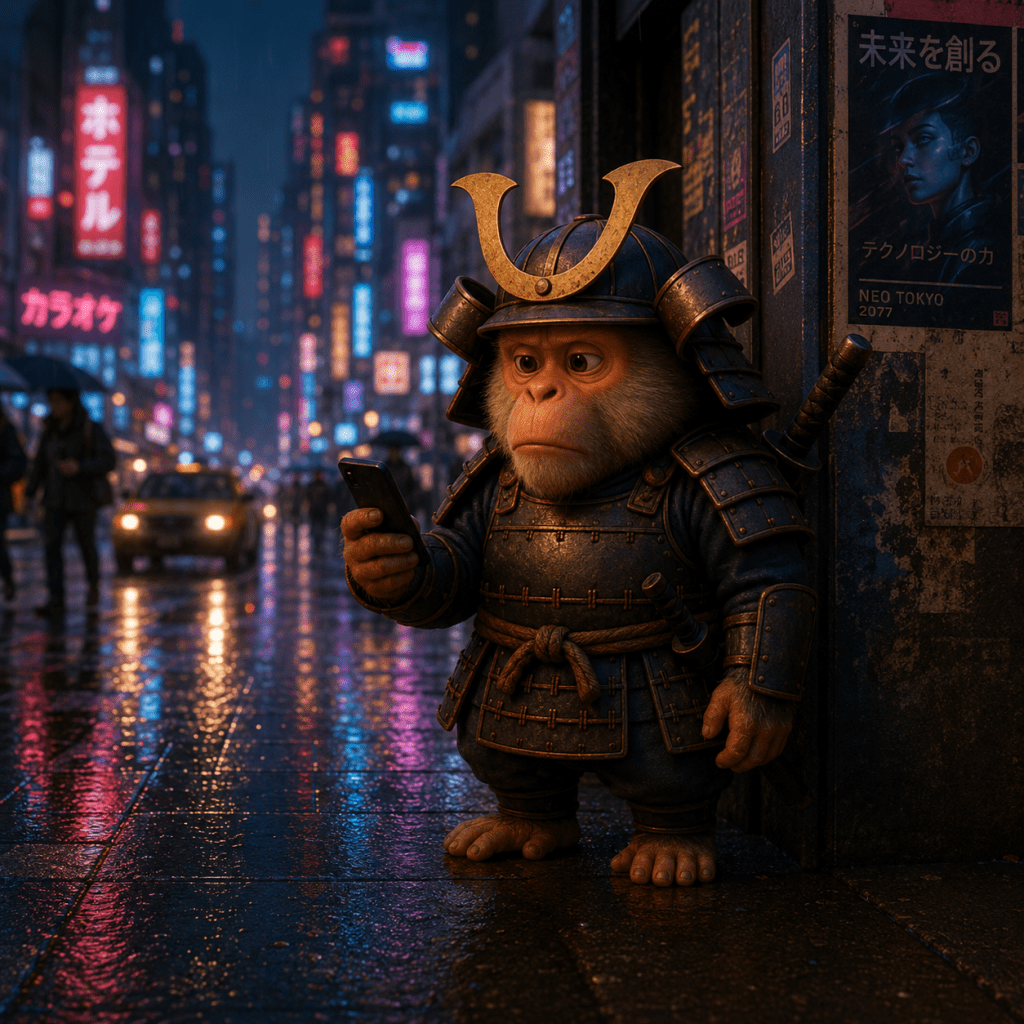
Suji comes from a world with fewer conveniences but stronger connections to the present moment.
A world where people observed their surroundings.
Where conversations happened face-to-face.
Where communities gathered together.
Where attention was not constantly divided between dozens of competing voices.
When Suji arrives in the modern city, he doesn’t simply notice the technology.
He notices the people.
He notices the habits.
He notices the contradictions.
He sees a world where information is everywhere, yet wisdom can be difficult to find.
A world where people can communicate instantly across oceans, yet sometimes struggle to connect with the person standing beside them.
A world where millions of stories, cultures, languages, and traditions coexist within the same city.
And perhaps that is what fascinates him most.
The modern city is not a place of strangers.
It is a gathering place for humanity.
Different foods.
Different beliefs.
Different histories.
Different journeys.
All sharing the same streets.
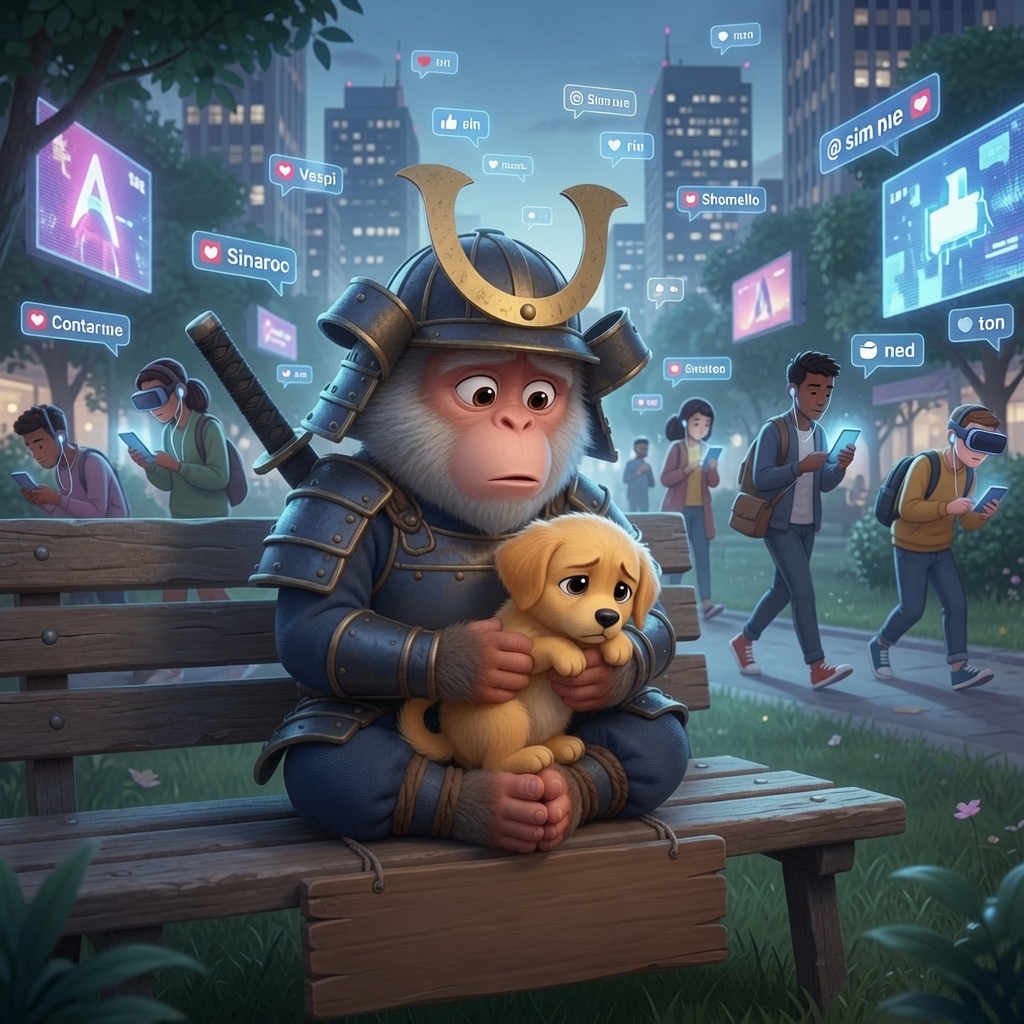
To Suji, this diversity is not confusing.
It is remarkable.
The city becomes a living adventure.
Every neighborhood tells a story.
Every person carries a history.
Every conversation reveals a new way of seeing the world.
Through Suji’s eyes, ordinary things become extraordinary again.
A subway ride.
A marketplace.
A public park.
A family meal.
A conversation with a stranger.
The things we often overlook become moments worth noticing.
At its heart, Samurai Suji is not simply about a samurai monkey lost in the future.
It is about perspective.
It is about curiosity.
It is about rediscovering the world around us.
Because perhaps the greatest lesson Suji brings from the past is not how to wield a sword.
It is how to pay attention.
To look up.
To ask questions.
To speak to people.
To embrace curiosity.
To remain present.
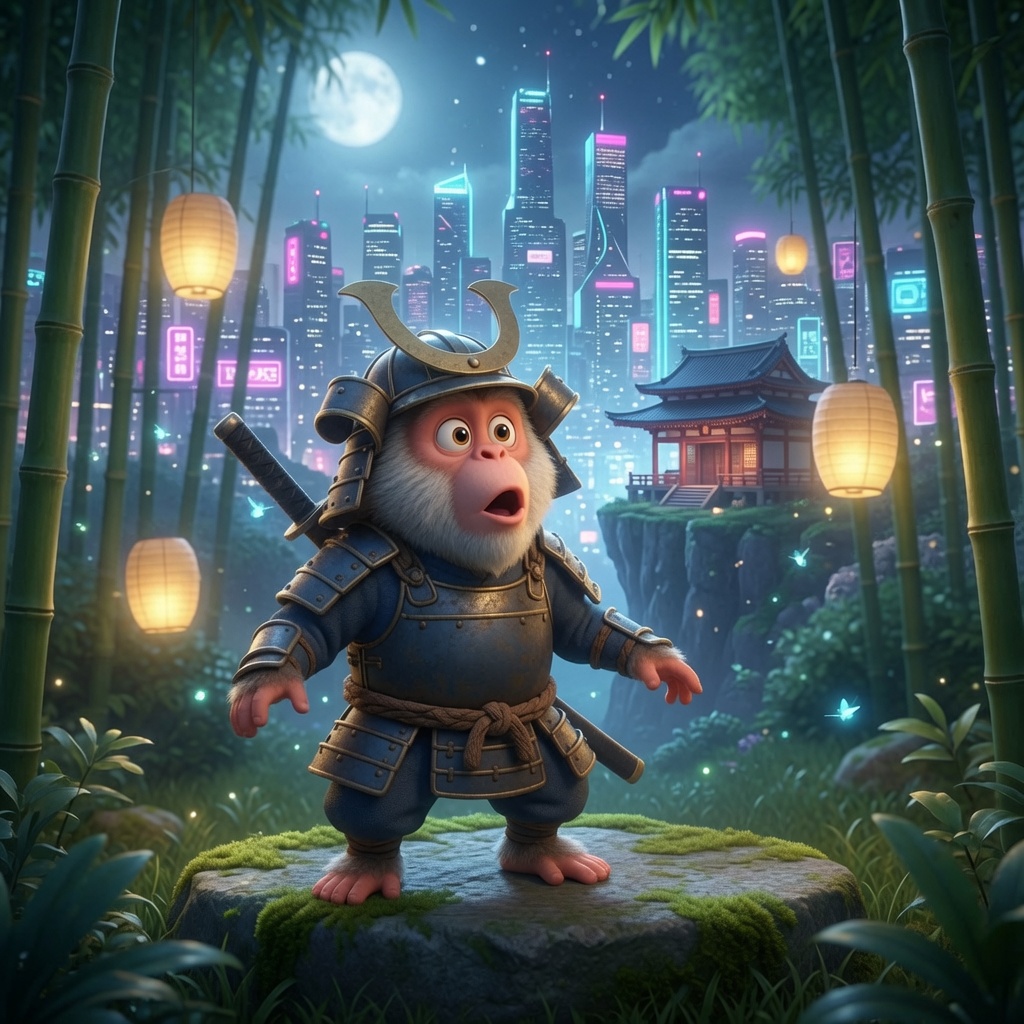
In a world connected by technology, Samurai Suji reminds us how to reconnect with each other.
But this is only the beginning of Suji’s journey.
As he continues to explore the modern world, he will encounter new challenges, unexpected contradictions, and questions many of us no longer think to ask.
Why do people spend so much time looking down at glowing screens?
What does honour mean in a digital age?
Can a city of millions still feel lonely?
What lessons from the past still matter today?
And what can a wandering samurai teach us about attention, community, and connection?
Through Suji’s eyes, familiar places become new adventures, ordinary moments reveal hidden meaning, and the modern world becomes a landscape waiting to be rediscovered.
The stories ahead are not just about where Suji goes next.
They are about what he notices.
And what we might learn when we stop long enough to notice it too.
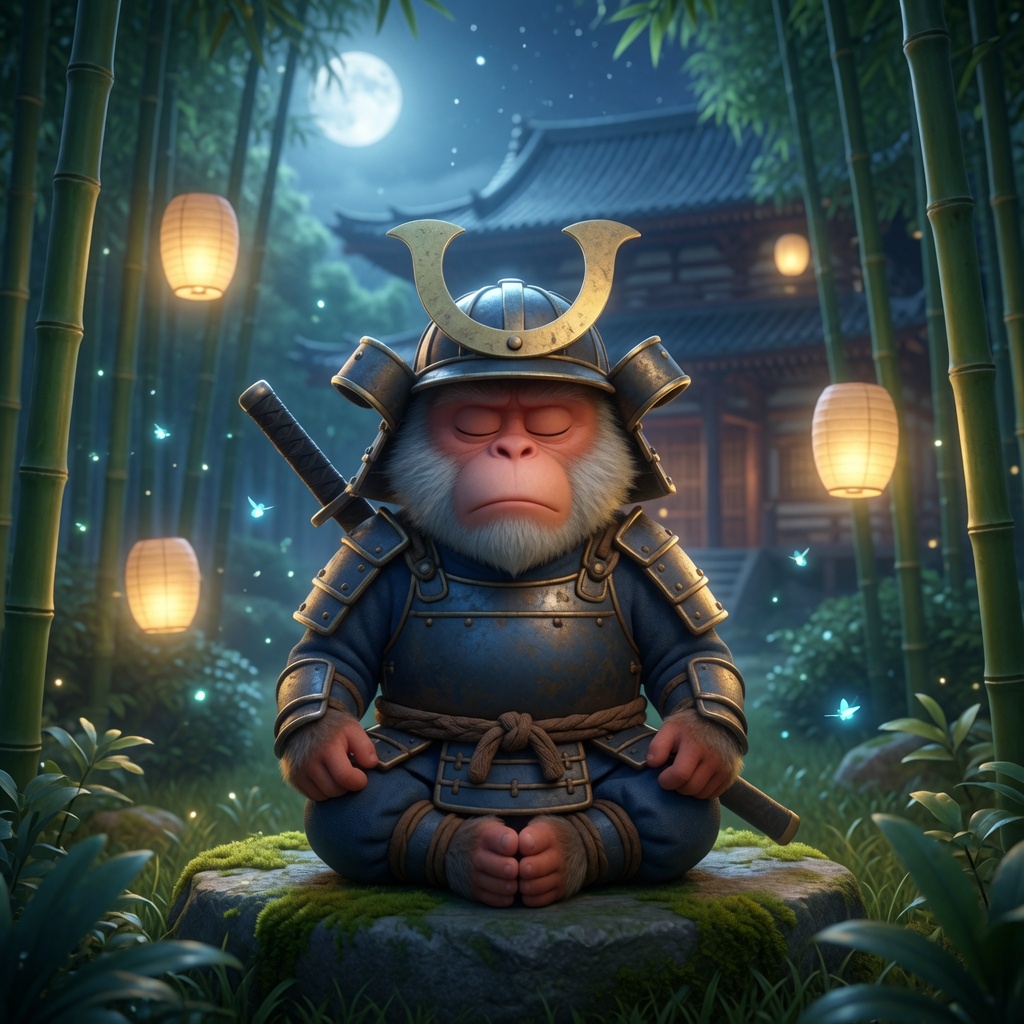
 Artist Blueprint